About Tetris (1984)
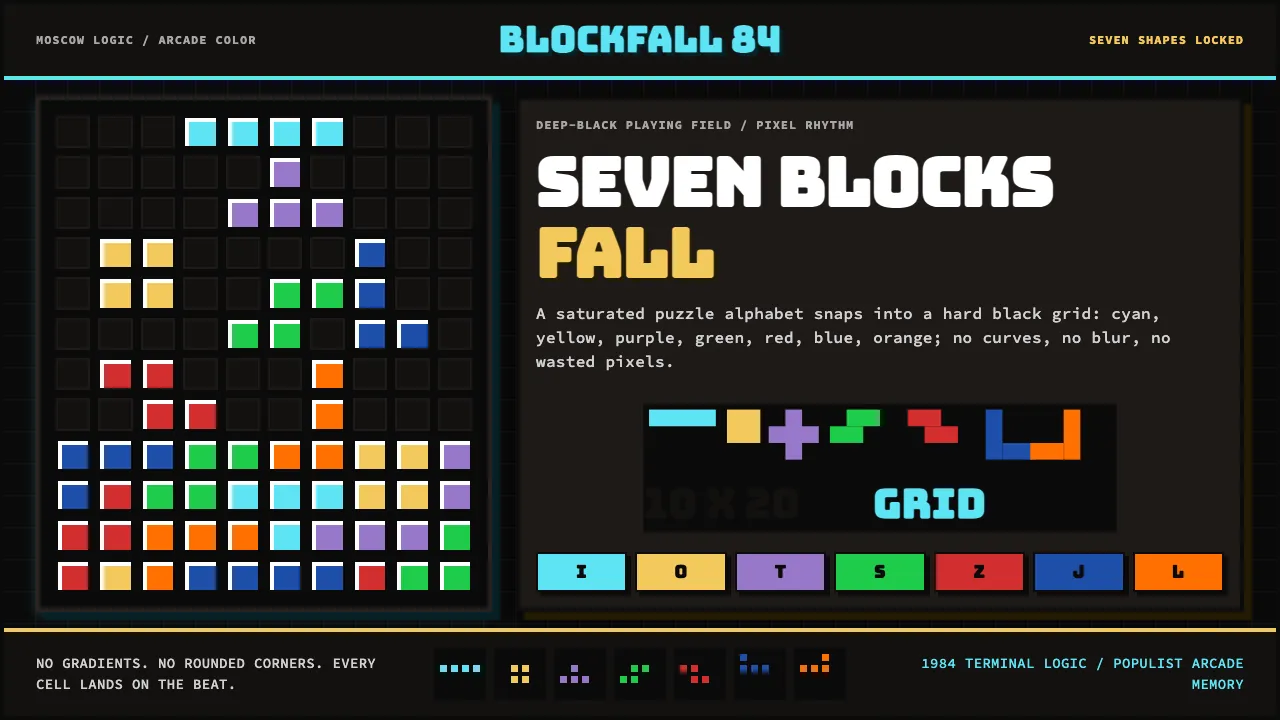
Tetris (1984) is the most-licensed video game ever made, born inside the Soviet Academy of Sciences when Alexey Pajitnov wired seven falling tetrominoes onto a black grid. Its identity is one of the strongest in interactive media: deep-black playing field, seven saturated tetromino colors, and pixel-precise sharp corners.
The aesthetic is populist arcade — bold, readable across CRT and LCD, instantly nostalgic. Cyan-I, yellow-O, purple-T, green-S, red-Z, blue-J, orange-L are the alphabet; the grid is the syntax. Nothing curves, nothing washes out, every block snaps to the pixel.
- Origin
- Soviet Russia (origin) → global game canon
- Era
- 1984 created (Alexey Pajitnov, Moscow); 1989 Nintendo Game Boy global breakout; ongoing canon through 2024+
- Key figures
- Alexey Pajitnov · Henk Rogers · Vladimir Pokhilko
- Movements
- 1980s puzzle-game canon · Soviet tech cultural export · foundational mobile-puzzle aesthetic
Tetris (1984) design spec
Colors
Typography
The other 11 sections — buttons, cards, spacing, motion, techniques and more — open once you unlock. Download the DESIGN.md or send it to your AI in one click. Unlock once, yours forever.
Sign up nowStyles similar to Tetris (1984)
Also inspired by film, games & music, with a close feel.
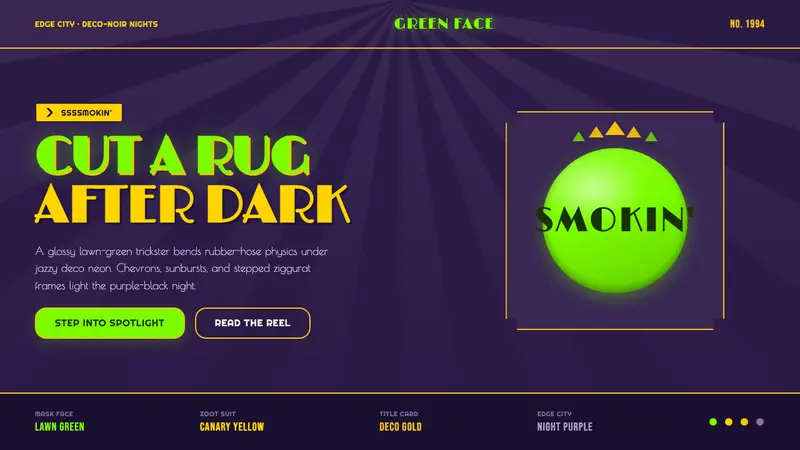 The Mask 1994 Green FaceLoud, theatrical, ssssmokin'. Lawn-green and canary-yellow scream against deco purple-black night.
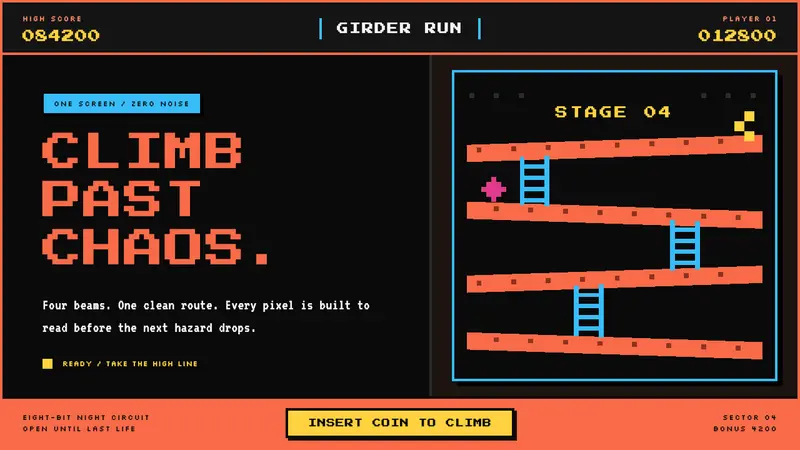 Donkey Kong (1981 Arcade)Built to read through the smoke. Coral girders and cyan ladders cut across a CRT-black grid.
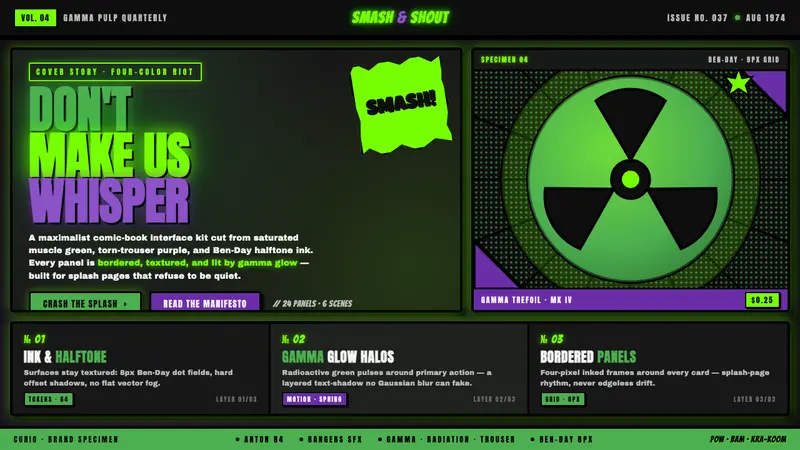 Hulk Gamma GreenDon't make us whisper. Muscle green, trouser purple, inked panels, Ben-Day halftone fury.
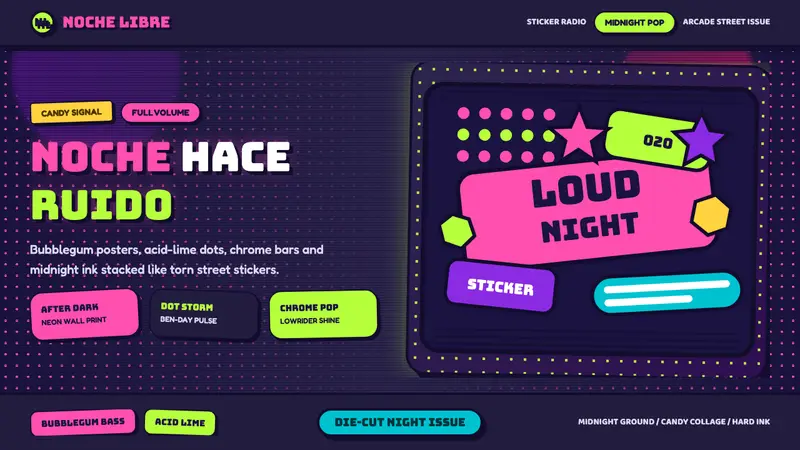 Bad Bunny YHLQMDLGMaximal night-pop collides. Bubblegum pink and acid lime stickers glow on midnight.