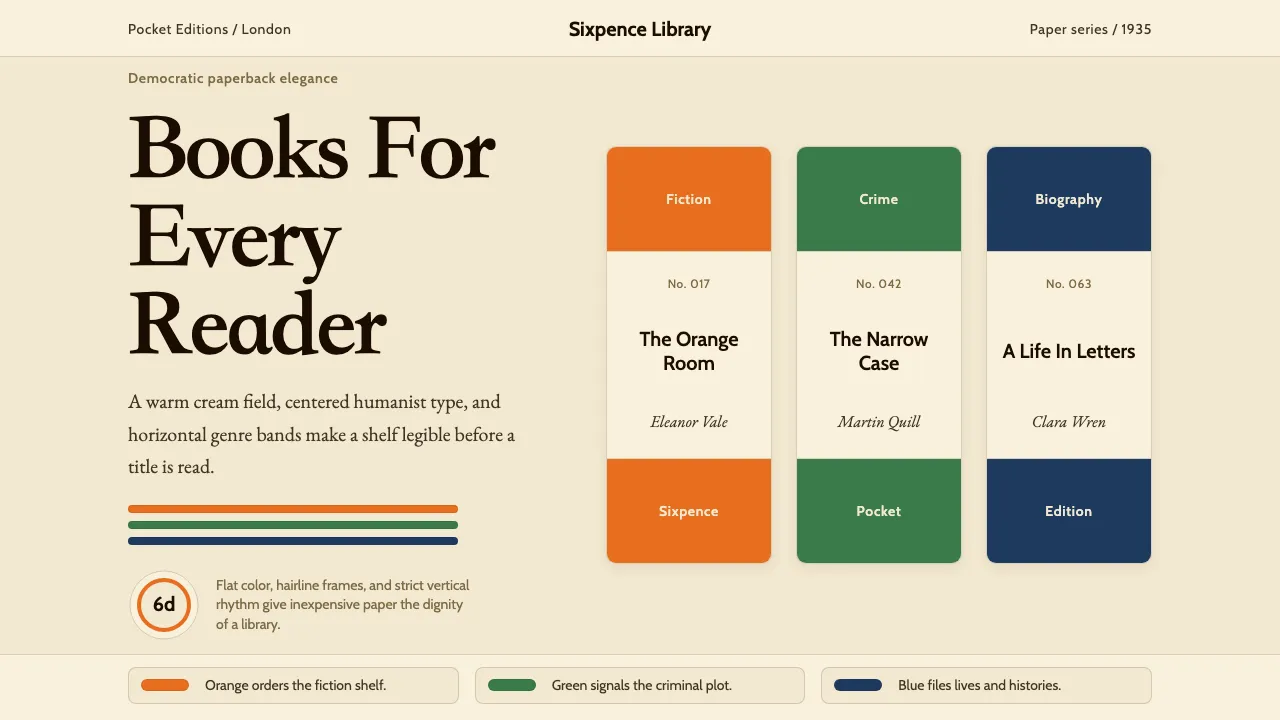
About Penguin Books (1935)
Penguin Books invented the modern paperback in 1935 with a deceptively simple system: horizontal color bands coding genre, Gill Sans typography centered on cream paper, and a penguin silhouette. Allen Lane's sixpence books democratized literature; Jan Tschichold's 1947 composition rules gave them Swiss-modernist rigor.
The tri-band cover is one of graphic design's most enduring identities — ninety years of recognizability built on color, type discipline, and the radical idea that affordable books deserve beautiful design.
- Origin
- United Kingdom, London
- Era
- 1935 founded; peak design milestones 1935–1968; ongoing identity continuity
- Key figures
- Allen Lane · Edward Young · Jan Tschichold · Romek Marber
- Movements
- Mass-market paperback revolution · British modernist typography · Swiss International Style in publishing
Penguin Books (1935) design spec
Colors
Typography
The other 11 sections — buttons, cards, spacing, motion, techniques and more — open once you unlock. Download the DESIGN.md or send it to your AI in one click. Unlock once, yours forever.
Sign up nowStyles similar to Penguin Books (1935)
Also inspired by brands & products, with a close feel.
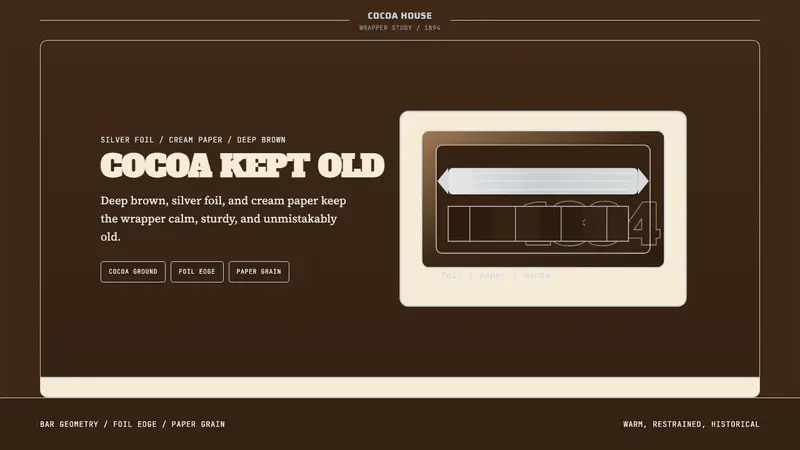 Hershey's Chocolate Brown (1894)Plain, enduring, warm. Cocoa brown meets silver foil on cream paper.
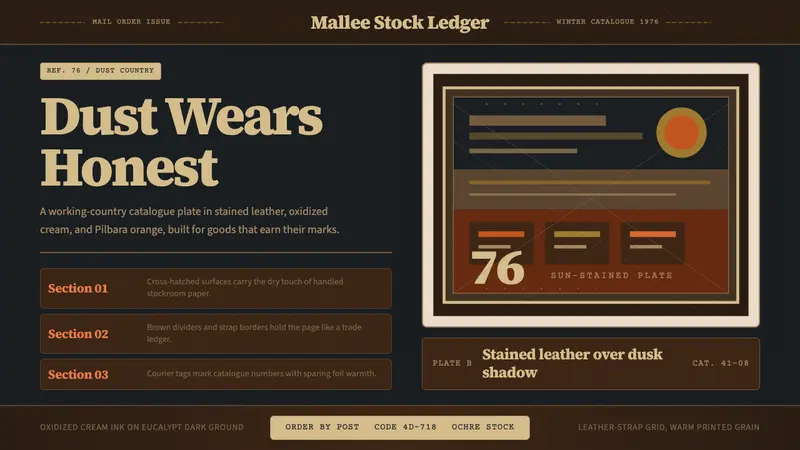 Akubra Outback (1970s Stockman)Worn honesty. Leather brown, Pilbara orange, and cream catalogue frames carry the grit.
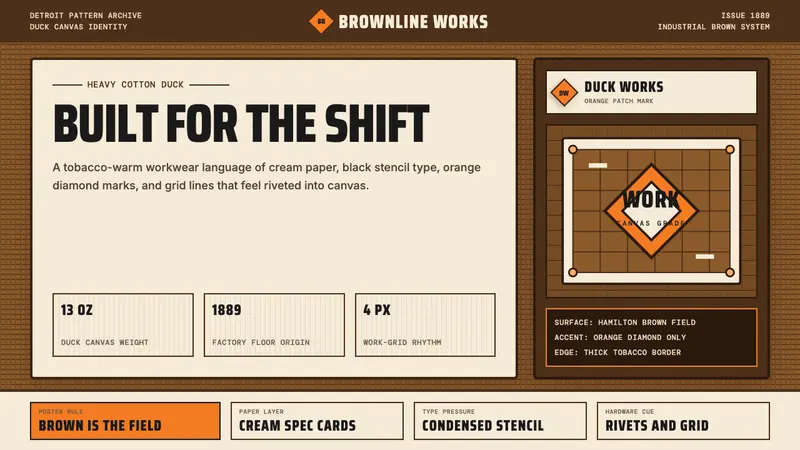 Carhartt Work Jacket Brown (1889)Built like work. Hamilton brown, orange diamond, and condensed type carry canvas weight.
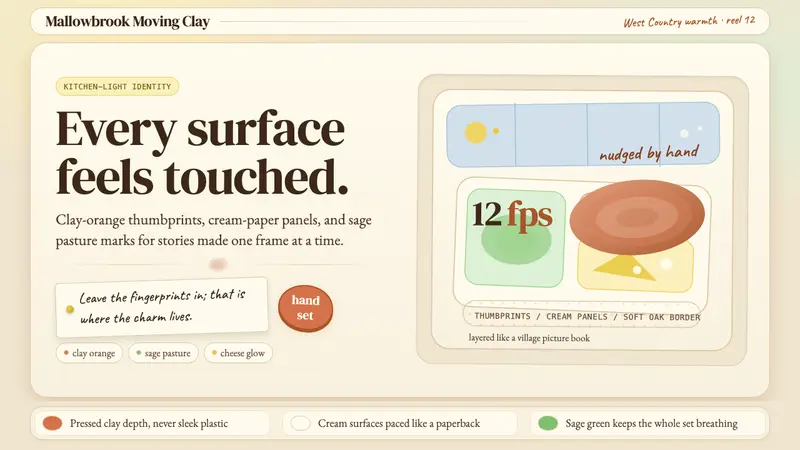 Aardman ClaymationHandmade warmth, visibly touched. Clay-orange panels, Caveat notes, thumbprint geometry.