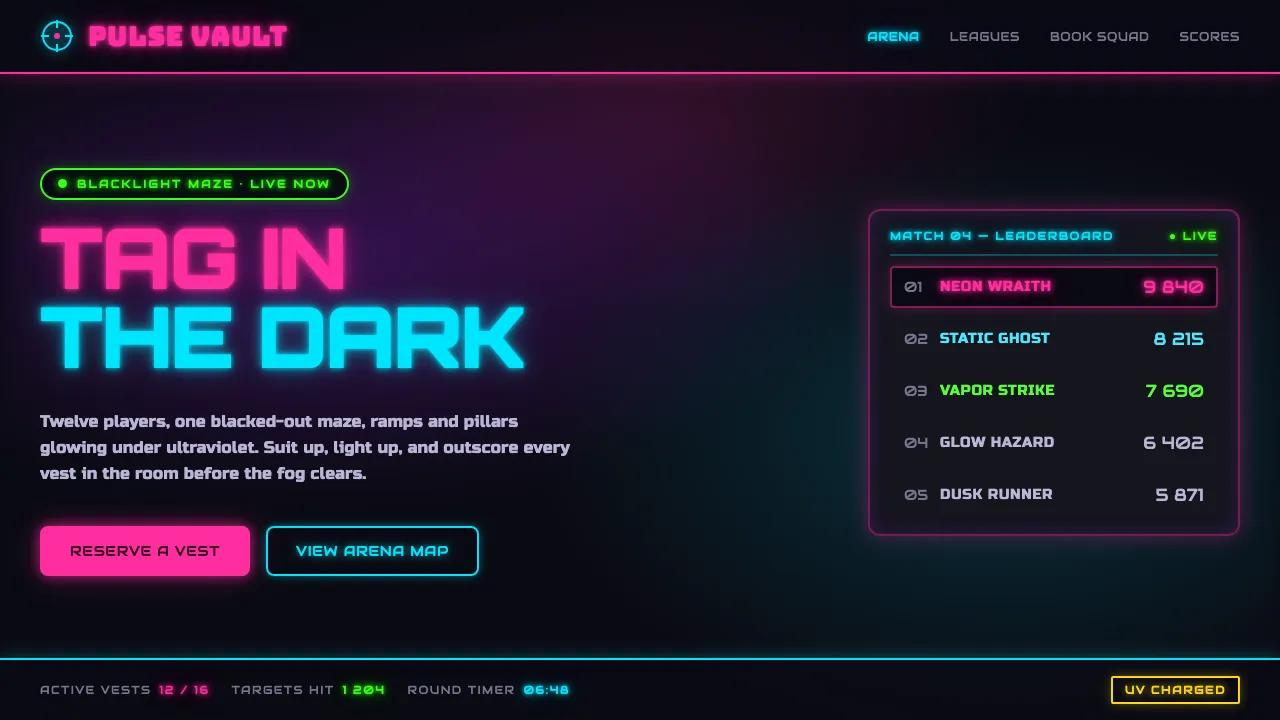
About Laser Tag Arena Blacklight
Step into a blacked-out maze lit only by UV blacklight. Wall murals and vests painted in fluorescent pigment burn electric against matte near-black surfaces while glowing fog drifts between the ramps. This is the 1990s–2000s laser-tag arena — Laser Quest, Q-Zar — all chunky sci-fi branding and arcade futurism.
The system distills that blackout-arcade energy into a design language: UV-fluorescent hot pink, acid green, and electric cyan that only read as *glowing* because everything around them is near-black. Score panels, neon outlines, and blocky signage complete the vest-and-blacklight world.
- Origin
- North America (mall and strip-mall entertainment centers)
- Era
- 1990–2010 (peak laser-tag franchise era)
- Key figures
- Laser Quest franchise operators · Q-Zar franchise operators · UV-reactive paint and vest makers
- Movements
- 90s arcade culture · family entertainment center design · sci-fi blacklight graphics · arcade futurism
Laser Tag Arena Blacklight design spec
Colors
Typography
The other 11 sections — buttons, cards, spacing, motion, techniques and more — open once you unlock. Download the DESIGN.md or send it to your AI in one click. Unlock once, yours forever.
Sign up nowStyles similar to Laser Tag Arena Blacklight
Also inspired by pop culture, with a close feel.
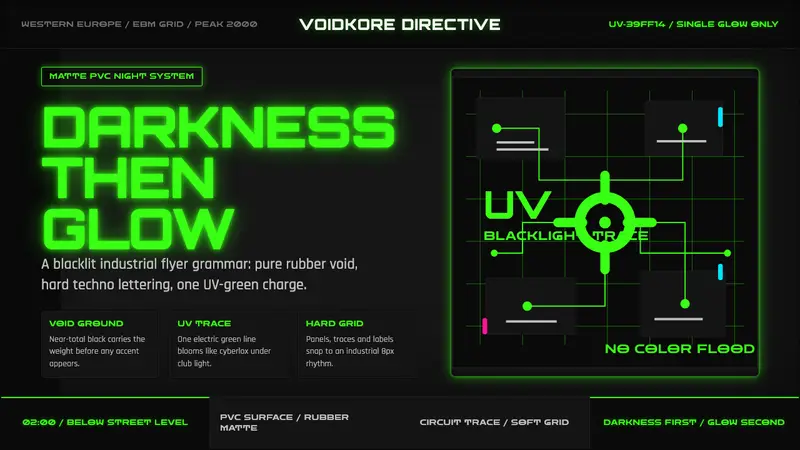 Cybergoth RaveDarkness rules. Pure black PVC is split by one UV-green circuit glow.
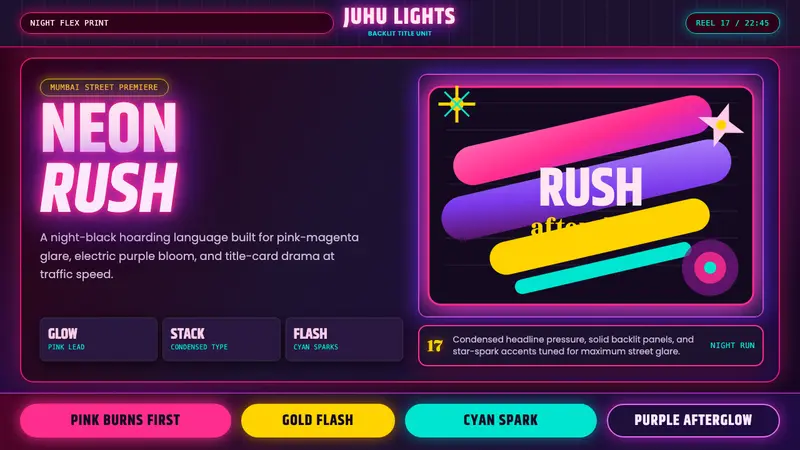 Bollywood Neon MumbaiMumbai pop burns bright. Khand stacks glow over night-black, with pink-purple flares.
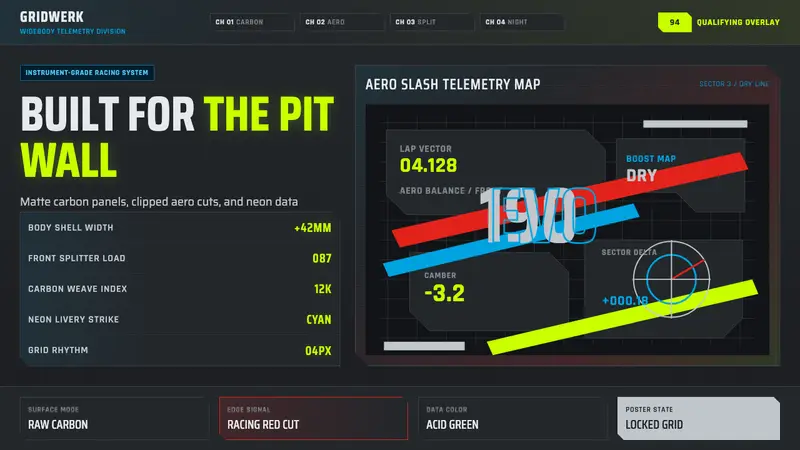 DTM Touring CarEngineered aggression. Carbon black grid, gunmetal type, cyan and acid telemetry slashes.
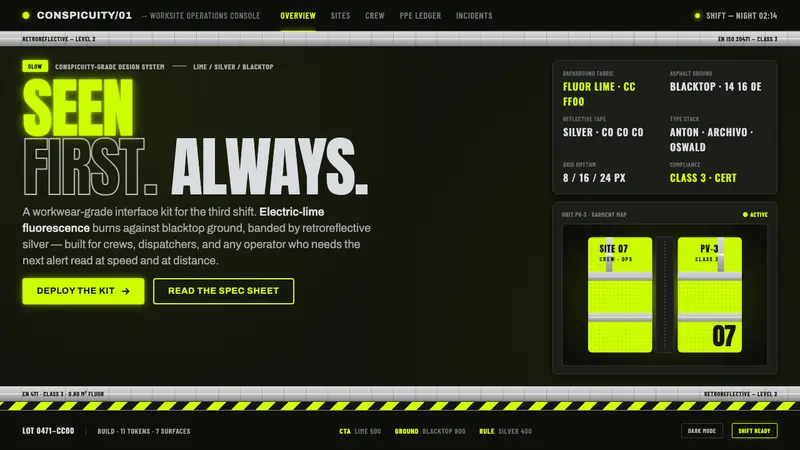 Hi-Vis Safety VestEngineered to be seen. Fluorescent lime on blacktop, silver reflective bands, stencil grotesque.