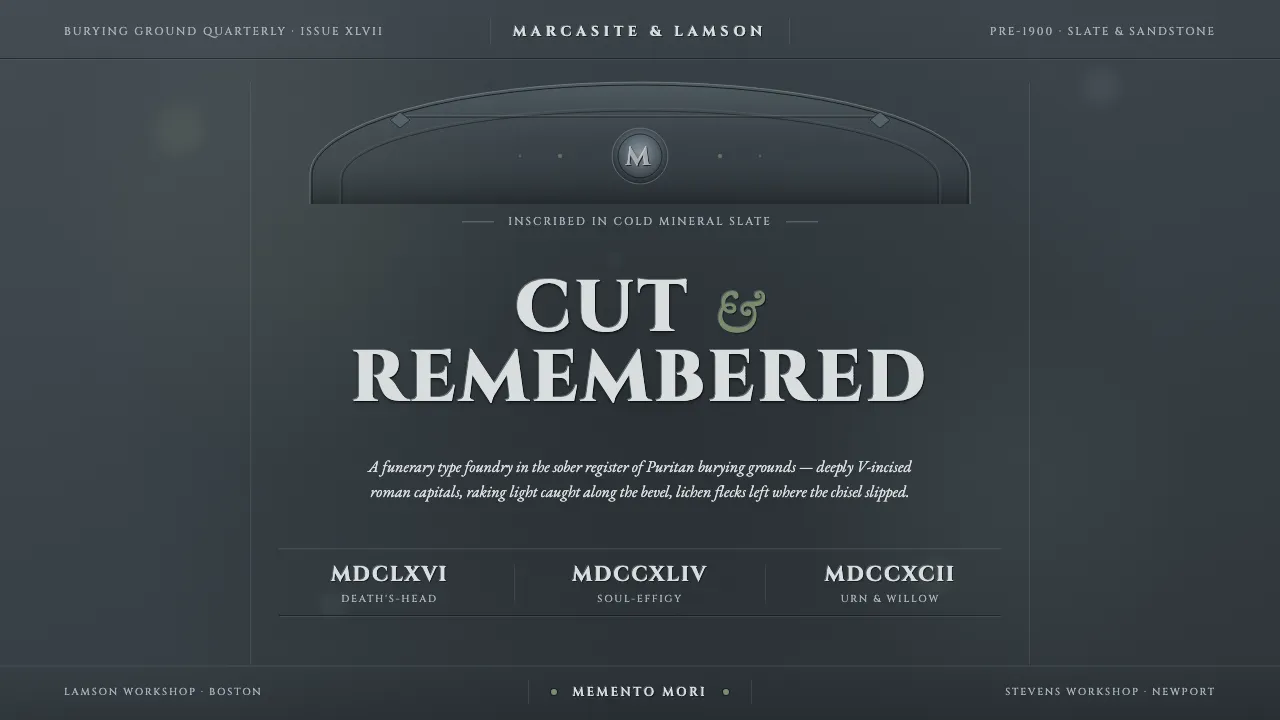
About Slate Headstone Lettercutting
Colonial New England slate headstone lettercutting is the Puritan funerary craft of carving heavy imported English slate into grave markers — deeply V-incised classical roman capitals and winged death's-head motifs cut by hand into dark blue-gray stone.
The referent is the stone face itself: weathered, lichen-flecked, never a sheet of paper. It reads as dark slate-blue-gray, with cut letter-faces catching a thin highlight along their bevels, the whole sitting in a sober, deeply-shadowed mortuary register.
- Origin
- North America — colonial New England (Massachusetts Bay, Connecticut River Valley, Rhode Island, New Hampshire)
- Era
- 17th–19th century (pre-1900); densest in the 1660s–1810s Puritan burying grounds
- Key figures
- The Lamson workshop · The Stevens workshop · Boston and Newport carvers · Anonymous regional stonecutters
- Movements
- Puritan funerary art · Death's-head iconography · The death's-head → cherub → urn-and-willow progression
Slate Headstone Lettercutting design spec
Colors
Typography
The other 11 sections — buttons, cards, spacing, motion, techniques and more — open once you unlock. Download the DESIGN.md or send it to your AI in one click. Unlock once, yours forever.
Sign up nowStyles similar to Slate Headstone Lettercutting
Also inspired by crafts & folk art, with a close feel.
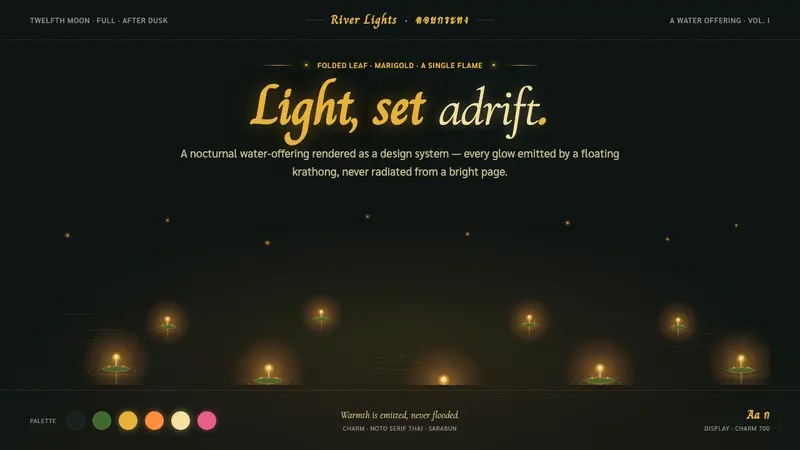 Loy Krathong (River Lights)Light, set adrift. Candle-gold flames on near-black river water — warmth emitted, never flooded.
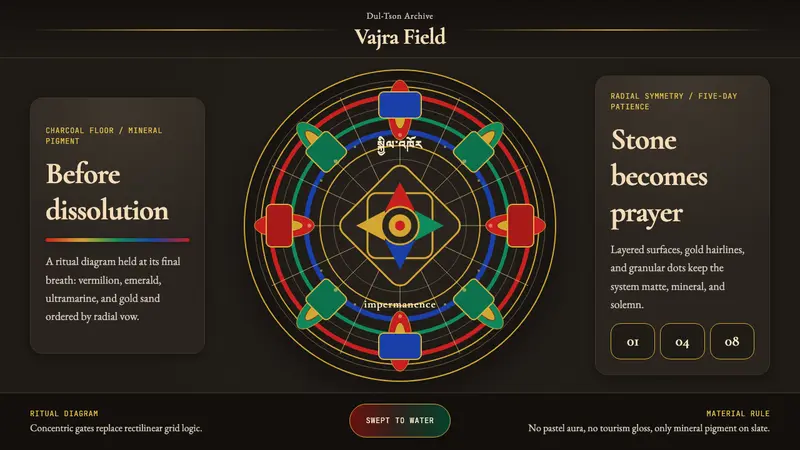 Tibetan Vajrayana Sand MandalaSolemn impermanence. Vermilion, emerald, ultramarine and gold orbit on charcoal.
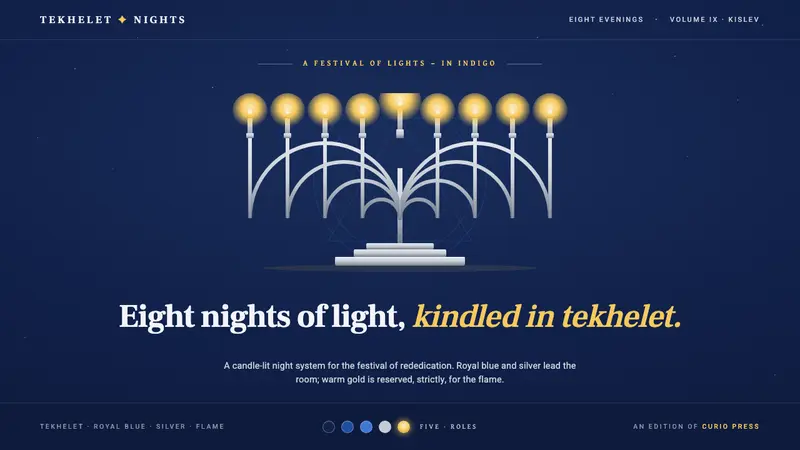 Hanukkah MenorahEight nights kindled in tekhelet. Royal blue and silver hold the dark room; gold is only the flame.
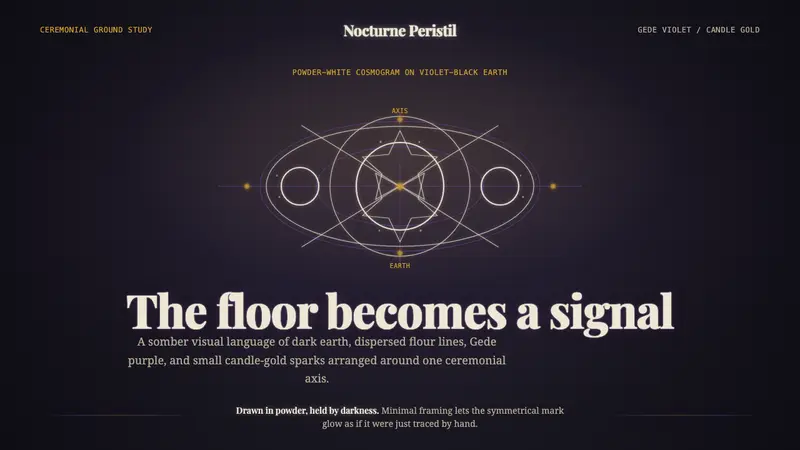 Haitian Vodou VèvèSomber ritual glow. Powder-white lines on violet-black earth, touched by candle gold.