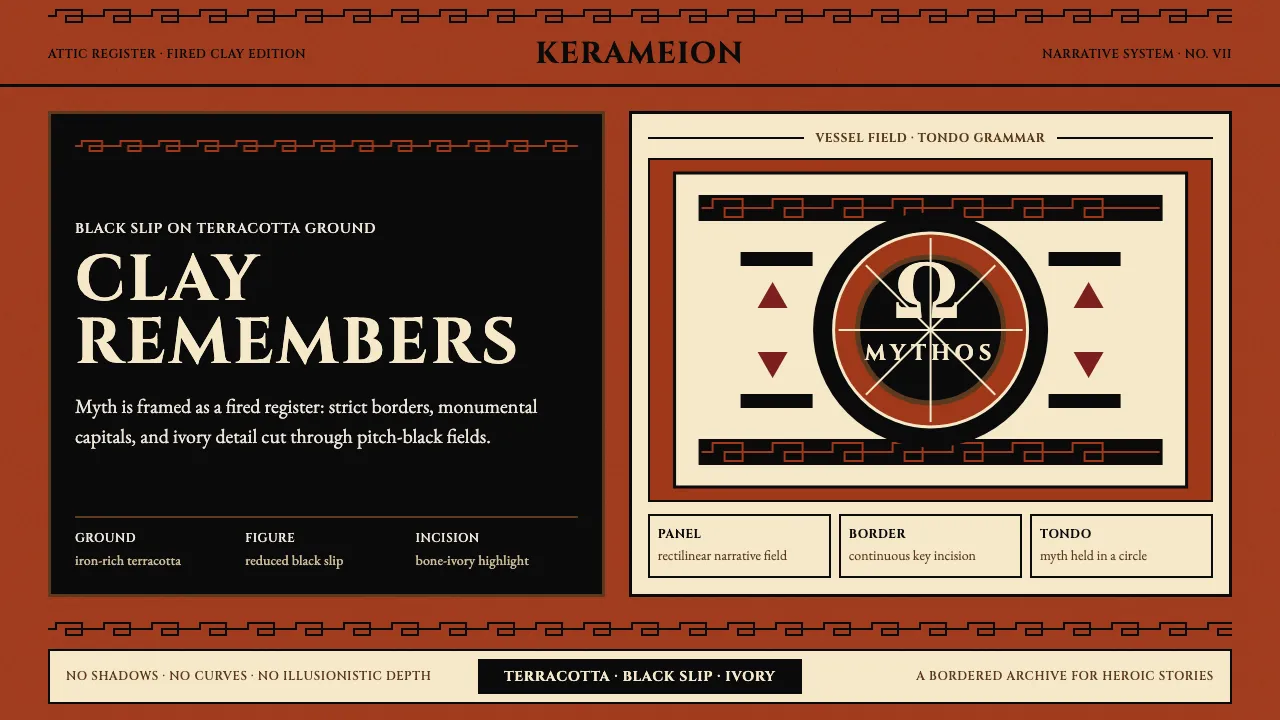
About Greek Antiquity (Attic Vase)
Attic vase painting is the original Western figurative narrative design language — black silhouette figures on fired terracotta clay, framed by Greek-key meander borders, telling myths across amphoras and kylixes for over two thousand years. This system translates the iron-rich orange-red ground, pitch-black slip, and bone-ivory highlights of 6th–4th century BCE Athens into a digital design vocabulary.
Every surface recalls a fired clay vessel: warm terracotta page grounds, sharp rectilinear panels, inscriptional Roman caps descended directly from Greek letterforms, and decorative meander patterns that frame content the way they once framed gods and heroes.
- Origin
- Athens (Attica), Greece
- Era
- 7th c. BCE (Geometric) → 5th–4th c. BCE (Red-figure peak)
- Key figures
- Exekias · Andokides Painter · Euphronios · Berlin Painter
- Movements
- Attic vase painting · Greek classical art · pre-Western-canon image-making
Greek Antiquity (Attic Vase) design spec
Colors
Typography
The other 11 sections — buttons, cards, spacing, motion, techniques and more — open once you unlock. Download the DESIGN.md or send it to your AI in one click. Unlock once, yours forever.
Sign up nowStyles similar to Greek Antiquity (Attic Vase)
Also inspired by art & artists, with a close feel.
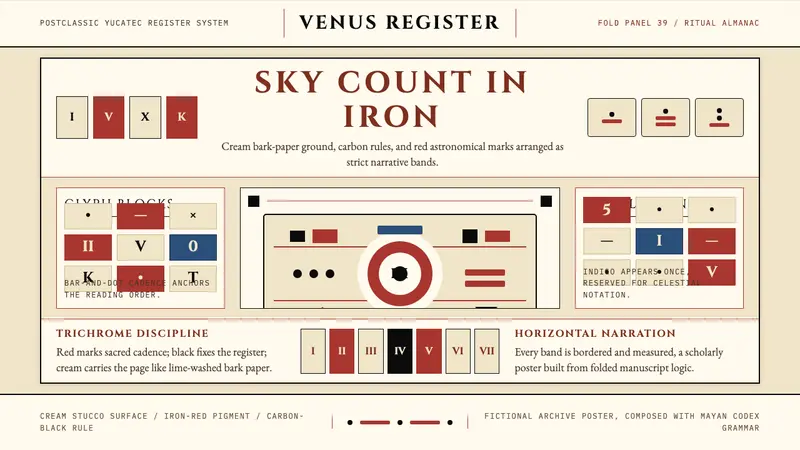 Mayan Dresden CodexSacred astronomy, measured. Cream registers, iron-red glyphs, carbon rules.
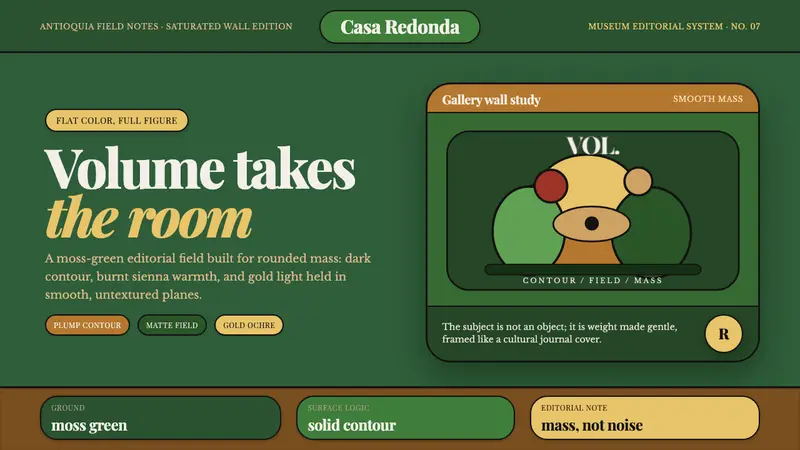 Botero Boterismo VolumeVolume becomes gentle. Moss green fields, dark contours, and gold ochre make mass feel buoyant.
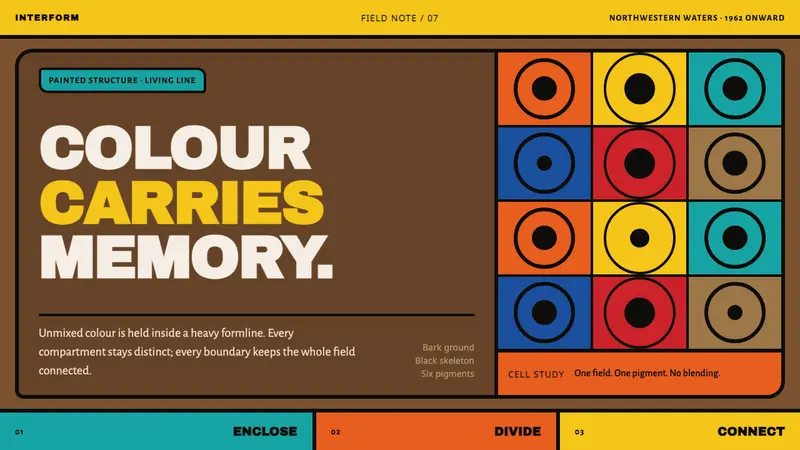 Woodland School — MorrisseauColour carries memory. Unmixed orange, yellow and turquoise lock into heavy black cells.
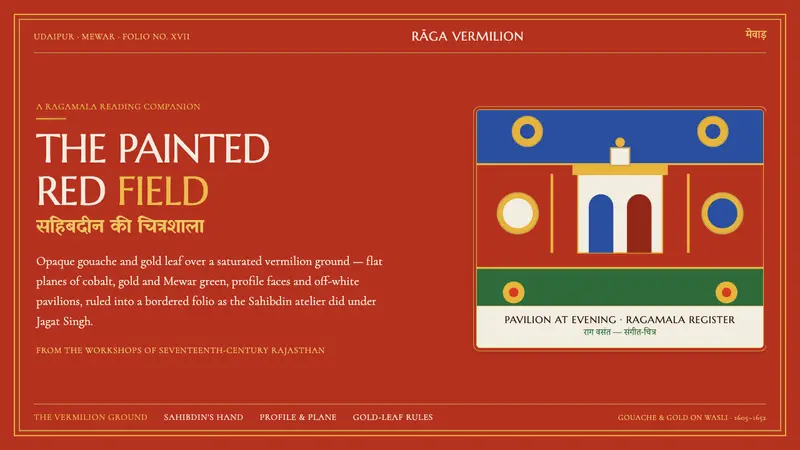 Mewar Rajput MiniatureThe ground is the painting. Vermilion fields, cobalt, gold-leaf rules, profile faces in a folio.