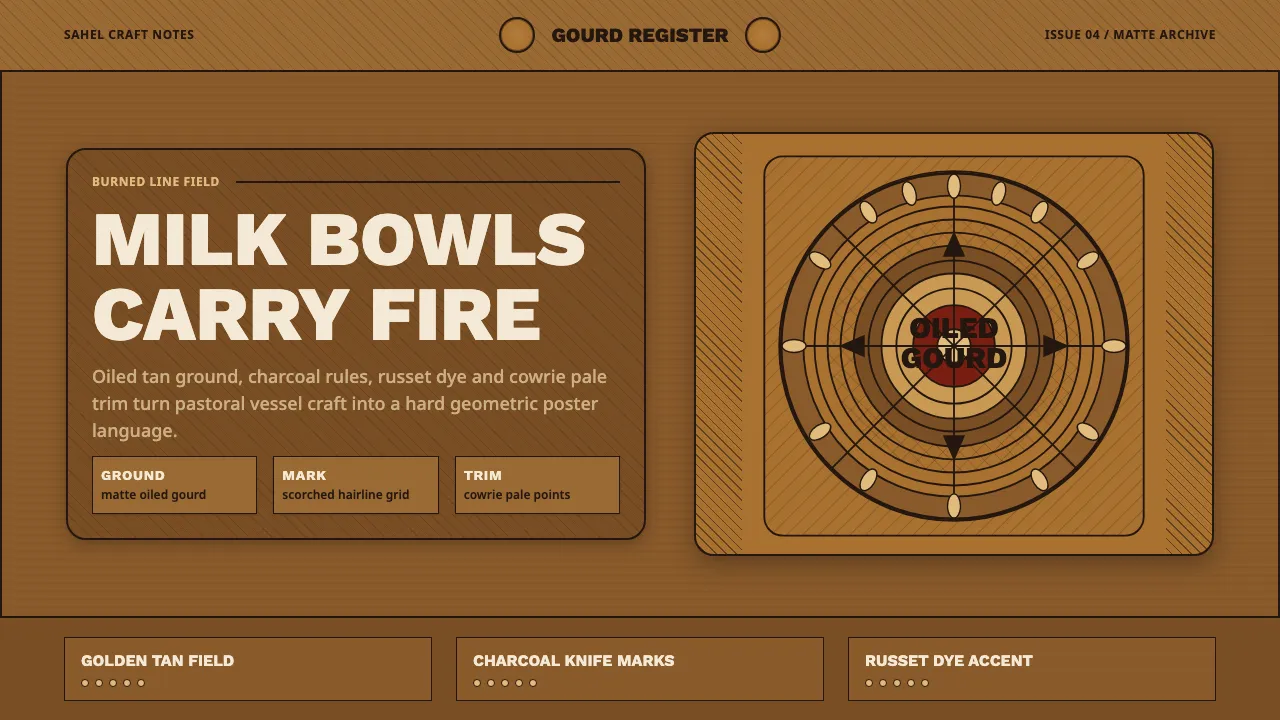
About Fulani Milk Calabash
Across the Sahel, Fulani pastoralist women dry calabash gourds into milk bowls and burn them with fine geometric line patterns using red-hot knives. Years of hand-oiling deepen the golden-tan shell toward a warm matte brown, while the scorched ornament stays charcoal-black for stark contrast — sometimes dyed russet-red and trimmed with cowrie shells.
This system translates that pyrographic craft into an interface: a warm oiled-gourd ground, hard charred line work, and disciplined sans-serif type. Never cream, never glossy — matte gourd grain throughout.
- Origin
- Africa — the Sahel (Fulani / Fulbe pastoralists, northern Nigeria)
- Era
- 1900–1950 (living tradition; documented colonial-era northern Nigeria collections)
- Key figures
- Fulani women decorators · Fulbe milkmaids and herders
- Movements
- West African calabash pyrography · Gourd carving and dyeing
Fulani Milk Calabash design spec
Colors
Typography
The other 11 sections — buttons, cards, spacing, motion, techniques and more — open once you unlock. Download the DESIGN.md or send it to your AI in one click. Unlock once, yours forever.
Sign up nowStyles similar to Fulani Milk Calabash
Also inspired by crafts & folk art, with a close feel.
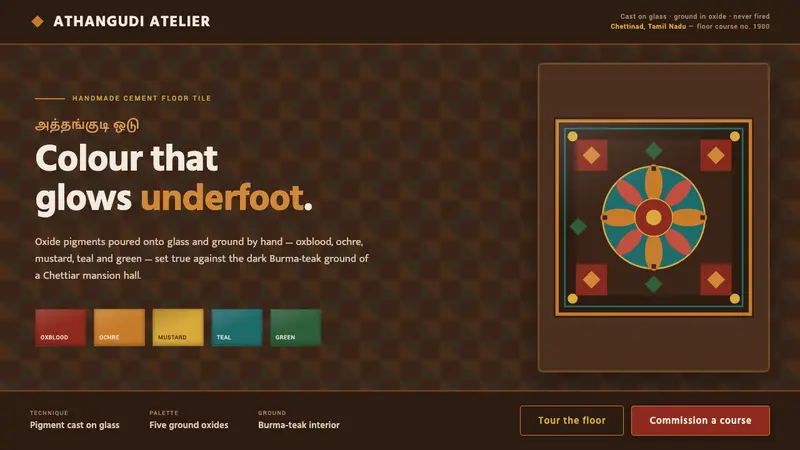 Chettinad Athangudi TilesColour that glows underfoot. Five ground-oxide tones on dark teak in bordered tile-grid medallions.
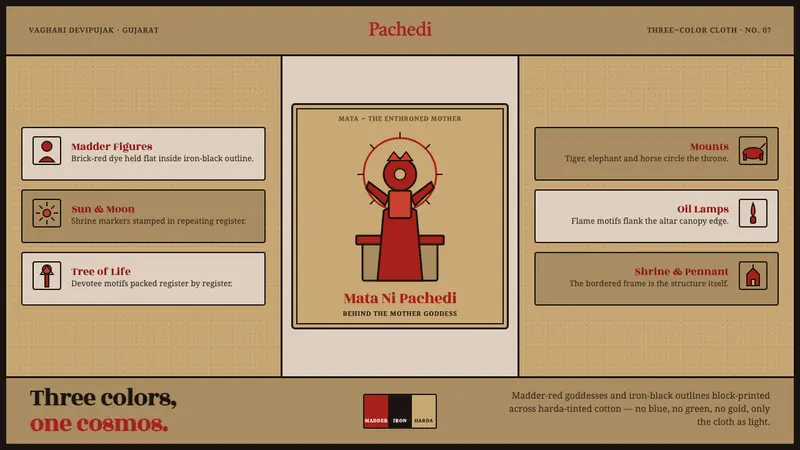 Mata Ni Pachedi Temple ClothThree colors, one cosmos. Madder-red goddesses, iron-black outlines, harda-tinted cotton — no gold.
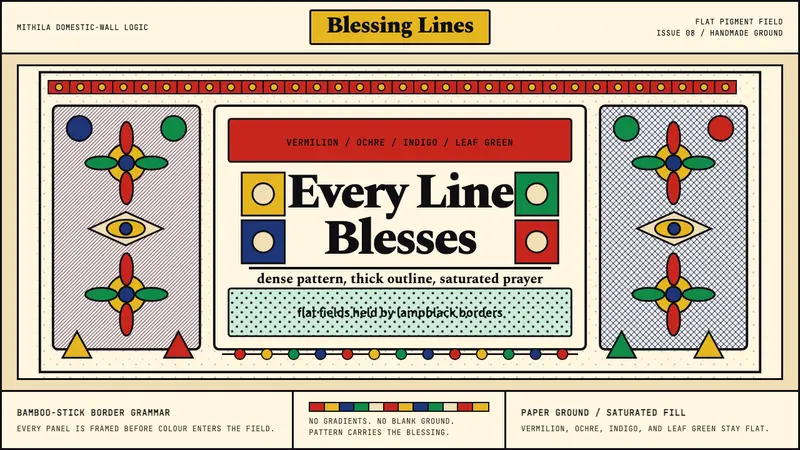 Mithila (Madhubani) PaintingEvery inch is blessed. Lampblack borders lock vermilion, ochre, indigo, and leaf green.
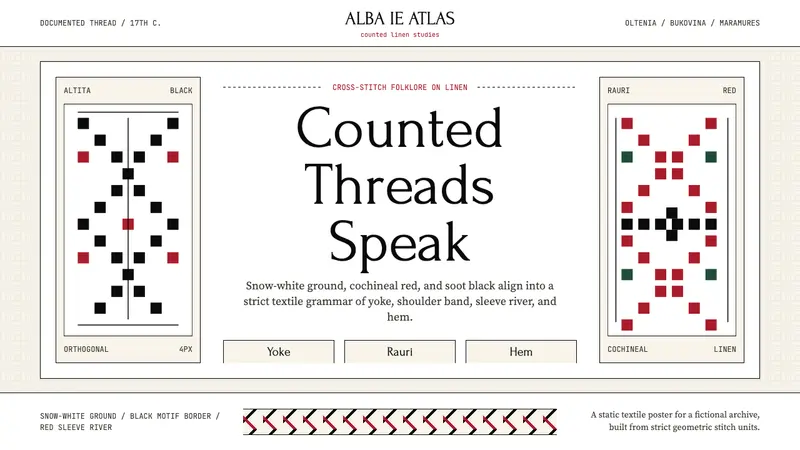 Romanian Ie (folk embroidered blouse)Folklore becomes grid. Cochineal red and soot black stitch strict bands on linen white.