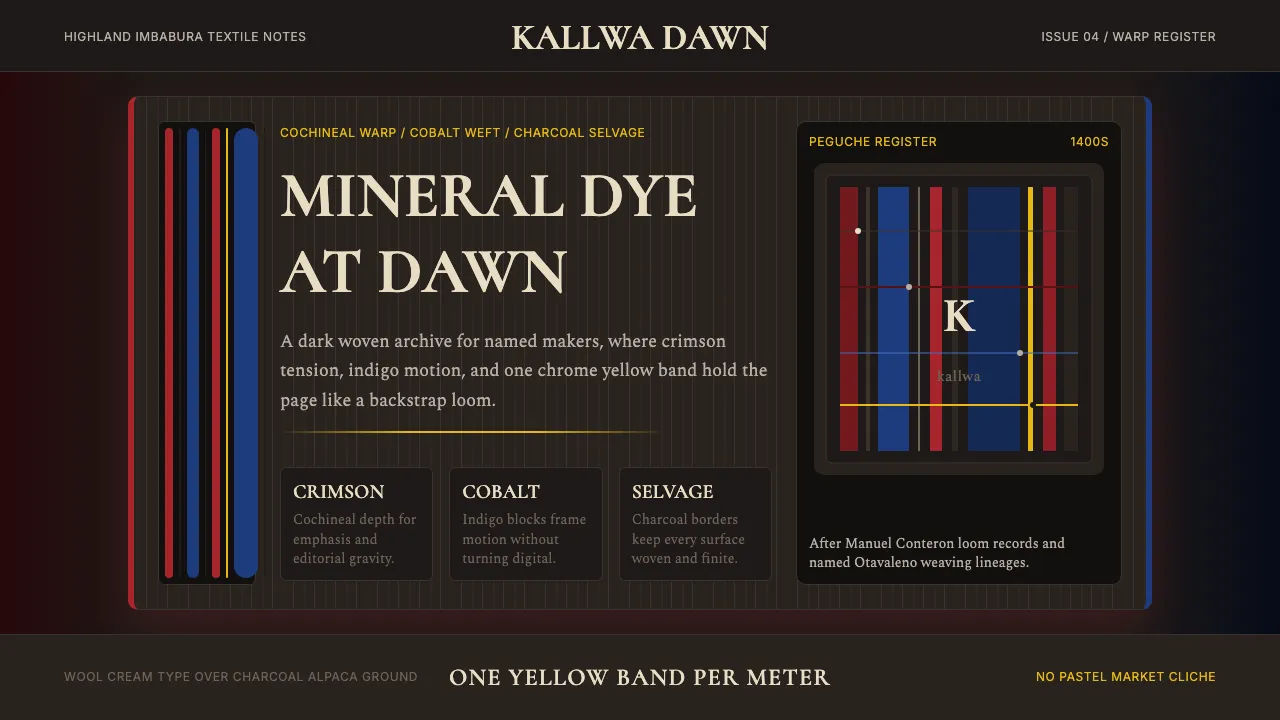
About Ecuadorian Otavalo Cochineal Loom
The Otavaleño weavers of highland Imbabura have sustained a backstrap-loom textile economy since before the Inca conquest, producing cochineal-red chamarras and indigo-cobalt warp-stripe anacos that define one of South America's most enduring indigenous visual traditions. This design system channels the mineral-dye saturation of a Manuel Conterón loom at dawn — cochineal warp tensioned, cobalt weft in motion, charcoal selvage framing a single chrome yellow accent band per meter.
Learn more about the Ecuadorian Otavalo Cochineal Loom style
- Origin
- Otavalo, Imbabura province, northern Andean Ecuador
- Era
- pre-Inca textile continuity (1400s) — Plaza de Ponchos 1964; contemporary boom 1990s–now
- Key figures
- Miguel Andrango · Lynn Meisch · Ariruma Kowii · José Cotacachi
- Movements
- Kichwa-Otavalo cultural revival · Plaza de Ponchos market consolidation · Pachakutik political design
Ecuadorian Otavalo Cochineal Loom design spec
Colors
Typography
The other 11 sections — buttons, cards, spacing, motion, techniques and more — open once you unlock. Download the DESIGN.md or send it to your AI in one click. Unlock once, yours forever.
Sign up nowStyles similar to Ecuadorian Otavalo Cochineal Loom
Also inspired by crafts & folk art, with a close feel.
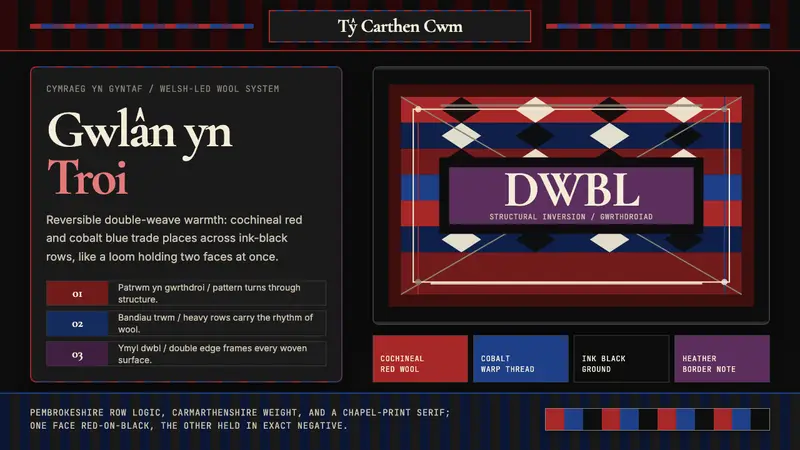 Welsh Tapestry Blanket CarthenWarmth has two faces. Cochineal and cobalt invert across ink-black woven bands.
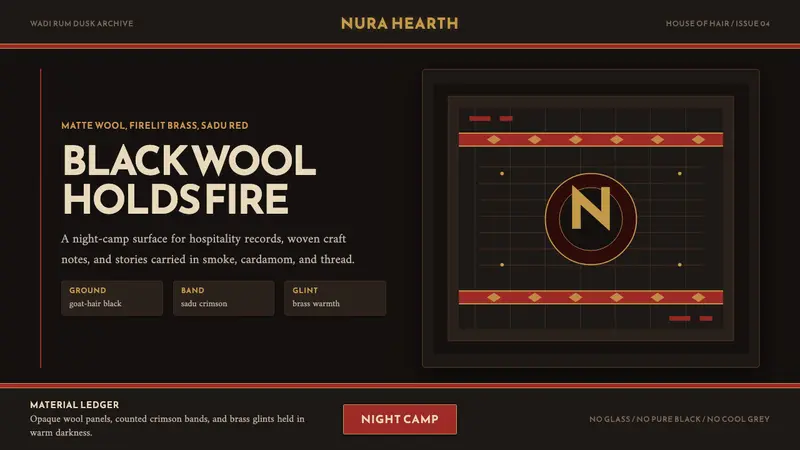 Jordanian Bedouin Black TentNight camp honesty. Goat-hair black, sadu crimson, brass lines.
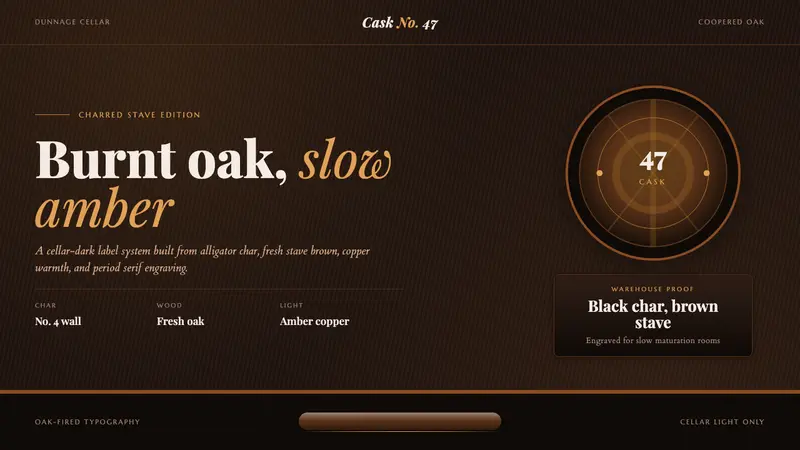 Whisky CooperageBuilt for the long dark. Charred black grounds copper hoops and engraved serif cartouches.
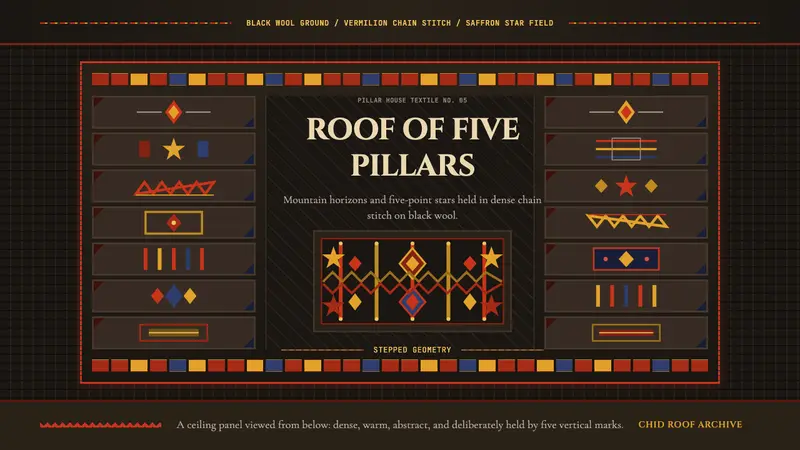 Tajik Pamir Needlework (Chid Roof)Cosmos stitched into wool. Vermilion diamonds and saffron stars hold a five-pillar grid.