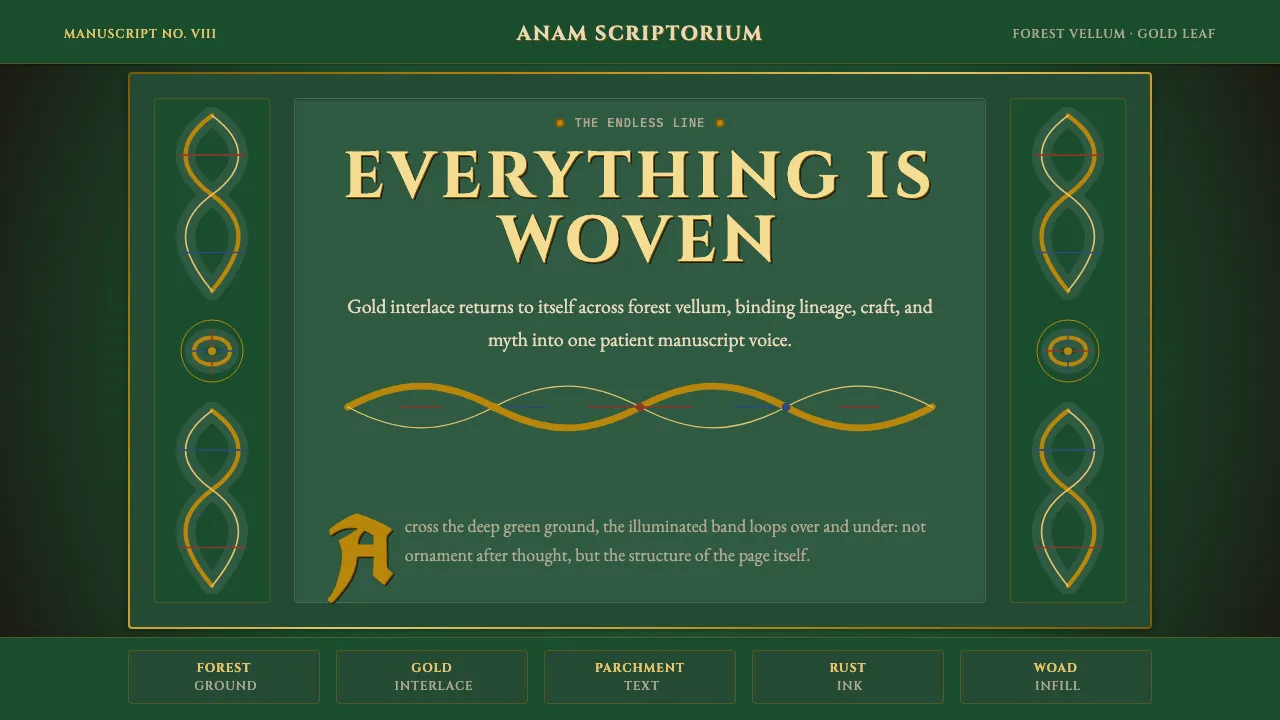
About Celtic Knotwork
Celtic Knotwork distils 1,500 years of Insular art — the endless-line tradition carved in stone crosses and painted in the Book of Kells (c. 800 CE) — into a working design system. Forest-green grounds recall Irish vellum; gold interlacing stands in for the illuminator's leaf; parchment cream carries the text.
Cinzel's carved-stone capitals front EB Garamond body prose, UnifrakturCook supplies illuminated initials, and every divider is a woven band that loops back on itself. Decorative, patient, and unmistakably medieval.
- Origin
- Ireland, Scotland, Northumbria, Wales, Brittany
- Era
- 5th–12th century CE (Insular art peak); Celtic Revival 19th c.; living tradition today
- Key figures
- Iona monks · Lindisfarne monks · George Bain · Muiredach
- Movements
- Insular art · Hiberno-Saxon style · Celtic Revival
Celtic Knotwork design spec
Colors
Typography
The other 11 sections — buttons, cards, spacing, motion, techniques and more — open once you unlock. Download the DESIGN.md or send it to your AI in one click. Unlock once, yours forever.
Sign up nowStyles similar to Celtic Knotwork
Also inspired by crafts & folk art, with a close feel.
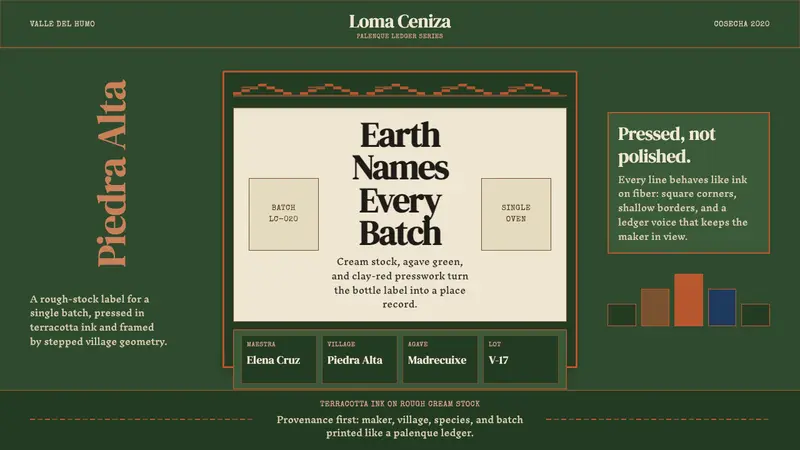 Mexican Mezcal CraftRooted and exact. Agave green, terracotta borders, and DM Serif labels tell the batch.
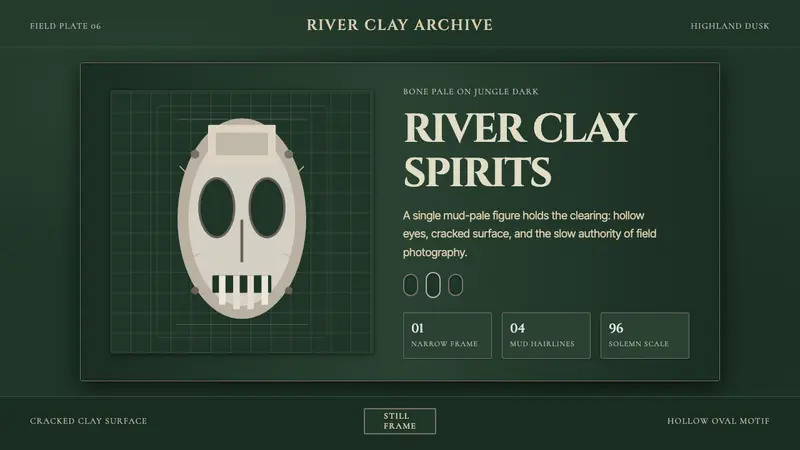 Papuan Asaro MudmenRitual stillness commands the frame. Bone-pale Cinzel rises against jungle-dark borders.
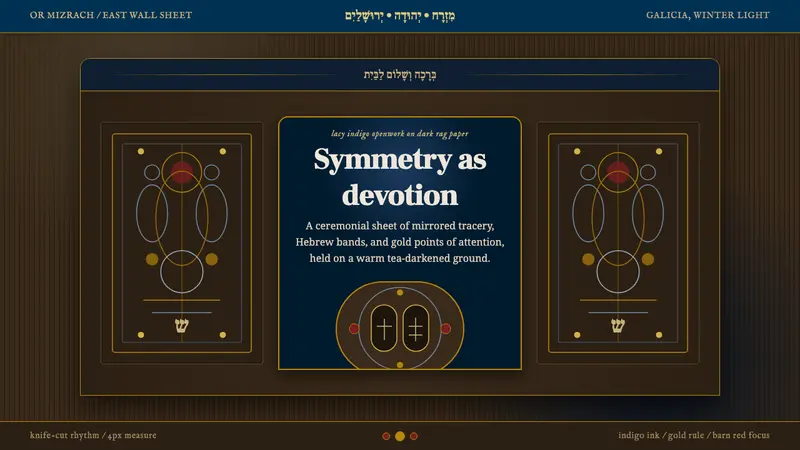 Jewish Papercut MizrahDevotion as openwork. Indigo filigree and Hebrew bands glow on dark rag paper.
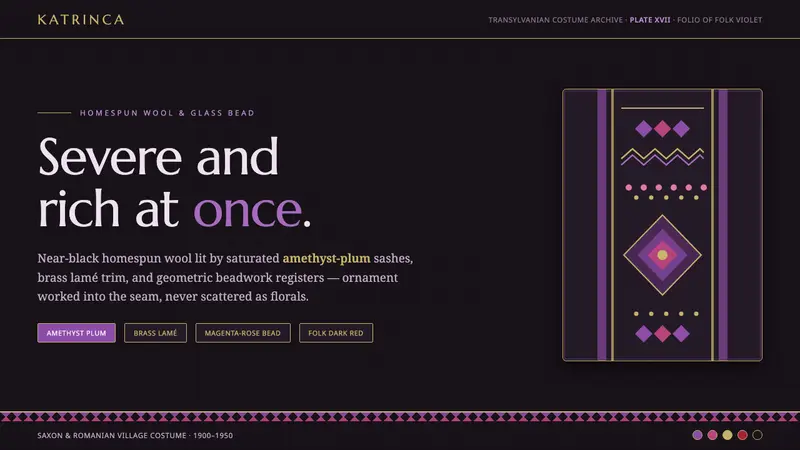 Romanian Folk VioletSevere and rich at once. Near-black homespun wool lit by amethyst-plum and brass beadwork bands.