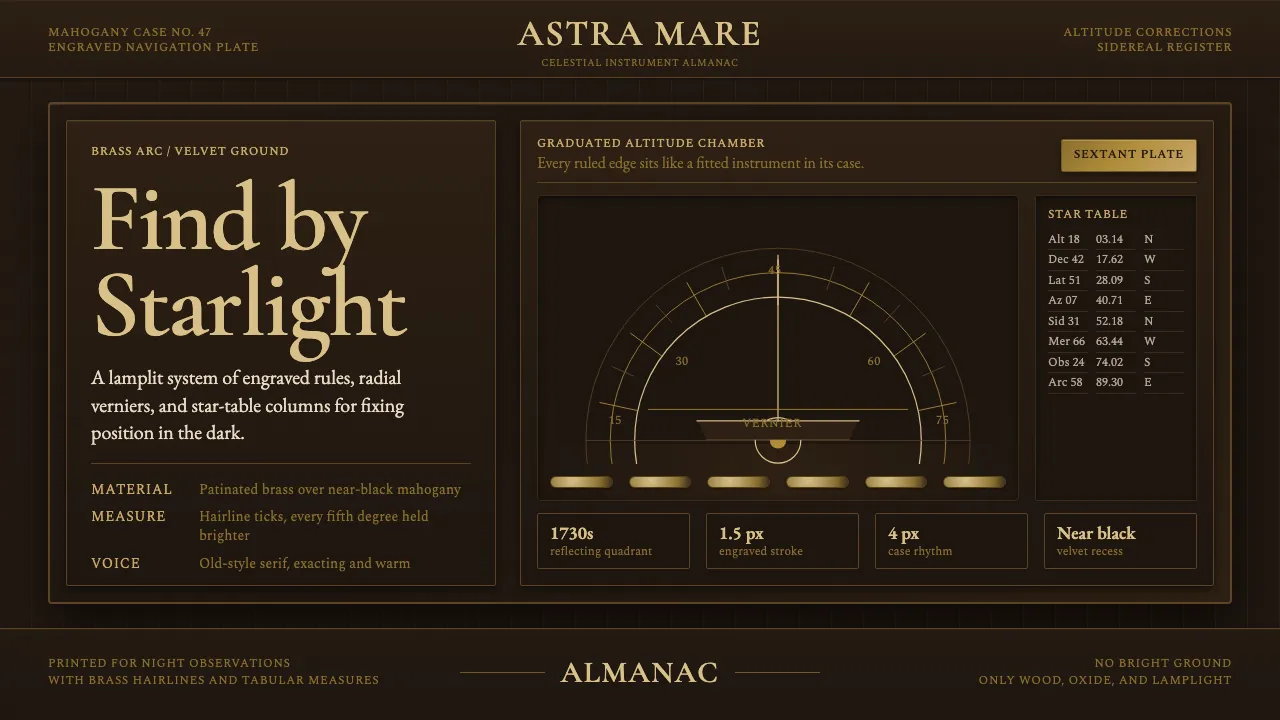
About Sextant Navigation
A pre-1900 marine sextant rendered as an interface: solid brass graduated to a hair's width, seated in a mahogany case lined with near-black velvet. The whole system lives in the warm patina of aged gold catching light against deep wood and shadow.
Every surface is the toolcraft of finding your position by the stars — engraved arc scales, fine angle ticks, radial vernier detail, and the dense star-table columns that the instrument was useless without.
- Origin
- Western Europe (Britain & France — Royal Navy and merchant-marine instrument houses)
- Era
- pre-1900 (reflecting quadrant invented 1730s; sextant in service through the age of sail)
- Key figures
- John Hadley · Thomas Godfrey
- Movements
- scientific-instrument craft · Enlightenment precision optics · maritime celestial navigation
Sextant Navigation design spec
Colors
Background
Surface
Primary
Secondary
Accent
Text
Typography
EB GaramondHeadings
SpectralMono
Unlock for 1 credit
The other 11 sections — buttons, cards, spacing, motion, techniques and more — open once you unlock. Download the DESIGN.md or send it to your AI in one click. Unlock once, yours forever.
Sign up nowHave an account? Sign in
Styles similar to Sextant Navigation
Also inspired by science & nature, with a close feel.
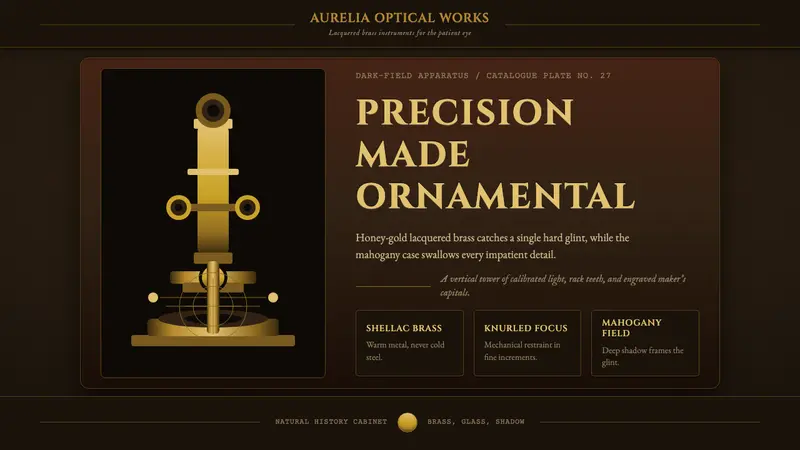 Victorian Brass MicroscopePrecision glows in shadow. Honey brass geometry rises from a mahogany dark-field.
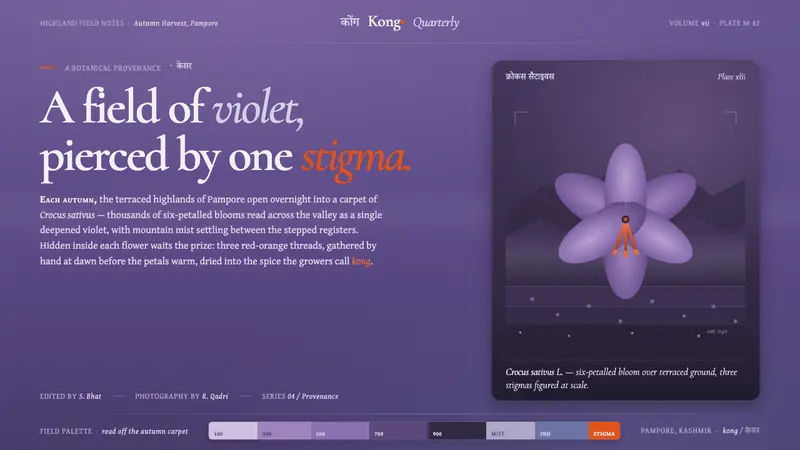 Kashmiri Crocus PurpleAbundance of one hue, scarcity of its complement. Crocus violet under mist, one saffron stigma.
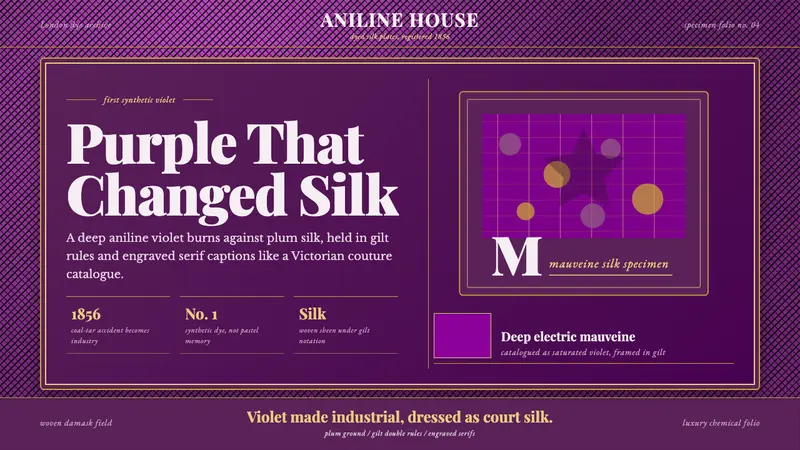 Mauveine (Perkin 1856)Electric purple, framed as luxury. Gilt rules and Playfair serifs turn dye into silk.
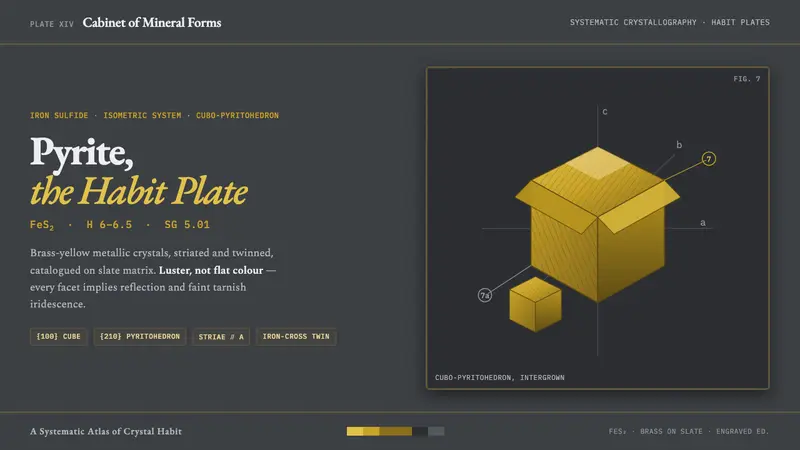 Pyrite Crystal HabitFool's gold under the loupe. Striated brass pyritohedra on slate, serif names, monospaced indices.