About Brazilian Cordel (Northeast Folk Literature)
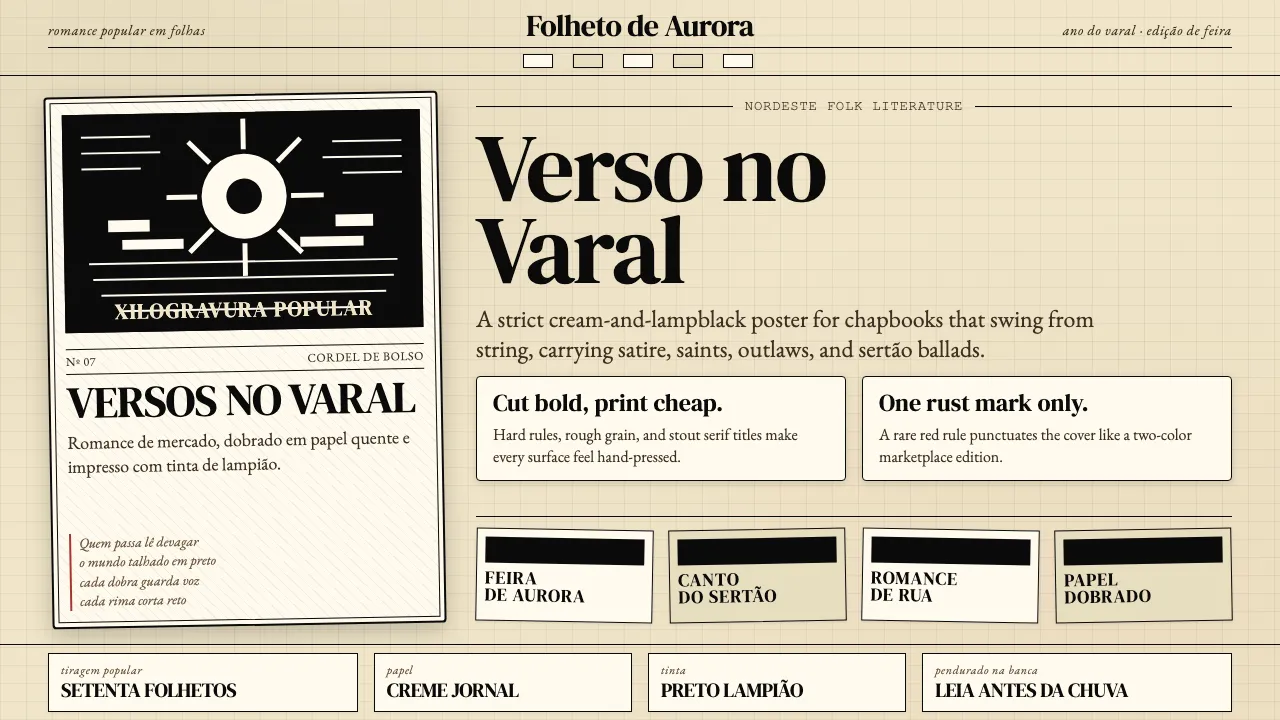
Brazilian Cordel is the Northeast Brazilian woodcut-illustrated chapbook tradition — small folded paper pamphlets of narrative ballads, religious tales, and satirical verse, hung from string ("cordel") at marketplace stalls. Each cover bears a bold black-and-white woodcut of cangaceiro outlaws, sertão landscapes, or saints.
The aesthetic is strict two-tone: lampblack ink on cream newsprint, with the rarest rust-red accent. It is populist-cheap printing by definition — chunky hand-cut woodblock lines, Garamond serifs, folded paper edges. UNESCO recognized it as Intangible Cultural Heritage in 2018.
Learn more about the Brazilian Cordel (Northeast Folk Literature) style
- Origin
- Northeast Brazil (Nordeste) — Pernambuco, Paraíba, Ceará, Bahia, Rio Grande do Norte
- Era
- Portuguese folhetos descent 1500s; Brazilian Cordel flourished 1880s onward; peak 1920s–1970s; UNESCO ICH 2018
- Key figures
- João Martins de Athayde · Leandro Gomes de Barros · J. Borges · Mestre Noza
- Movements
- Latin American chapbook tradition · Brazilian Northeast folk literature · Folk-art canonization
Brazilian Cordel (Northeast Folk Literature) design spec
Colors
Typography
The other 11 sections — buttons, cards, spacing, motion, techniques and more — open once you unlock. Download the DESIGN.md or send it to your AI in one click. Unlock once, yours forever.
Sign up nowStyles similar to Brazilian Cordel (Northeast Folk Literature)
Also inspired by crafts & folk art, with a close feel.
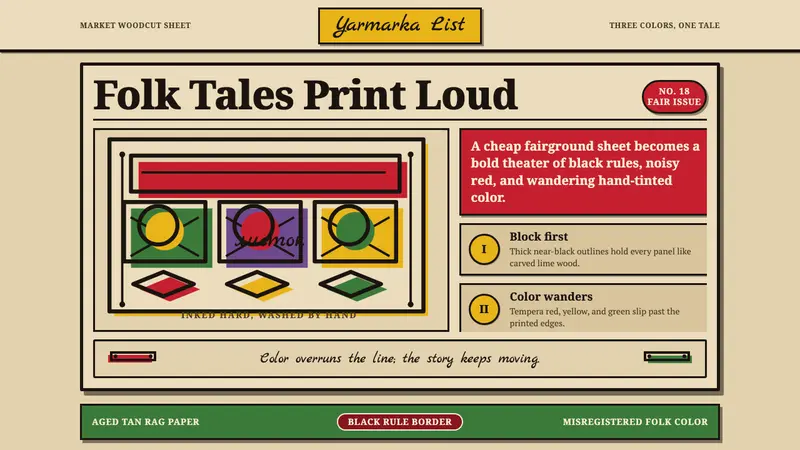 Russian LubokFolk print sings. Tan rag paper, black woodcut rules, red and green fills misregister.
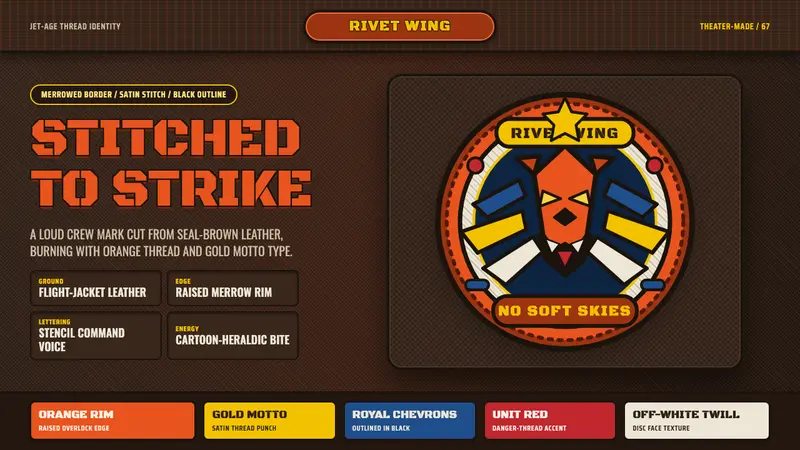 Squadron PatchStitched swagger. Orange merrow rims and stencil type burn over seal-brown leather.
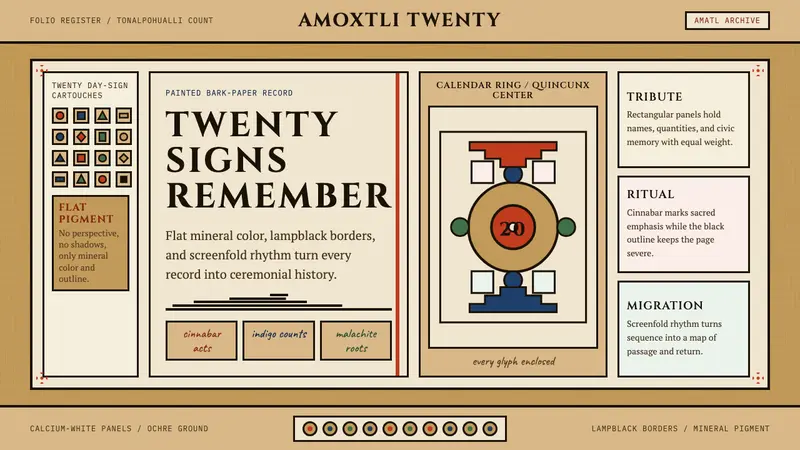 Aztec CodexSacred records stay severe. Ochre amatl ground, Cinzel capitals, black cartouches.
 Niuean HiapoEvery line keeps its maker. Dark plant ink fills smoky barkcloth in hand-ruled fields.