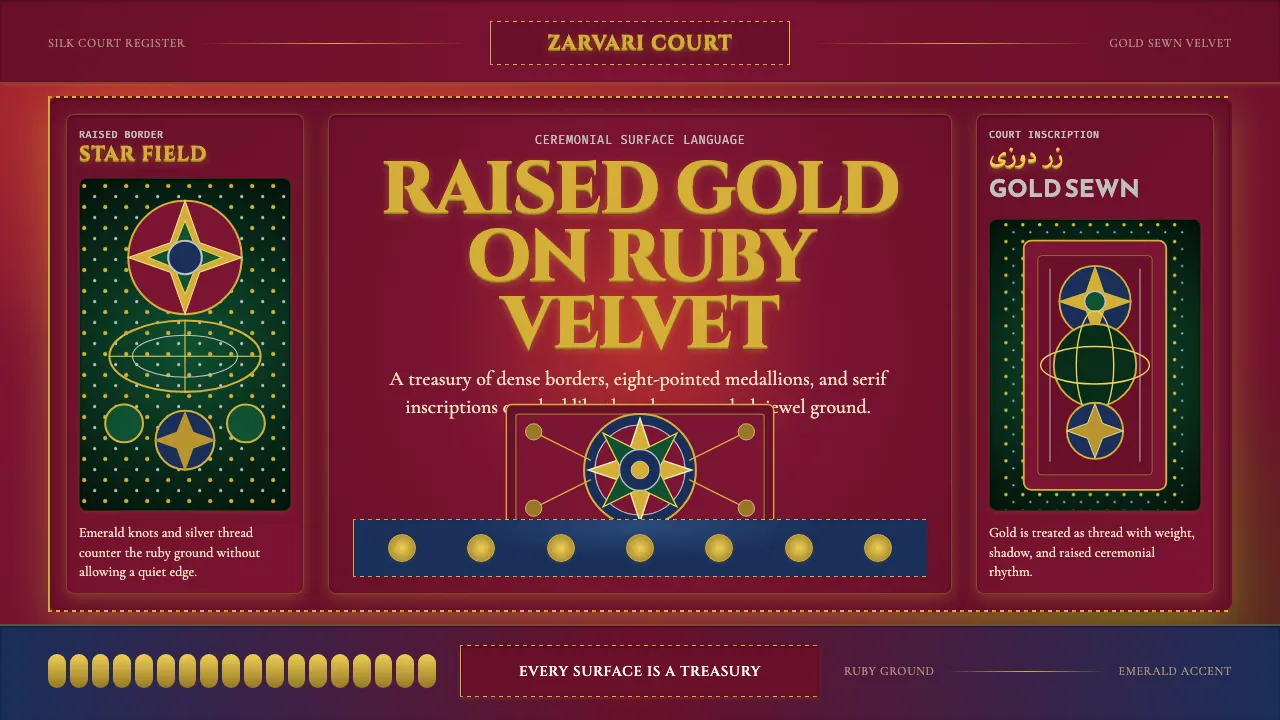
About Uzbek Bukhara Gold Zardozi
Zardozi — literally "gold-sewing" in Persian — is the centuries-old embroidery tradition of Bukhara, the Silk Road oasis where gold wire was couched onto ruby velvet for the courts of the Khans. This design system channels the horror-vacui density and jewel-palette richness of those ceremonial chapan robes, translating raised gold-thread arabesques, eight-pointed star medallions, and silk-fringe borders into a digital surface language.
Every surface is treated as a treasury: deep ruby grounds, emerald and indigo accents, and gold-thread type that catches the light. The system favours ornament over space, density over restraint, and the slow hand of craft over the speed of machine.
- Origin
- Bukhara, Uzbekistan
- Era
- 16th century origin (Timurid); peak Emirate of Bukhara 1785–1920; revival post-1991
- Key figures
- Emir Muzaffaruddin · Said Alim Khan · Ismatilla Khazratov · Sergey Prokudin-Gorsky
- Movements
- Bukharan zardozi · Central Asian Silk Road embroidery · Timurid-Persian decorative arts
Uzbek Bukhara Gold Zardozi design spec
Colors
Typography
The other 11 sections — buttons, cards, spacing, motion, techniques and more — open once you unlock. Download the DESIGN.md or send it to your AI in one click. Unlock once, yours forever.
Sign up nowStyles similar to Uzbek Bukhara Gold Zardozi
Also inspired by crafts & folk art, with a close feel.
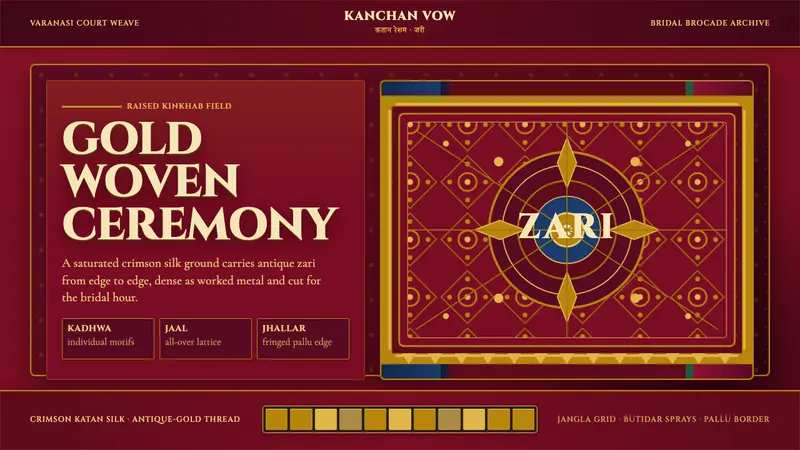 Banarasi Brocade SareeBridal maximalism, woven dense. Crimson silk grid carries raised antique-gold zari.
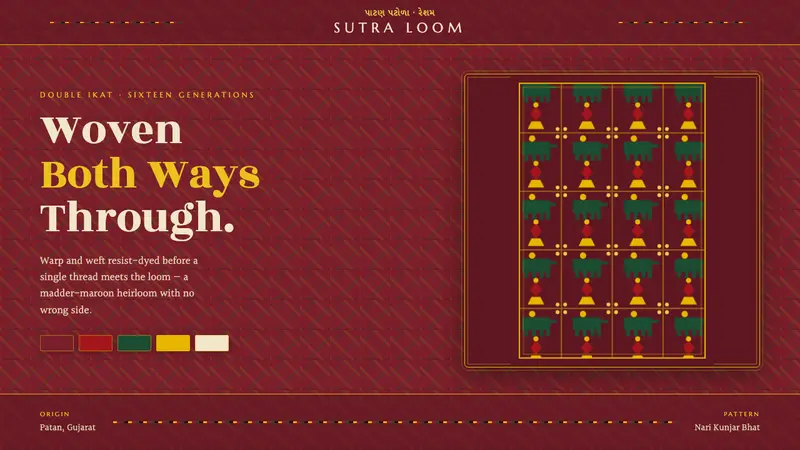 Patan Patola Double IkatReversible by design. Madder-maroon ground, a strict red-green-gold lattice, feathered ikat edges.
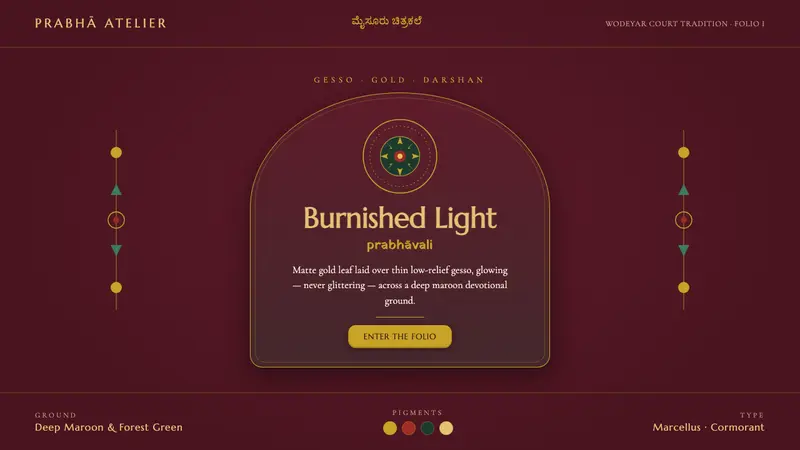 Mysore Gesso Gold PaintingGold that glows, never glitters. Matte burnished leaf over gesso on deep maroon devotional grounds.
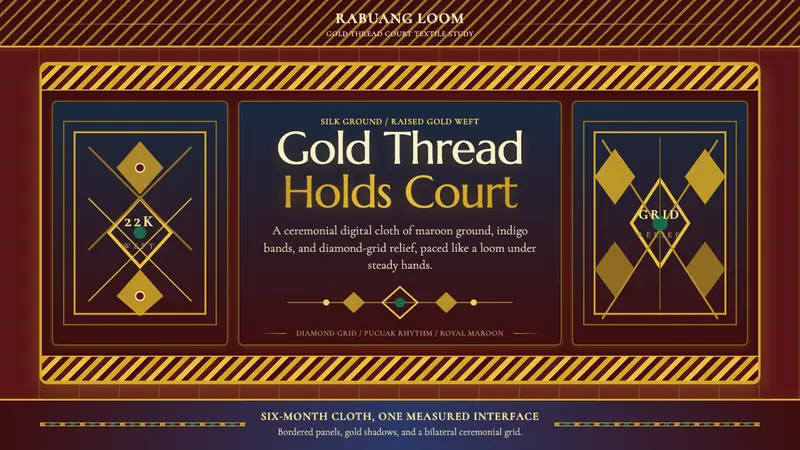 Sumatran Songket (Pandai Sikek)Courtly weight glows. Maroon silk, Cormorant small caps, and gold diamond grids.