About Sol LeWitt Conceptual
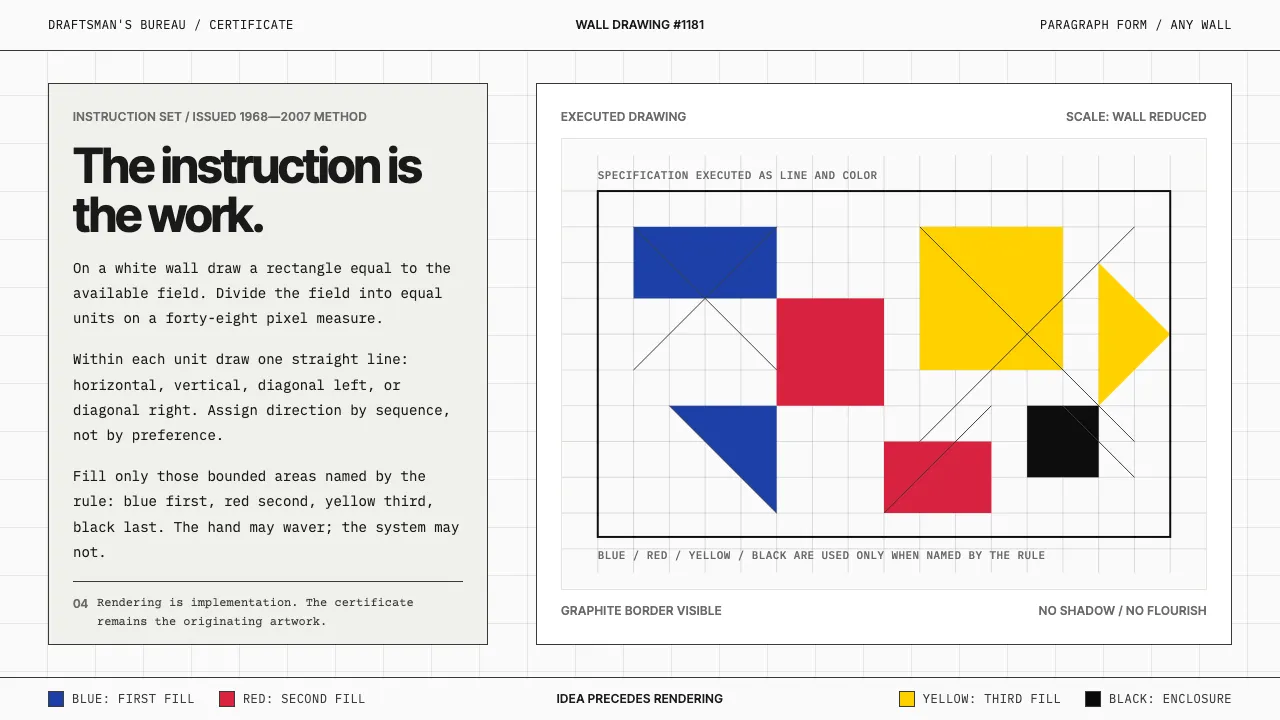
Sol LeWitt's conceptual practice (1968–2007) treats the written instruction set as the artwork itself — the executed wall drawing is merely a performance of the spec. Certificates of paragraph-form directives, typewritten on white, delegate execution to any draftsman willing to follow the rules.
The visual grammar is gallery-wall white, graphite pencil lines that waver under human hand, and the four prescribed colors — red, yellow, blue, black — deployed only when the system commands. Rendering is implementation; the concept is the art.
- Origin
- New York City & Hartford, Connecticut, USA
- Era
- 1967 'Paragraphs on Conceptual Art' → 2007; current reference ~1968–2007
- Key figures
- Sol LeWitt · Lawrence Weiner · Mel Bochner · Eva Hesse
- Movements
- Conceptual Art · Minimalism · Instruction Art
Sol LeWitt Conceptual design spec
Colors
Typography
The other 11 sections — buttons, cards, spacing, motion, techniques and more — open once you unlock. Download the DESIGN.md or send it to your AI in one click. Unlock once, yours forever.
Sign up nowStyles similar to Sol LeWitt Conceptual
Also inspired by art & artists, with a close feel.
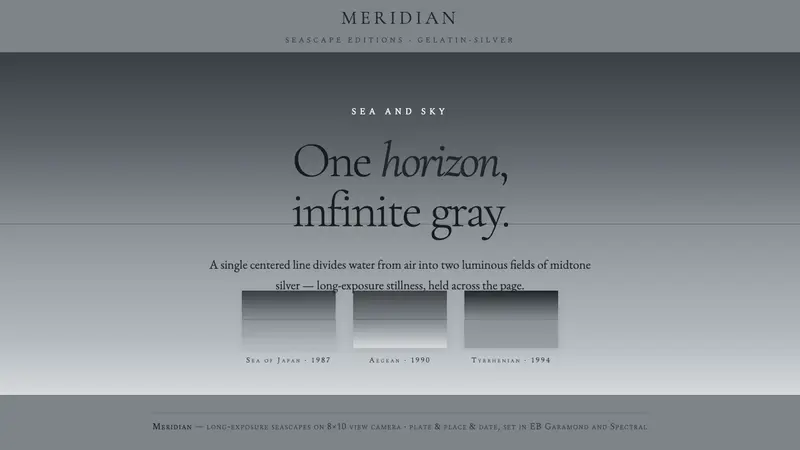 Sugimoto SeascapesTime, held still. A centered hairline horizon splits luminous neutral gray into sea and sky.
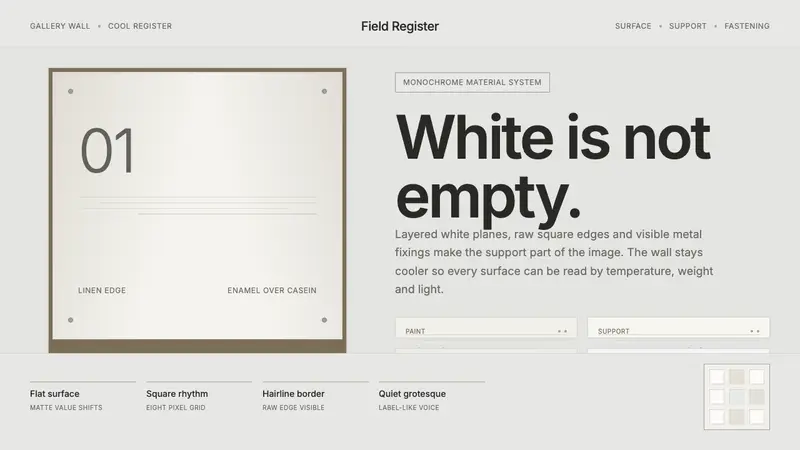 Robert Ryman White PaintingWhite becomes material. Cool grey wall, raw edges and metal fasteners expose each layer.
 Alvaro Siza WhiteLight makes the form. White planes on cool plaster throw sea-grey shadow and one wood note.
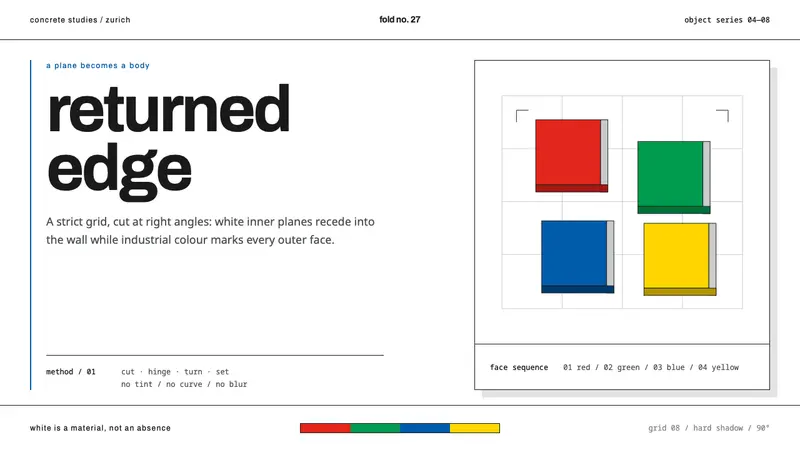 Nelly Rudin ConcreteFlat planes gain force. Archivo grids stage four industrial colours with hard returned edges.