About Safavid Isfahan
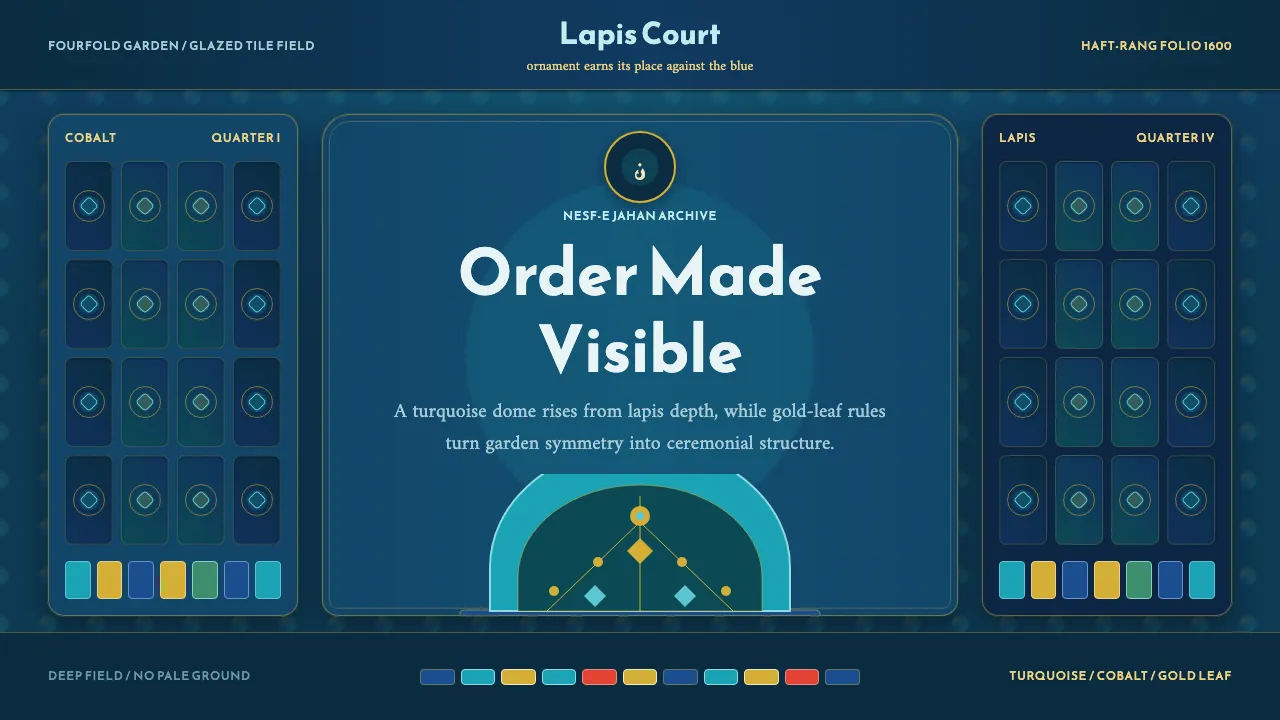
Safavid Isfahan is the visual language of Shah Abbas I's capital around 1600, when contemporaries declared "Isfahan is half the world." It reads as a turquoise dome on a deep lapis field: a glazed turquoise-cyan against documented cobalt and ultramarine, laced with gold-leaf arabesque.
The system carries the refinement of Persian miniature painting and haft-rang tilework — fourfold garden symmetry, arched iwans, and tessellating arabesque. It is jewel-toned and dark throughout, never cream or gold-grounded: ornament earns its place against the deep blue field.
- Origin
- Isfahan, Persia/Iran
- Era
- pre-1900 (Safavid, peak under Shah Abbas I, r. 1588–1629)
- Key figures
- Shah Abbas I · Reza Abbasi
- Movements
- Safavid art · Persian miniature painting · Isfahani haft-rang tilework
Safavid Isfahan design spec
Colors
Typography
The other 11 sections — buttons, cards, spacing, motion, techniques and more — open once you unlock. Download the DESIGN.md or send it to your AI in one click. Unlock once, yours forever.
Sign up nowStyles similar to Safavid Isfahan
Also inspired by art & artists, with a close feel.
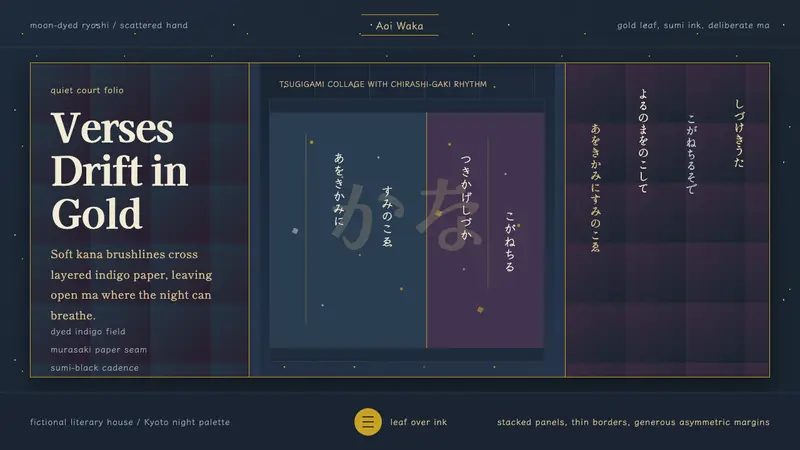 Kana Waka CalligraphyQuiet luxury in ink. Indigo ryoshi, Kaisei serif, scattered kana, and gold flecks.
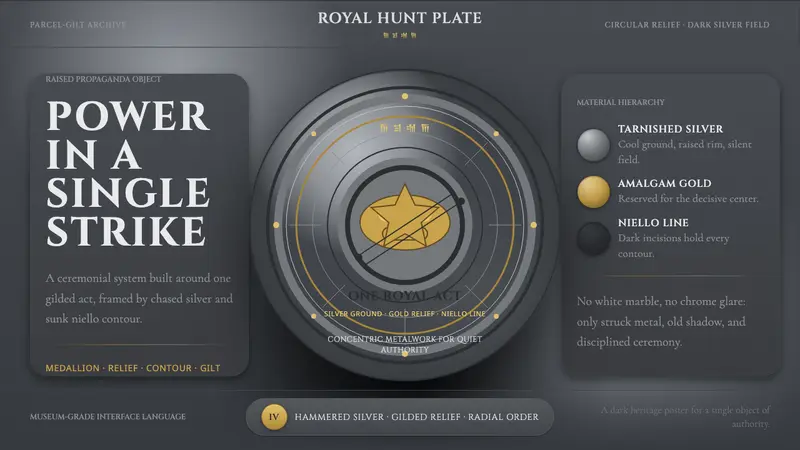 Sasanian Silver PlateRegal metal, held in silence. Tarnished silver frames one restrained gold relief.
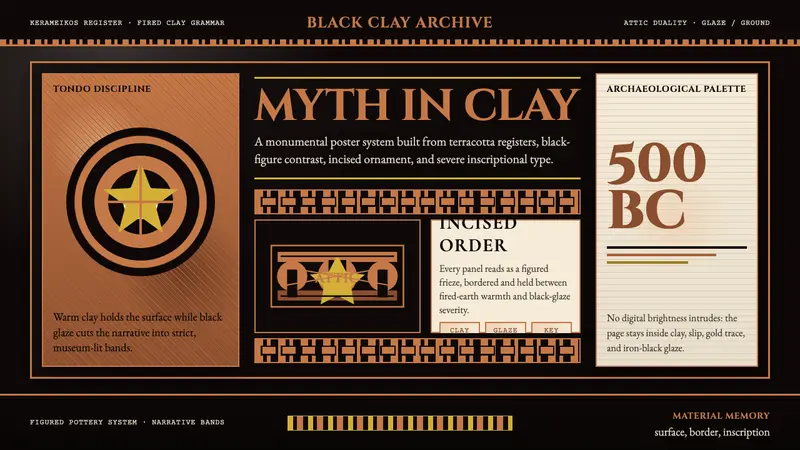 Greek Vase Attic (500 BC)Archaeological severity. Jet-black glaze, terracotta bands, and meander borders frame the page.
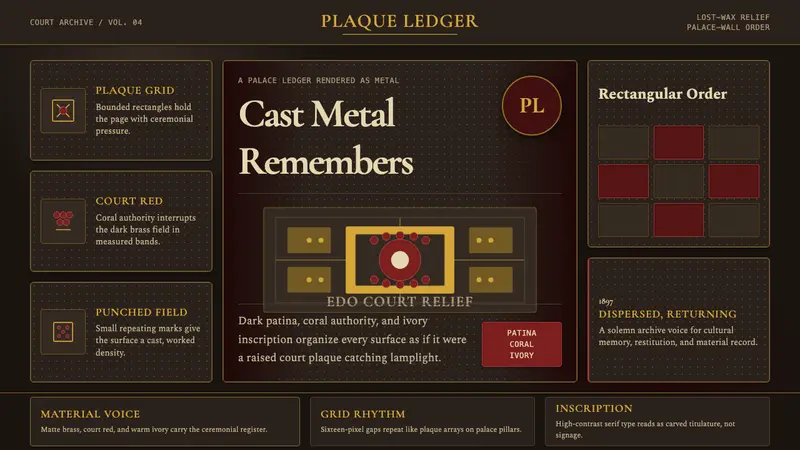 Benin Bronze Oba CourtCourt gravity in cast metal. Patinated brass grid, coral red panels, ivory serif relief.