About Rolling Stone Magazine
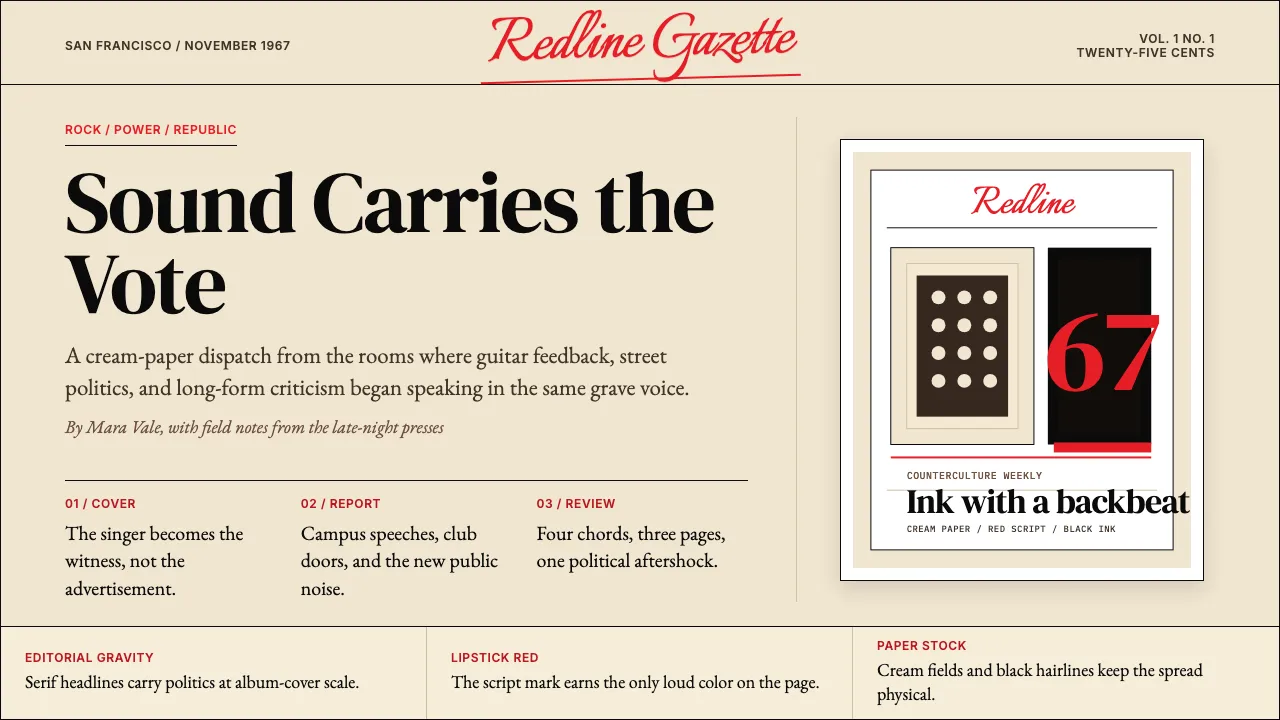
Rolling Stone was born in a San Francisco loft in November 1967, founded by Jann Wenner and Ralph J. Gleason to take rock-and-politics seriously while the rest of the press still treated it as teenage noise. The lipstick-script red wordmark, the warm cream paper stock, and Annie Leibovitz's photographic covers became a singular visual language for American counterculture.
The system here translates that magazine into screen: cream-paper backgrounds, saturated lipstick-script-red wordmark, deep-black serif body, and the gravity of editorial heritage rather than music-magazine cliché.
- Origin
- San Francisco / New York, USA
- Era
- founded November 1967; current visual continuum 1967–2024
- Key figures
- Jann Wenner · Ralph J. Gleason · Annie Leibovitz · Hunter S. Thompson
- Movements
- counterculture rock journalism · gonzo journalism · Leibovitz photographic portraiture
Rolling Stone Magazine design spec
Colors
Typography
The other 11 sections — buttons, cards, spacing, motion, techniques and more — open once you unlock. Download the DESIGN.md or send it to your AI in one click. Unlock once, yours forever.
Sign up nowStyles similar to Rolling Stone Magazine
Also inspired by brands & products, with a close feel.
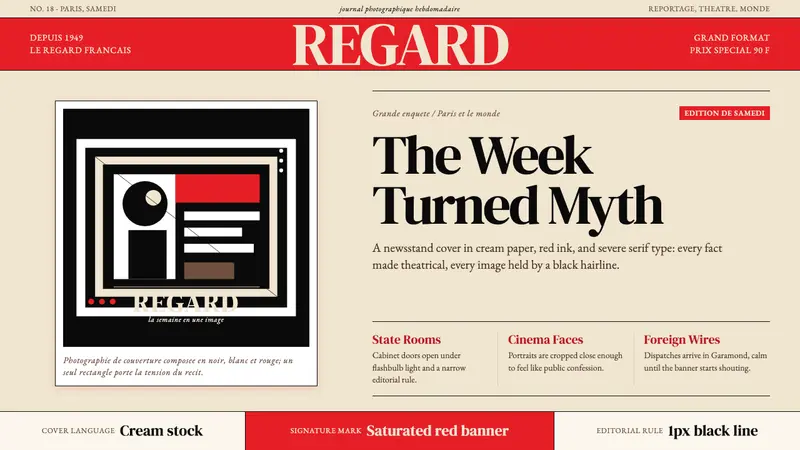 Paris MatchThe cover shouts in one red slab. Cream paper, serif headlines, and black rules stage drama.
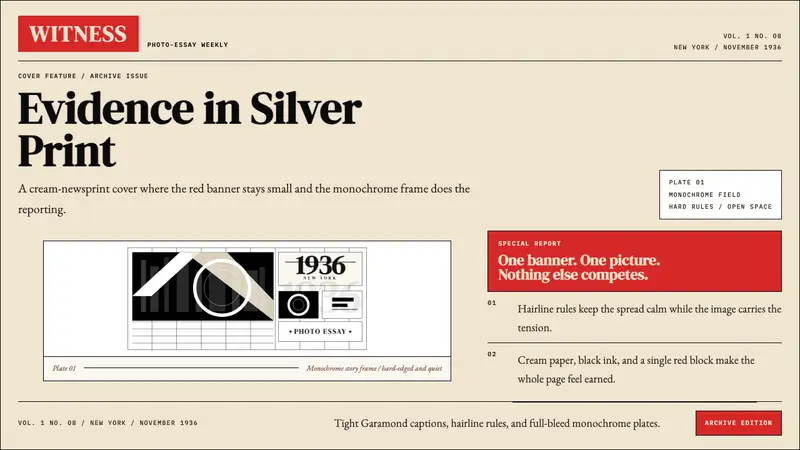 LIFE Magazine (Red-Banner)Photojournalism stripped bare. One red banner, cream newsprint, stark black plates.
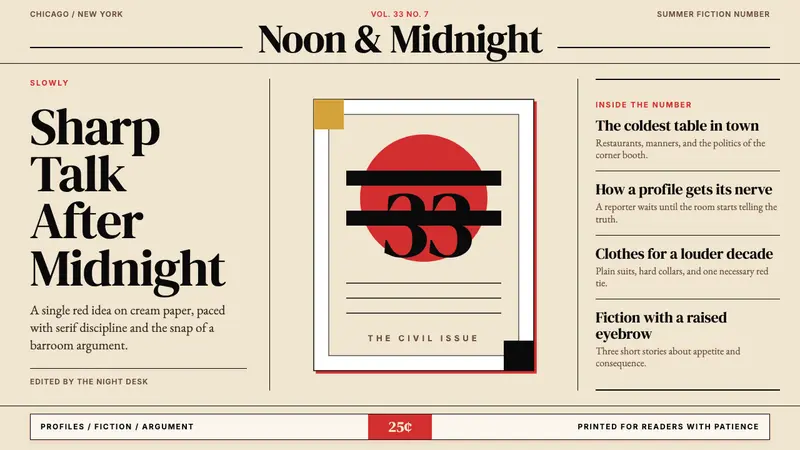 Esquire MagazineConceptual punch on paper. Cream stock, black hairlines, and one saturated red idea.
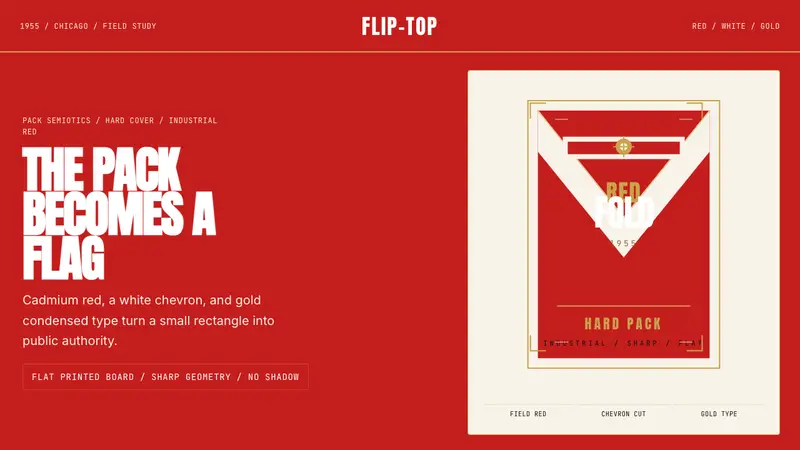 Marlboro Red Flip-Top (1955)Authority in one fold. Cadmium red, white chevron, and gold type read like a flag.