About Peruvian Quechua Keros (Andean Cup)
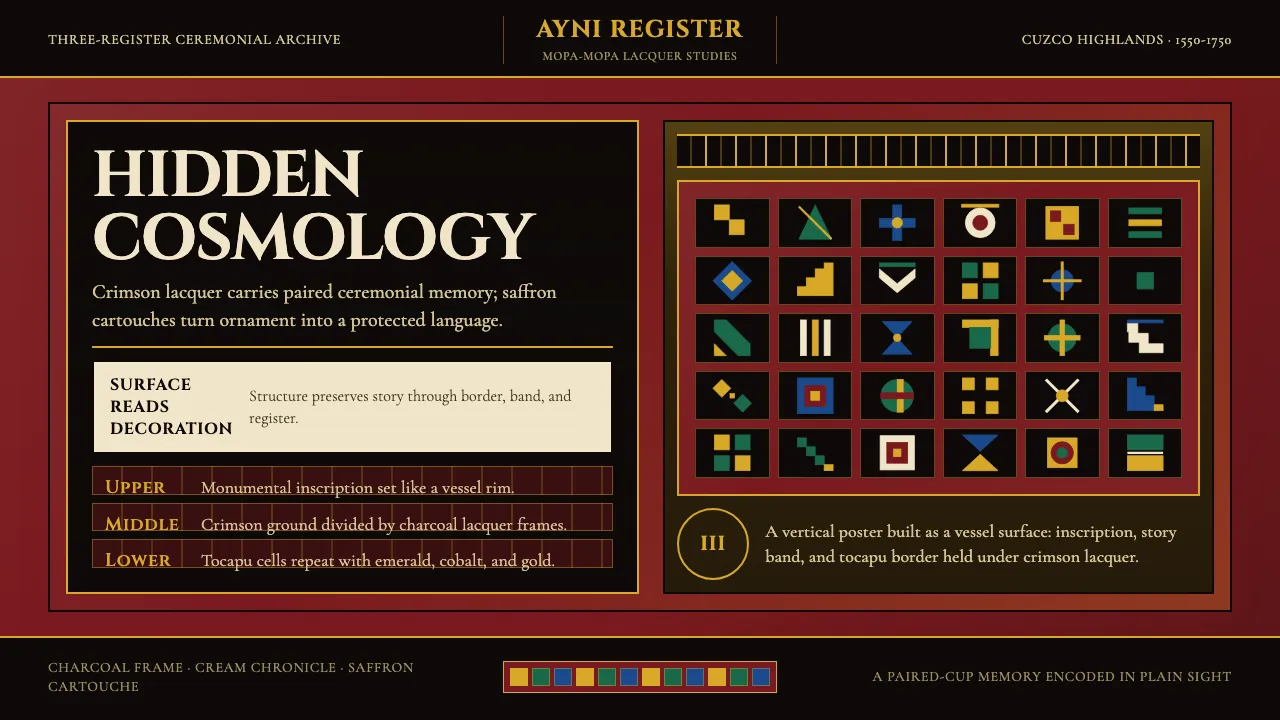
Quechua keros are wooden ceremonial chicha-beer cups whose painted surfaces preserved Inca cosmology under Spanish colonial rule. Between 1550 and 1750, anonymous Quechua artisans inlaid these vessels with mopa-mopa resin paint — crimson grounds, emerald figure-fills, saffron-gold geometric tocapu bands — encoding puma, condor, and Inca-noble processions that colonial authorities read as mere decoration.
This design system draws from the kero's three-register composition, its saturated lacquer palette, and the tension between hidden meaning and surface ornament. Deep crimson dominates like the lacquered cup-ground; charcoal-black anchors; saffron gold traces the geometric tocapu cartouches that border every surface.
Learn more about the Peruvian Quechua Keros (Andean Cup) style
- Origin
- Peru (Cuzco, Apurímac, Puno highlands), Bolivia (La Paz, Lake Titicaca)
- Era
- Inca-era pre-1532; painted colonial keros 1550–1750; museum era 19th c.–present
- Key figures
- Joanne Pillsbury · Lisa Trever · Tom Cummins · Verena Liebscher
- Movements
- Inca ceremonial drinking tradition · colonial mopa-mopa resin painting · post-conquest Andean syncretic iconography
Peruvian Quechua Keros (Andean Cup) design spec
Colors
Typography
The other 11 sections — buttons, cards, spacing, motion, techniques and more — open once you unlock. Download the DESIGN.md or send it to your AI in one click. Unlock once, yours forever.
Sign up nowStyles similar to Peruvian Quechua Keros (Andean Cup)
Also inspired by crafts & folk art, with a close feel.
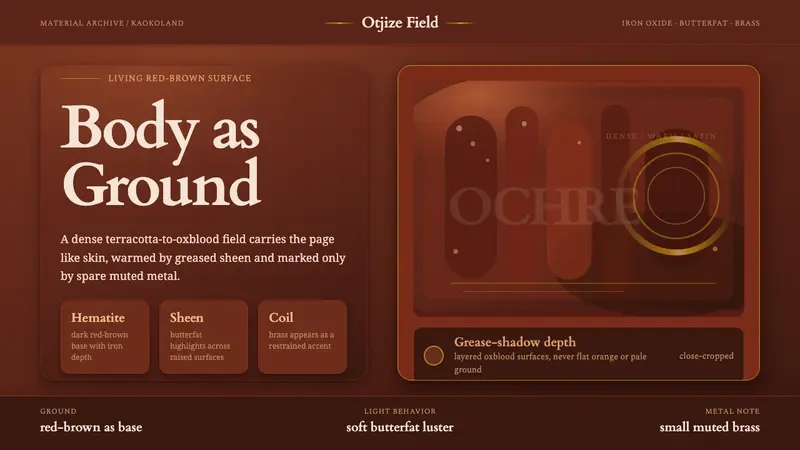 Himba Otjize Ochre NamibiaDense and ritual-warm. Oxblood ground, butterfat sheen, and sparse brass coils.
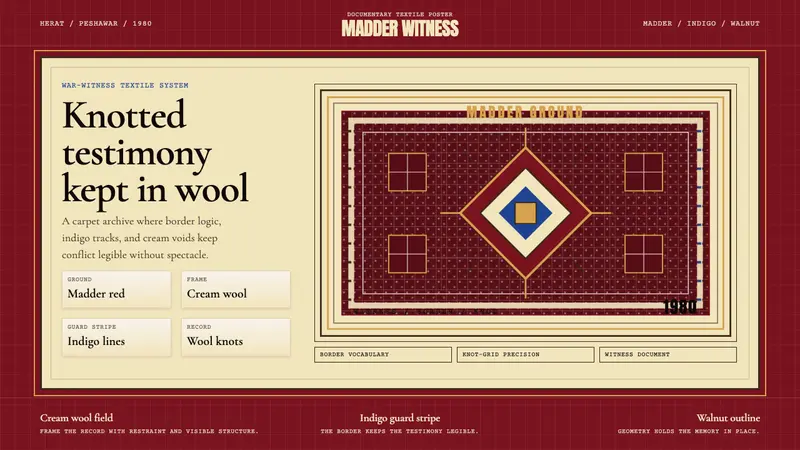 Afghan War Rug (1980)Witness in wool. Madder red, indigo, and cream borders knot testimony into a grid.
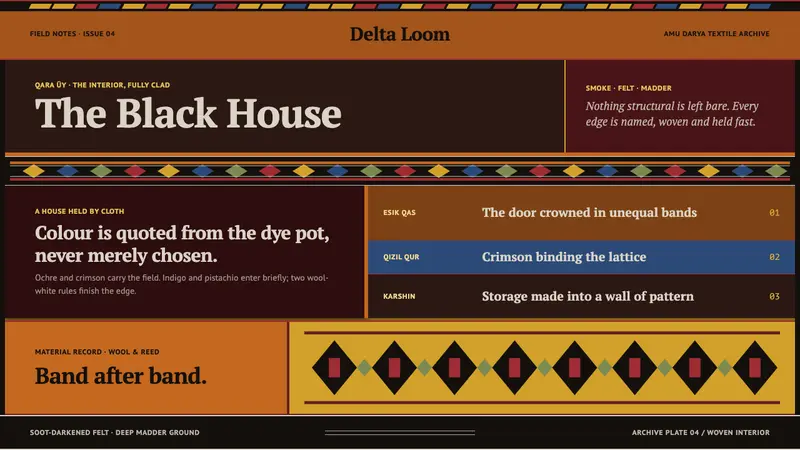 Karakalpak Yurt InteriorNo surface is left bare. Ochre, crimson and indigo bands wrap a smoke-darkened madder field.
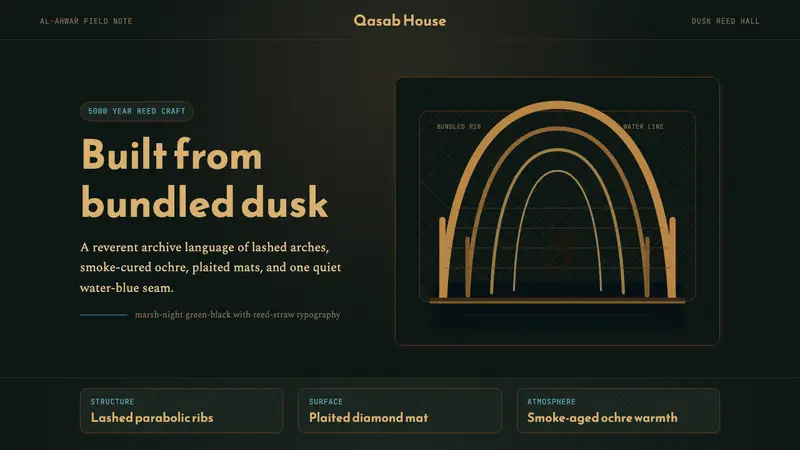 Iraqi Marsh Arab Mudhif ReedReverent reed darkness. Kufi arches, ochre lattice, and one water-blue line hold dusk.