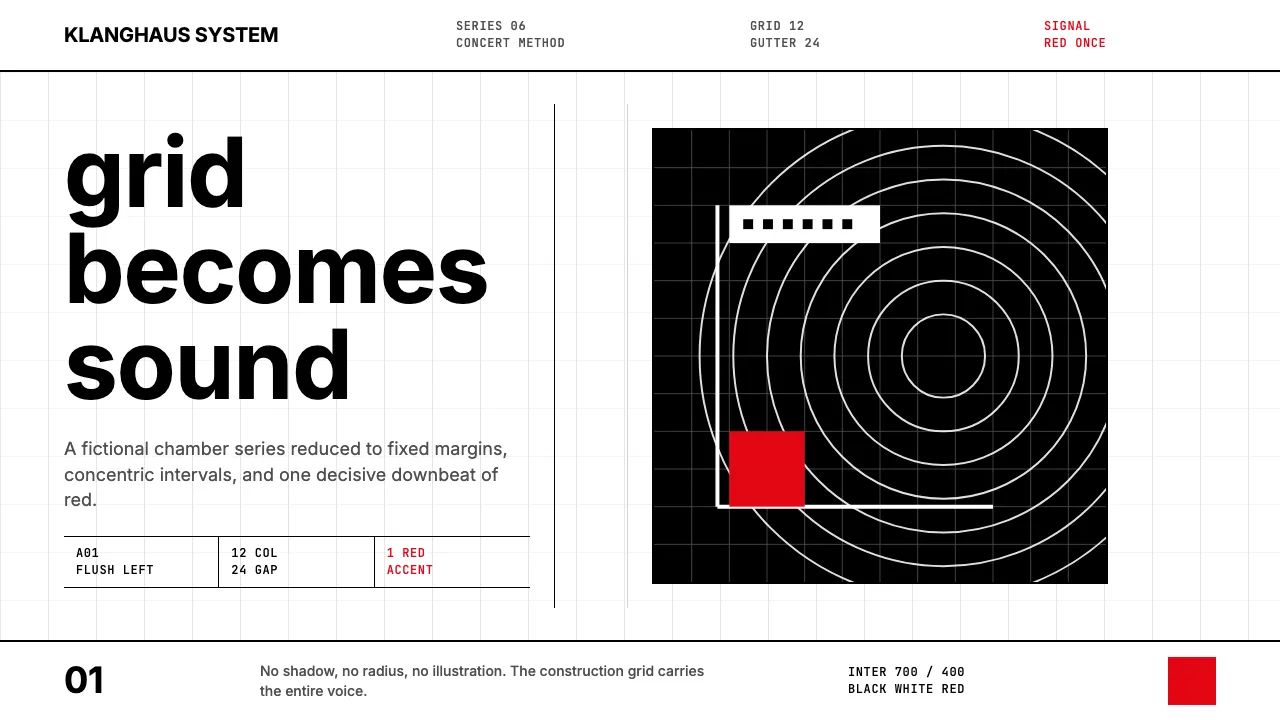
About Müller-Brockmann Grid
Josef Müller-Brockmann distilled graphic design to its mathematical essence. His Zurich Tonhalle concert posters — concentric circles for Beethoven, expanding squares for Musica Viva — proved that geometry alone could communicate with the force of illustration. His 1981 Grid Systems in Graphic Design became the canonical reference for structured layout.
This system translates his philosophy into interface tokens: pure black and white, Inter as a digital stand-in for Akzidenz-Grotesk, zero border-radius, no shadows, and an unwavering commitment to the grid. Every spacing value, every type size, every rule line serves the mathematical order that Müller-Brockmann spent a lifetime perfecting.
- Origin
- Zurich, Switzerland
- Era
- Active 1936–1996; peak Tonhalle posters 1955–1965; Grid Systems book 1981
- Key figures
- Josef Müller-Brockmann · Shizuko Yoshikawa · Richard Paul Lohse · Emil Ruder
- Movements
- Swiss Style (Schweizer Typografie) · International Typographic Style · Mathematical-grid systematics
Müller-Brockmann Grid design spec
Colors
Typography
The other 11 sections — buttons, cards, spacing, motion, techniques and more — open once you unlock. Download the DESIGN.md or send it to your AI in one click. Unlock once, yours forever.
Sign up nowStyles similar to Müller-Brockmann Grid
Also inspired by design movements, with a close feel.
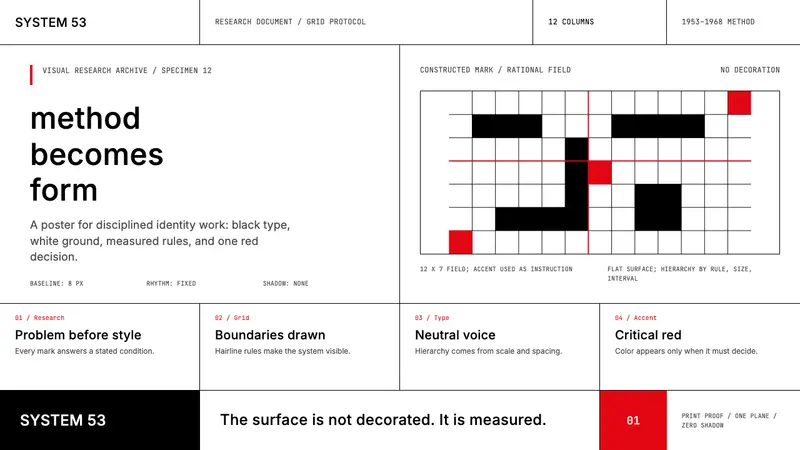 Ulm School (HfG Ulm)Clarity becomes discipline. Black-white grid, Inter grotesk, and one surgical red mark.
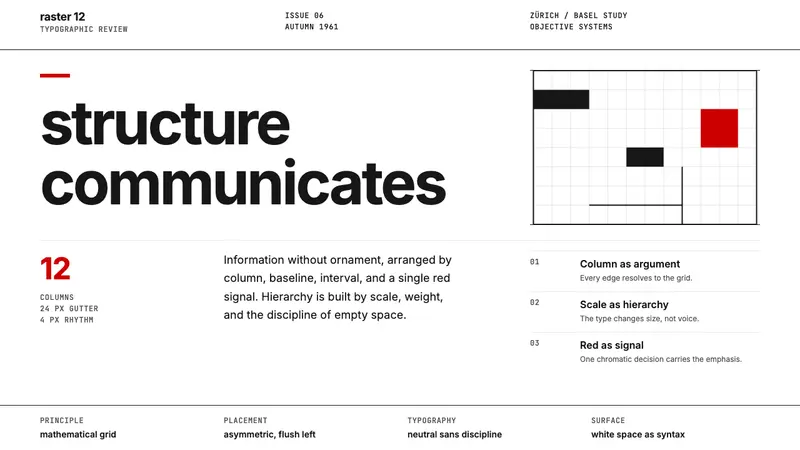 Swiss International StyleObjectivity made visible. Inter scale, white space, and one red block expose the grid.
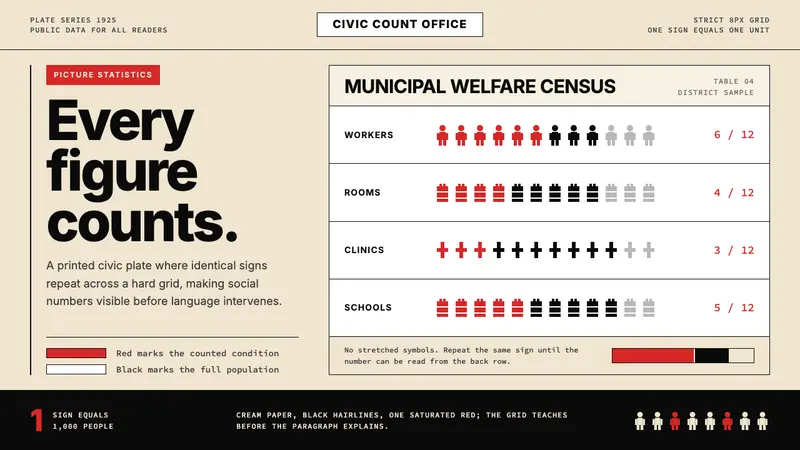 Otto Neurath ISOTYPEData anyone can count. Cream grids, black pictograms, and one red measure.
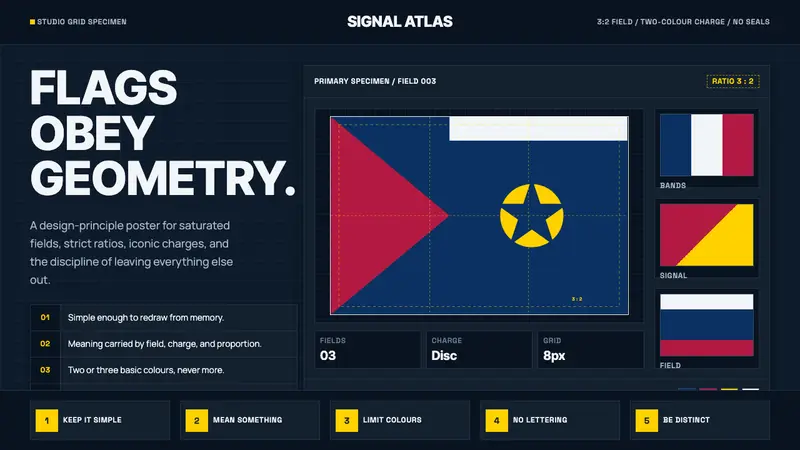 Vexillology Flag DesignDiscipline made visible. Old Glory blue, red and yellow sit on a strict dark grid.