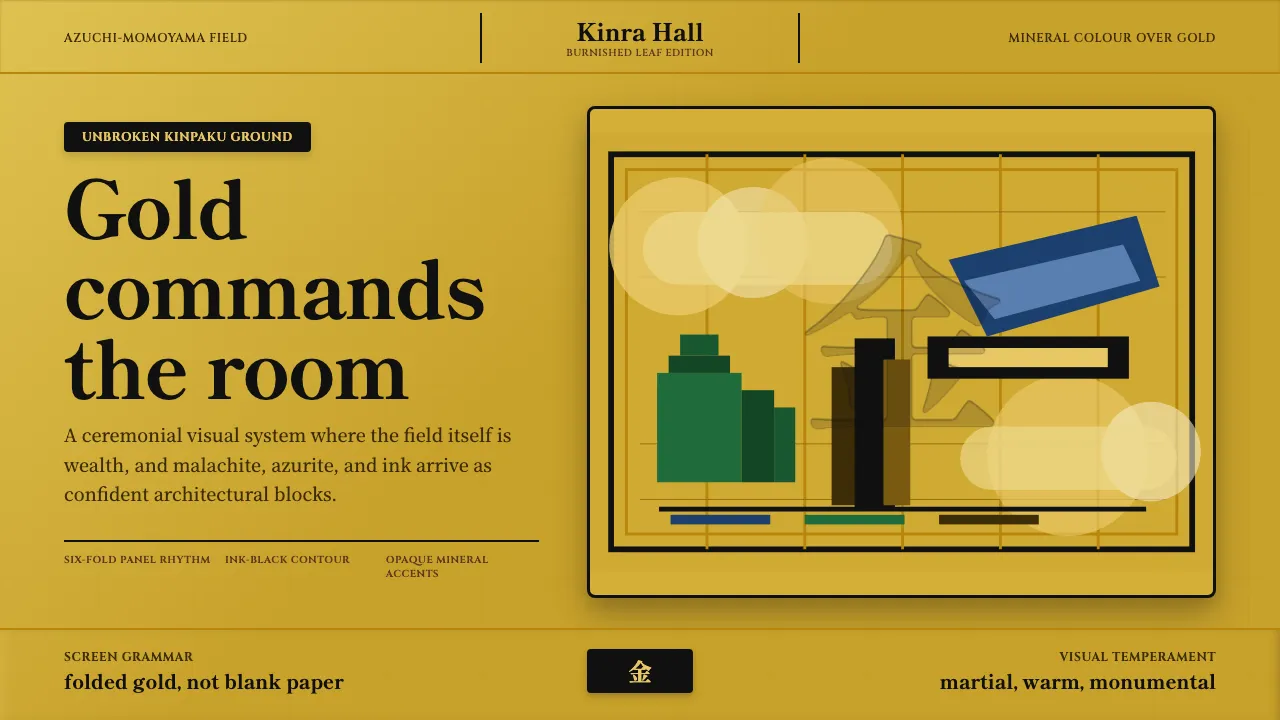
About Momoyama Gold Screen
Momoyama Gold Screen draws on the kinpeki shōhekiga of the late sixteenth century — Kanō-school folding screens whose entire ground is burnished gold leaf, laid sheet over sheet on paper and treated as a warm field of light. Over that gold, painters set monumental pines, hawks, tigers and lions in opaque mineral pigment, framed by cloud-band negative space.
Commissioned by warlords like Nobunaga and Hideyoshi to line castle halls, these screens were declarations of martial wealth: bold, large-scale, and unapologetically gold. The system keeps that conviction — the ground itself is gold, never cream or white, and colour arrives in confident mineral blocks rather than fussy ornament.
- Origin
- Kyoto / Azuchi / Osaka, Japan
- Era
- Azuchi-Momoyama, c. 1573–1615
- Key figures
- Kanō Eitoku · Kanō Sanraku · Hasegawa Tōhaku · Oda Nobunaga · Toyotomi Hideyoshi
- Movements
- Kanō school · Kinpeki gold-screen painting · Momoyama castle decoration
Momoyama Gold Screen design spec
Colors
Typography
The other 11 sections — buttons, cards, spacing, motion, techniques and more — open once you unlock. Download the DESIGN.md or send it to your AI in one click. Unlock once, yours forever.
Sign up nowStyles similar to Momoyama Gold Screen
Also inspired by art & artists, with a close feel.
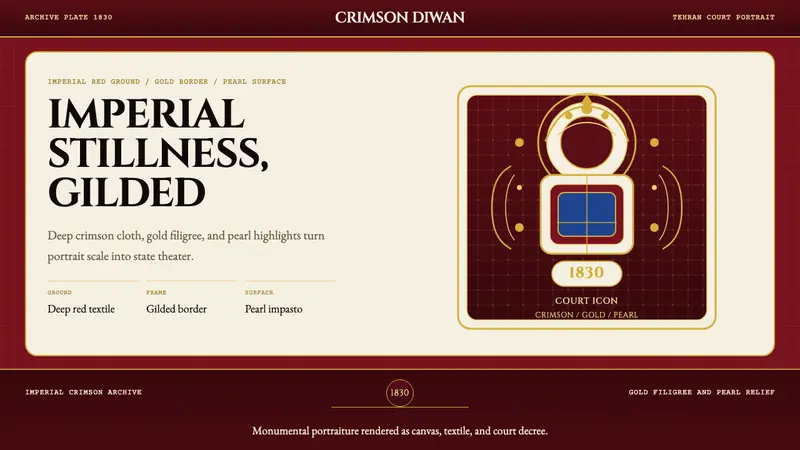 Persian Qajar Portrait (1830)Imperial stillness, gilded. Deep crimson, gold filigree, and pearl accents stage a royal icon.
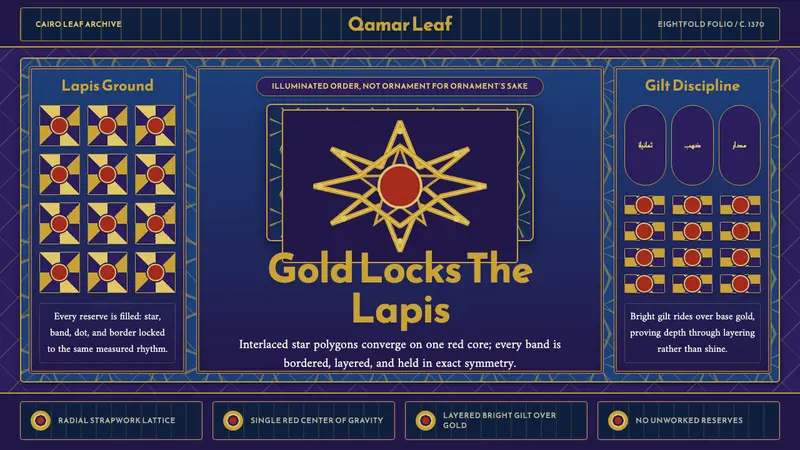 Mamluk Quran IlluminationGilded density rules. Lapis ground, eightfold gold strapwork, and one red core lock the page.
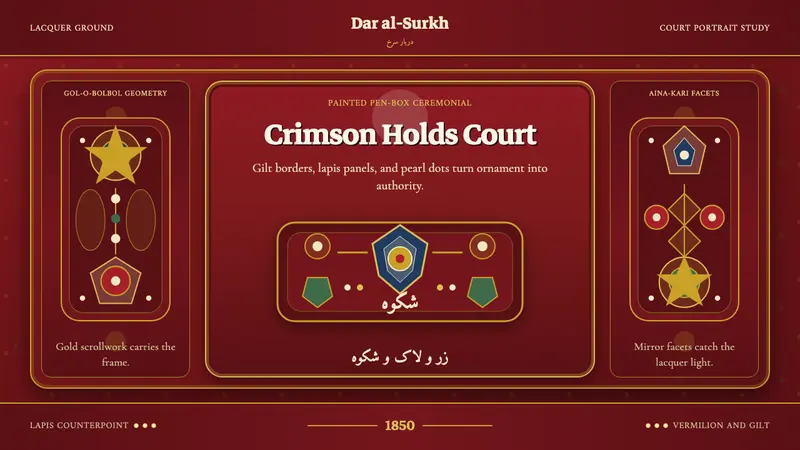 Qajar PersiaOpulence commands. Lacquer red, gilt borders, pearl dots, and lapis geometry.
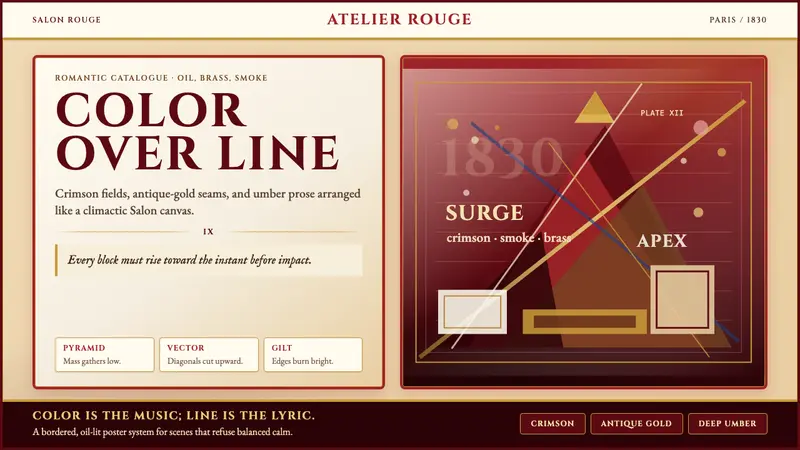 Delacroix French RomanticismOperatic color erupts. Crimson parchment, gilt borders, and diagonal pyramids force climax.