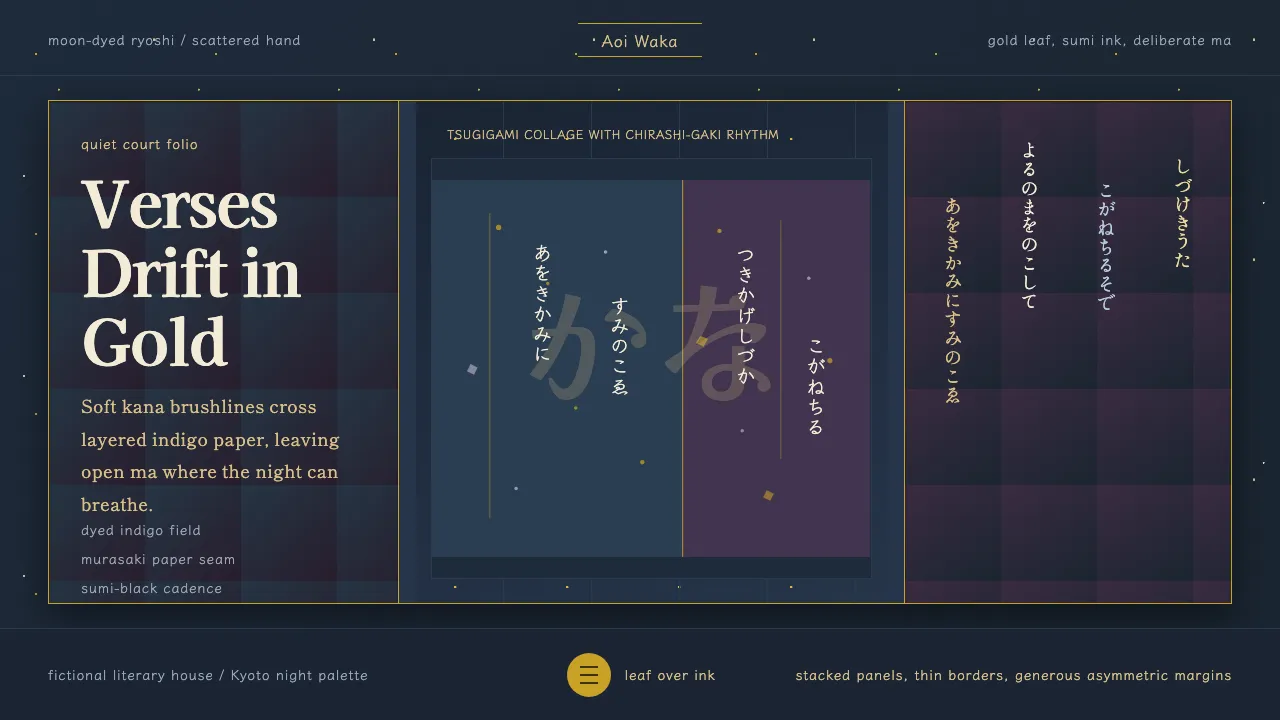
About Kana Waka Calligraphy
Kana Waka Calligraphy draws from the Sanjurokunin-kashu of Nishi Hongan-ji (c.1112), the supreme surviving album of Heian court writing. Its surfaces are tsugigami collages of dyed ryoshi paper, scattered with gold and silver leaf as sunago dust and kirikane cut-flake, over which flowing hiragana waka is brushed in black sumi.
The system never rests on plain white. Soft connected cursive drifts across decorated colour in a chirashi-gaki scatter — generous asymmetric margins, deliberate ma negative space, and the quiet luxury of gold flecks caught on a dyed-indigo field.
- Origin
- Kyoto, Heian court Japan
- Era
- Heian period; Sanjurokunin-kashu c.1112
- Key figures
- Ki no Tsurayuki · Ono no Komachi · Ariwara no Narihira · Fujiwara no Kinto
- Movements
- Wayo Japanese calligraphy · ryoshi decorated-paper craft · chirashi-gaki scattered-writing · waka poetics
Kana Waka Calligraphy design spec
Colors
Typography
The other 11 sections — buttons, cards, spacing, motion, techniques and more — open once you unlock. Download the DESIGN.md or send it to your AI in one click. Unlock once, yours forever.
Sign up nowStyles similar to Kana Waka Calligraphy
Also inspired by art & artists, with a close feel.
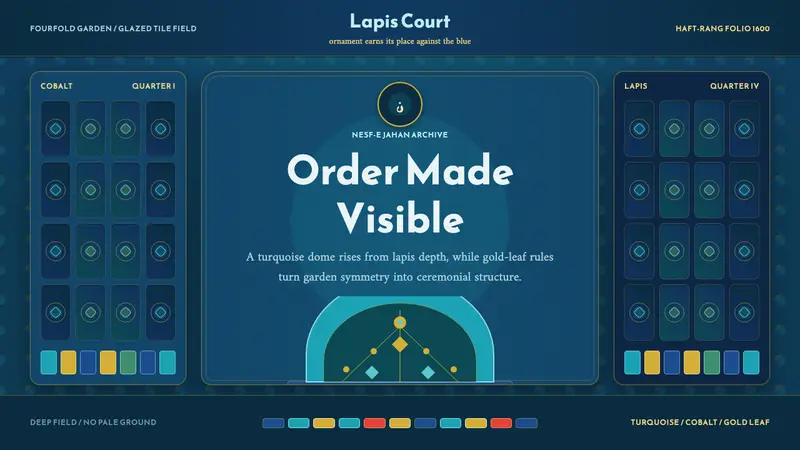 Safavid IsfahanOrnament is order. Turquoise domes and gold rules lock into a deep lapis grid.
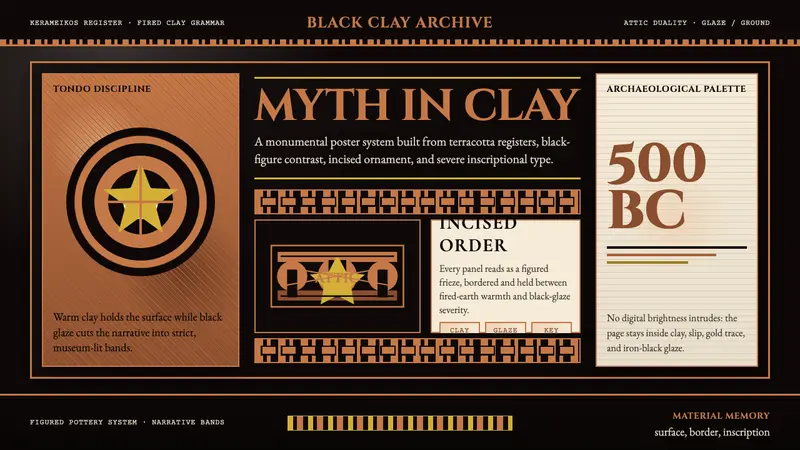 Greek Vase Attic (500 BC)Archaeological severity. Jet-black glaze, terracotta bands, and meander borders frame the page.
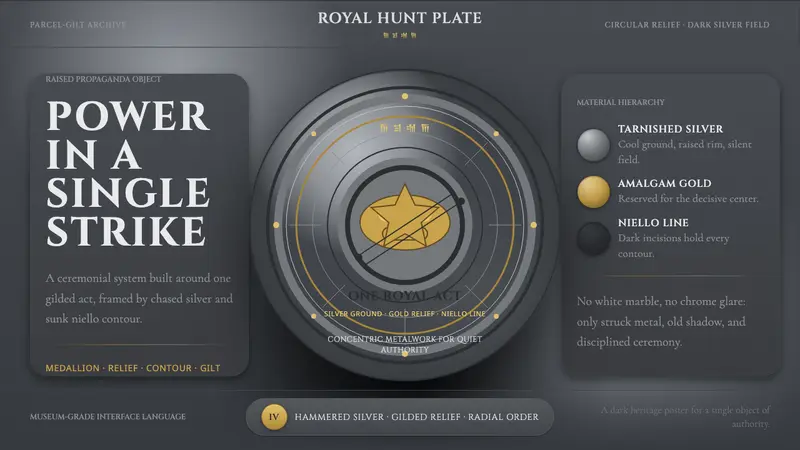 Sasanian Silver PlateRegal metal, held in silence. Tarnished silver frames one restrained gold relief.
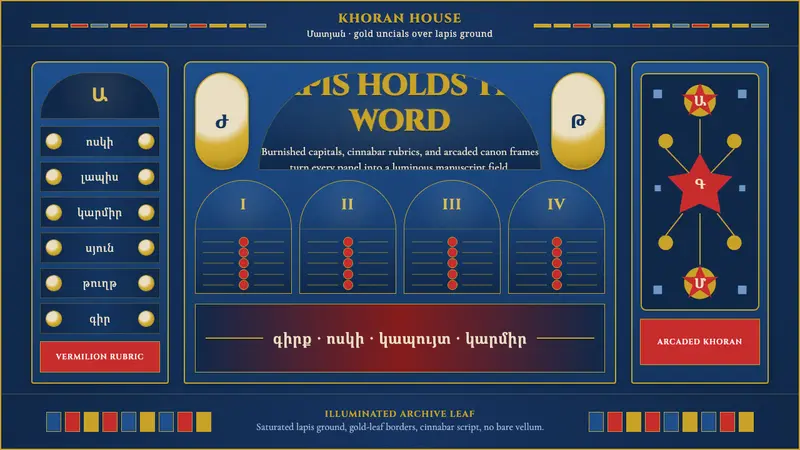 Armenian Manuscript FolkloreJewel-dense devotion. Lapis ground, gold uncials, and vermilion arcades fill every frame.