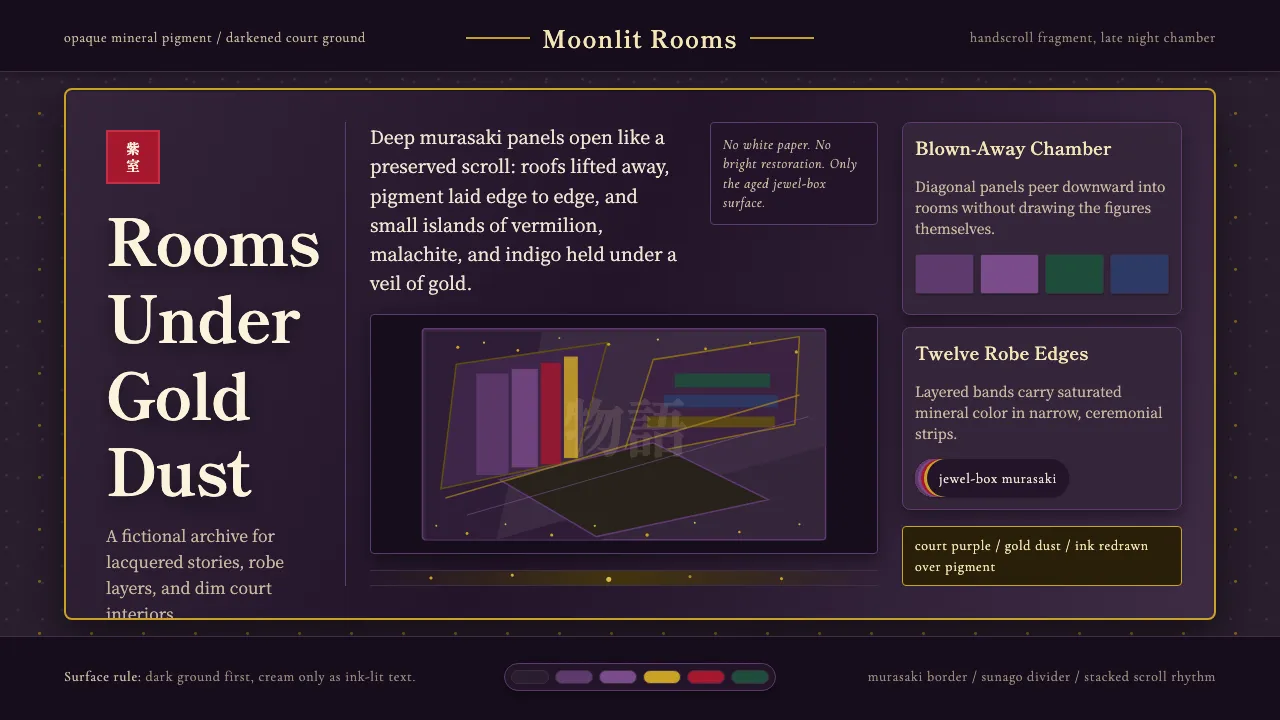
About Heian Genji Scroll
The Genji Monogatari Emaki are the oldest surviving illustrated handscrolls of Murasaki Shikibu's Tale of Genji, painted in the courtly onna-e tsukuri-e technique: opaque mineral pigment built up edge-to-edge, ink outlines redrawn on top, gold dust scattered as cloud-bands. Roofs are blown away to peer down into the rooms below, faces are reduced to a line-eye and a hook-nose, and robes pile up in twelve saturated layers.
Nine centuries of darkening have deepened those grounds into purple-browns and bruised murasaki — not the pale paper of later prints. This system keeps that aged, heavy, jewel-box surface: court-purple sovereign, gold dust, vermilion and malachite accents, every panel a fragment of scroll.
- Origin
- Heian-kyō (Kyoto), Japan
- Era
- pre-1900 (novel c. 1008; surviving Genji Monogatari Emaki scrolls 12th c.)
- Key figures
- Murasaki Shikibu · Heian court painters · Tokugawa & Gotoh Genji scroll fragments
- Movements
- Heian court art · yamato-e painting · onna-e tsukuri-e illustration
Heian Genji Scroll design spec
Colors
Typography
The other 11 sections — buttons, cards, spacing, motion, techniques and more — open once you unlock. Download the DESIGN.md or send it to your AI in one click. Unlock once, yours forever.
Sign up nowStyles similar to Heian Genji Scroll
Also inspired by art & artists, with a close feel.
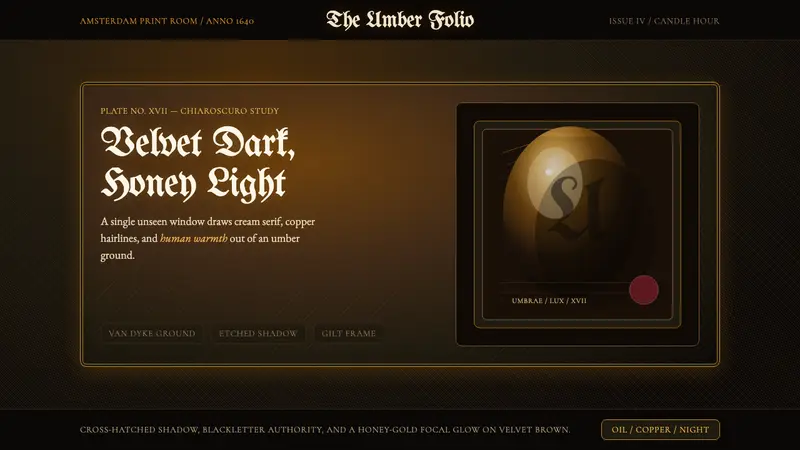 Rembrandt BaroqueDarkness becomes theatre. Honey-gold spotlight and blackletter rise from Van Dyke brown.
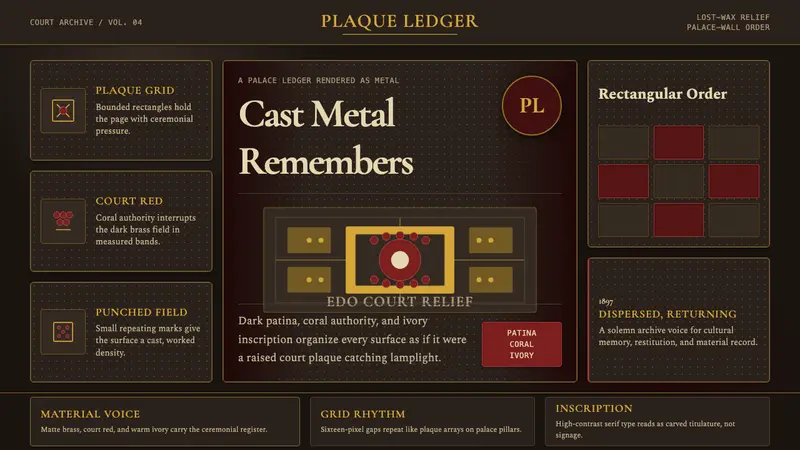 Benin Bronze Oba CourtCourt gravity in cast metal. Patinated brass grid, coral red panels, ivory serif relief.
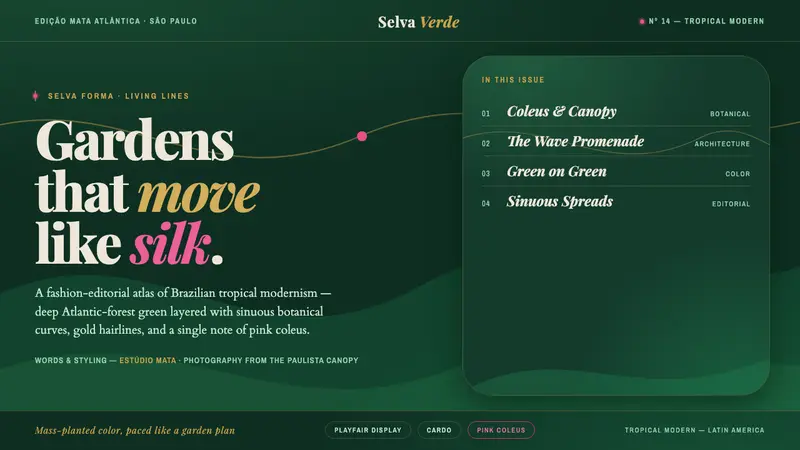 São Paulo Tropical EditorialBurle Marx's garden, made magazine. Layered green-on-green with gold hairlines, pink-coleus accent.
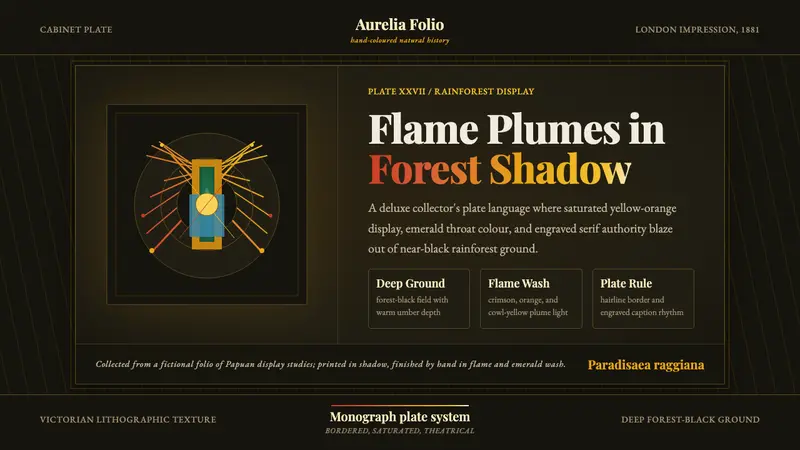 Bird of Paradise MonographTheatrical plate-book darkness. Flame plumes blaze from a bordered forest-black monograph.