About Chinese Jianzhi Paper-Cutting
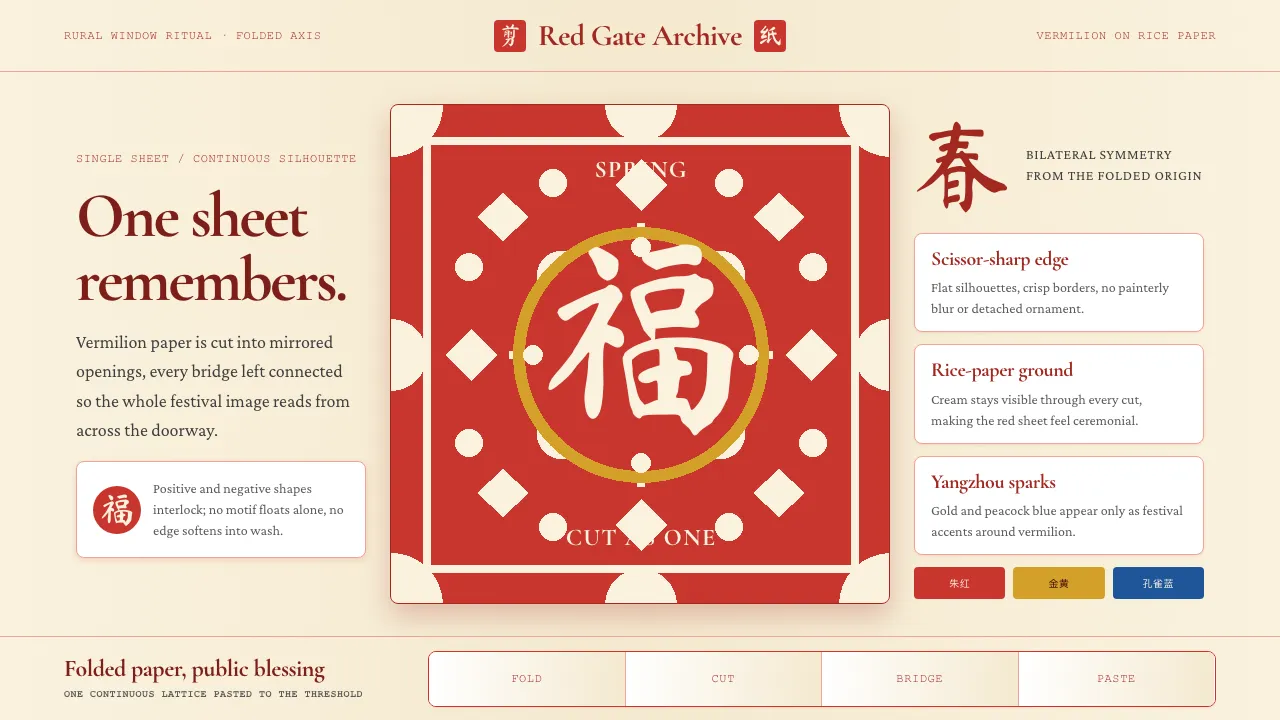
Jianzhi is rural China's most iconic single-color graphic system — 1,500 years of vermilion paper folded and scissor-cut into symmetrical animals, lotus, opera figures and good-fortune characters for Spring Festival doorways. The aesthetic says: a single sheet of red paper, cut down to a lacework silhouette that reads from a meter away.
The visual language is positive-negative interlock — every motif structurally connected by leaf-tendril bridges, no detached islands. Bilateral symmetry from folded paper. Scissor-sharp edges, zero anti-aliasing. Vermilion blood-red on rice-paper cream is the canonical mode; the multi-color Yangzhou school adds imperial yellow, peacock blue and jade green.
- Origin
- Rural northern China — Shaanxi, Shanxi, Hebei, Yangzhou, Fujian
- Era
- Han dynasty origin (~200 BC tin foil); paper-cut tradition matures Tang 7c; peak village craft 1500–1900; UNESCO ICH 2009
- Key figures
- Ku Shulan 库淑兰 · Wang Lao Shang 王老赏 · Gao Fenglian 高凤莲 · Bai Fengying 白凤英
- Movements
- Chinese folk arts 民间艺术 · Spring Festival decorative tradition · Embroidery-pattern transmission
Chinese Jianzhi Paper-Cutting design spec
Colors
Typography
The other 11 sections — buttons, cards, spacing, motion, techniques and more — open once you unlock. Download the DESIGN.md or send it to your AI in one click. Unlock once, yours forever.
Sign up nowStyles similar to Chinese Jianzhi Paper-Cutting
Also inspired by crafts & folk art, with a close feel.
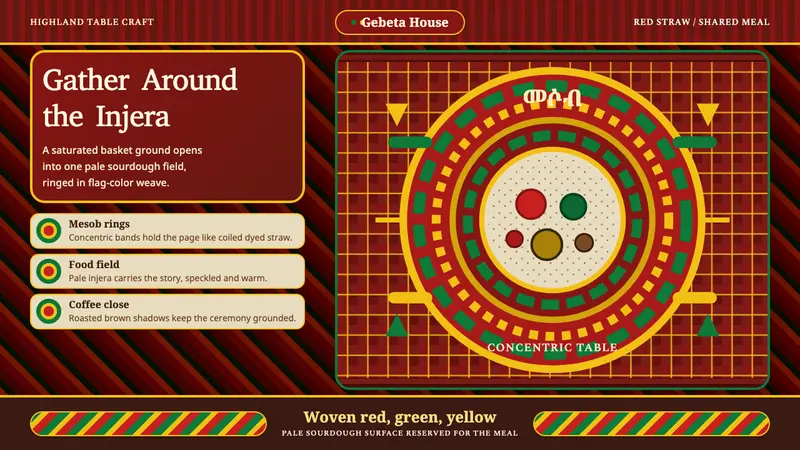 Ethiopian Injera & Mesob SpreadHospitality is woven in. Berbere red, flag bands, and an injera field hold the table.
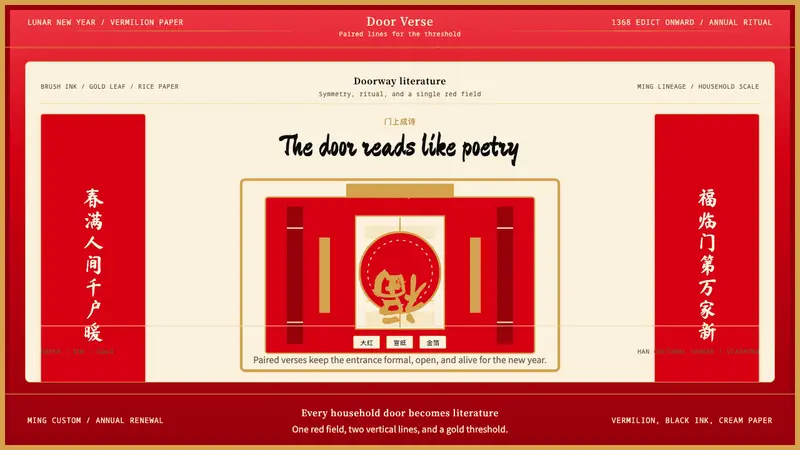 Chinese Spring Festival Red CoupletLiterature on the door. Vermilion paper, vertical pairs, and gold calligraphy.
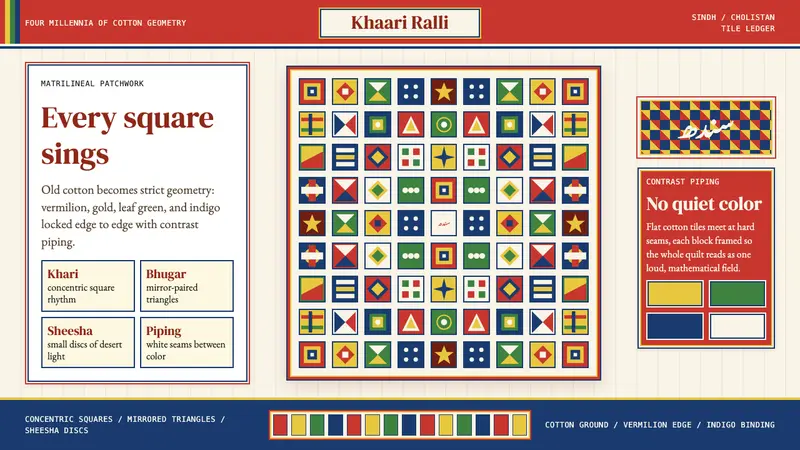 Sindhi Ralli QuiltSings in squares. Vermilion, gold, green, and indigo lock into piped tile rhythm.
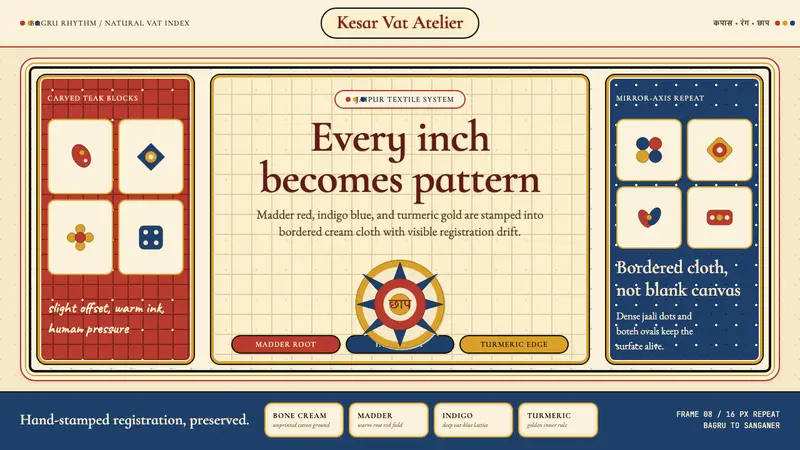 Indian Block PrintPattern claims every inch. Madder, indigo and turmeric stamp dense bordered cloth.