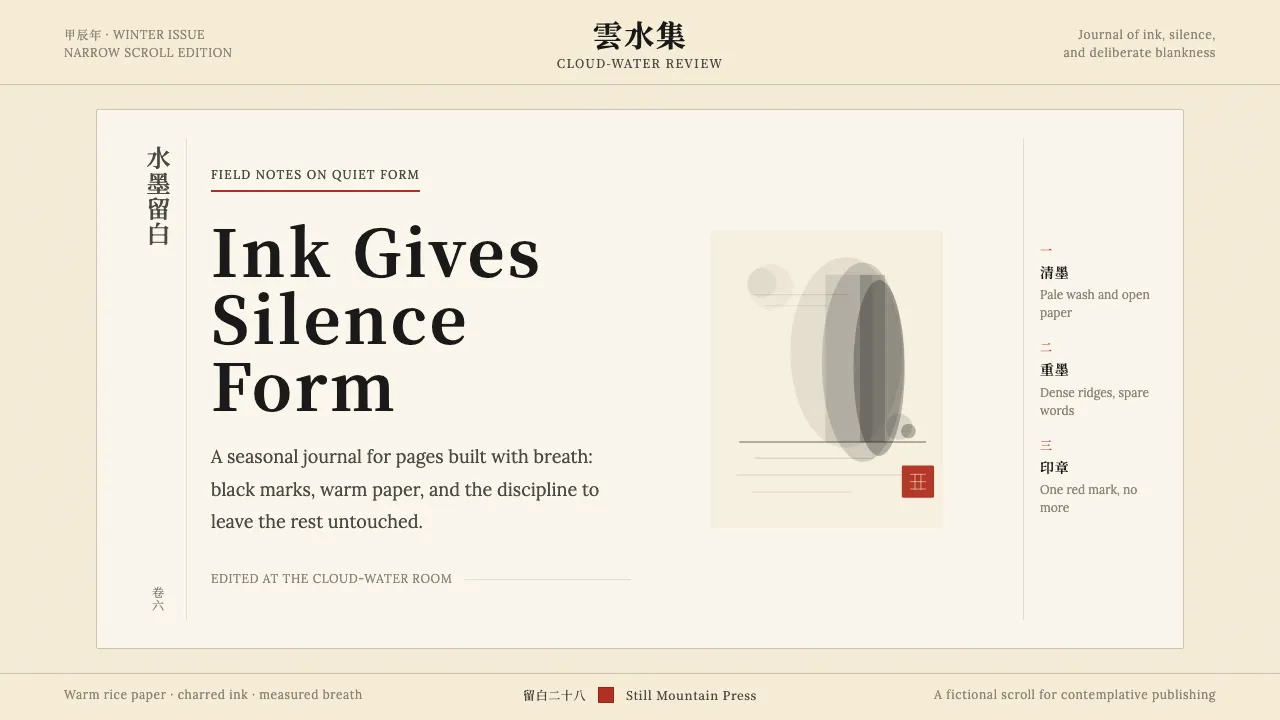
About Chinese Ink Wash 水墨
Chinese ink-wash design distills a millennium of monochromatic painting into a digital language of restraint. Every element breathes through 留白 — the deliberate emptiness that gives form its meaning. Deep black ink on warm rice-paper cream, gestural accents, and classical serif typography carry the gravitas of Song Dynasty masters into modern interfaces.
The system honors the six tonal grades of ink, from charred black to the faintest wash, as its entire chromatic vocabulary. A single seal-red accent punctuates sparingly, like a chop stamped on a finished scroll. Vertical rhythm, asymmetric balance, and generous negative space are not stylistic choices — they are philosophical commitments.
- Origin
- China (later spread to Japan and Korea)
- Era
- Tang Dynasty origins (618–907 AD); golden age in Song (960–1279) and Yuan (1271–1368) dynasties; ongoing tradition
- Key figures
- Wang Wei · Mi Fu · Mu Qi · Xu Beihong
- Movements
- literati painting (文人画) · Chan/Zen Buddhist painting tradition
Chinese Ink Wash 水墨 design spec
Colors
Typography
The other 11 sections — buttons, cards, spacing, motion, techniques and more — open once you unlock. Download the DESIGN.md or send it to your AI in one click. Unlock once, yours forever.
Sign up nowStyles similar to Chinese Ink Wash 水墨
Also inspired by art & artists, with a close feel.
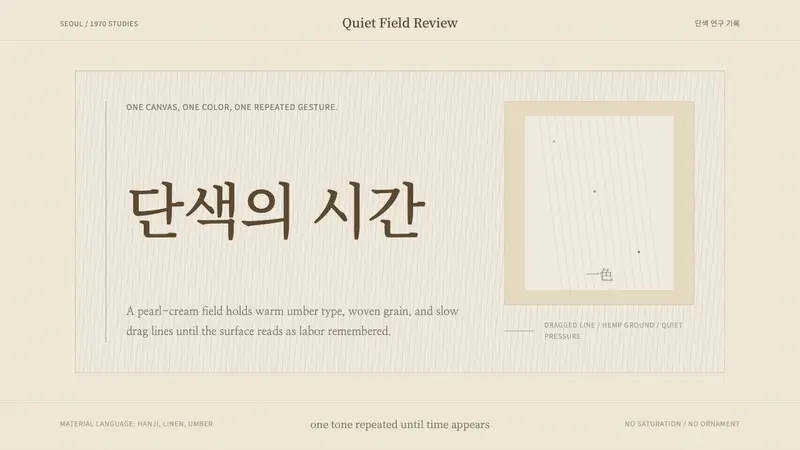 Korean Dansaekhwa MonochromeLabor becomes stillness. Umber serif type and drag lines on pearl cream.
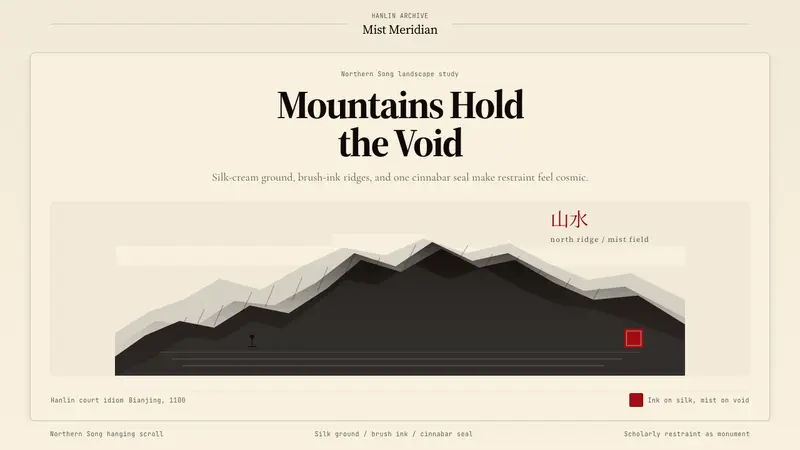 Song Landscape Painting (1100)Monumental calm. Silk-cream ground, ink ridges, and a cinnabar seal.
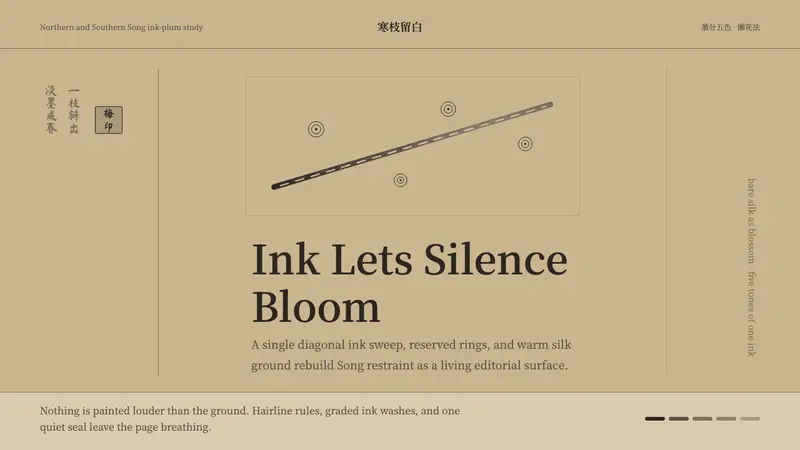 Plum Blossom Ink (宋)Silence carries the ink. Tea-tan ground, reserved blossoms, and one diagonal branch.
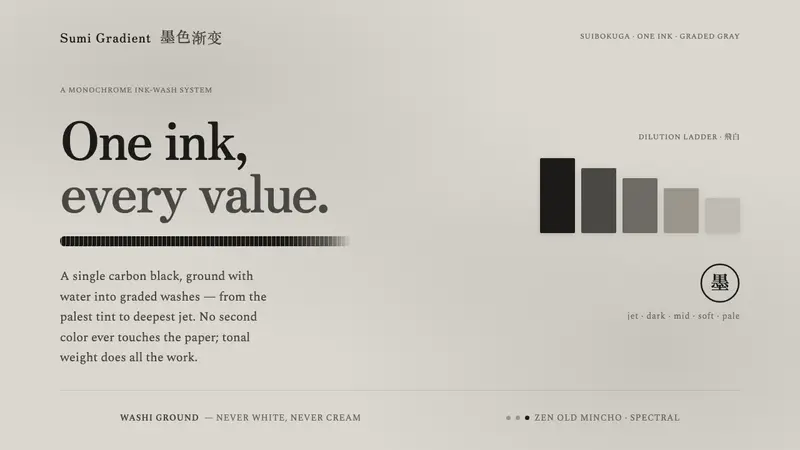 Sumi Grayscale GradientOne ink, every value. A single carbon black diluted into graded grays, marked by a dry-brush stroke.