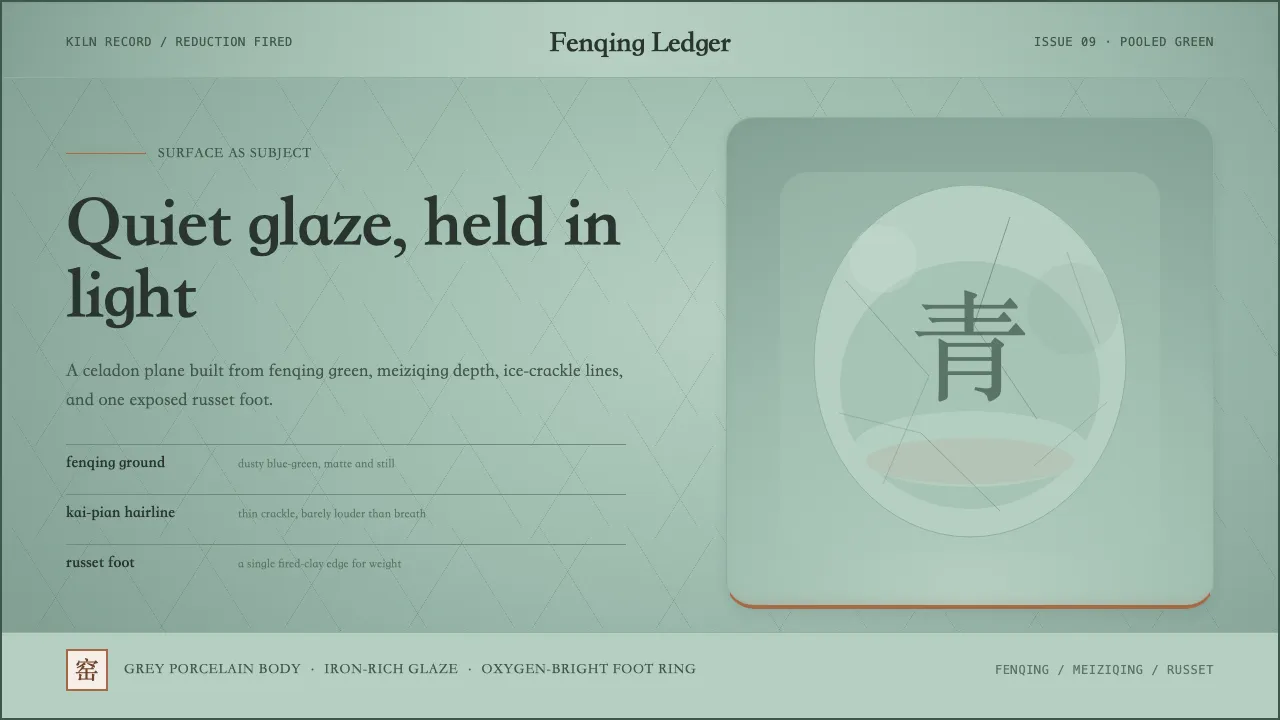
About Longquan Celadon
Longquan celadon is a glaze, not a graphic. For three centuries the kilns of Zhejiang stacked thick, iron-rich slips on a grey-white porcelaneous body and fired them in reduction until the surface pooled a pale, semi-opaque blue-green — kinuta's cool jade, meiziqing's deeper plum-green. The surface itself is the subject: soft, matte-to-satin, often laced with a fine ice-crackle network.
This system treats the page as a glazed plane. Backgrounds carry the dusty fenqing green; panels read like thicker pools of the same slip; type sits in quiet songti serifs and the occasional brushed ceramic mark. The single warm note is the unglazed foot-ring — the russet the iron body fires where the glaze pulls away — used sparingly as a grounding accent.
- Origin
- Longquan kilns, Zhejiang, southern China; East Asia
- Era
- Song dynasty, 10th–13th century; pre-1900 ceramic tradition
- Key figures
- Anonymous Longquan kiln potters · Song-era literati ceramicists · Later studio revivalists
- Movements
- Chinese celadon glaze tradition · Song stoneware · Literati ceramic taste
Longquan Celadon design spec
Colors
Typography
The other 11 sections — buttons, cards, spacing, motion, techniques and more — open once you unlock. Download the DESIGN.md or send it to your AI in one click. Unlock once, yours forever.
Sign up nowStyles similar to Longquan Celadon
Also inspired by crafts & folk art, with a close feel.
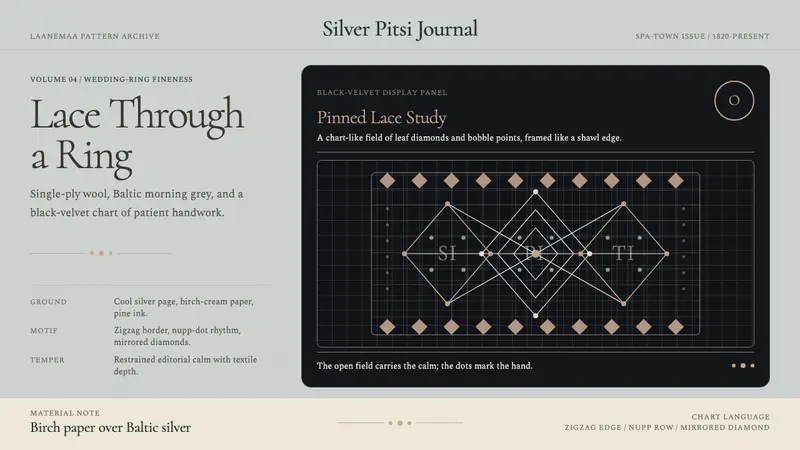 Estonian Haapsalu Lace ShawlQuiet craft, held in silver light. Cormorant type meets nupp dots and velvet lace grids.
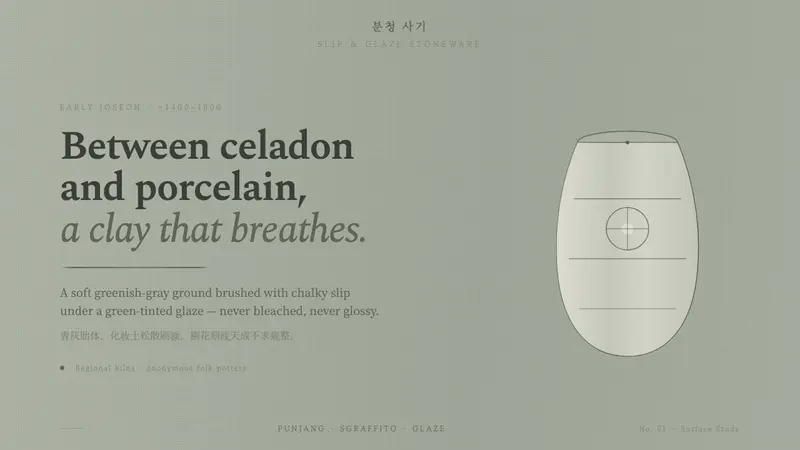 Buncheong Gray Slip WareBetween celadon and porcelain. Greenish-gray clay, chalky slip brushwork, dark sgraffito lines.
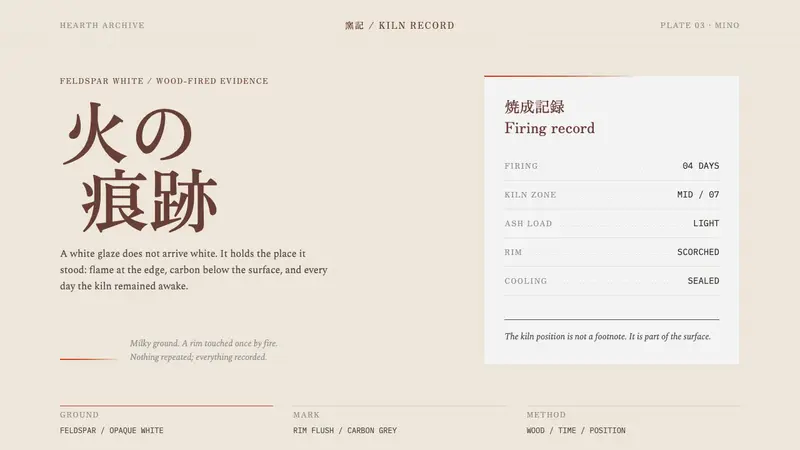 Anagama Shino GlazeFire leaves evidence, not decoration. Milky feldspar ground meets a sparse kiln record.
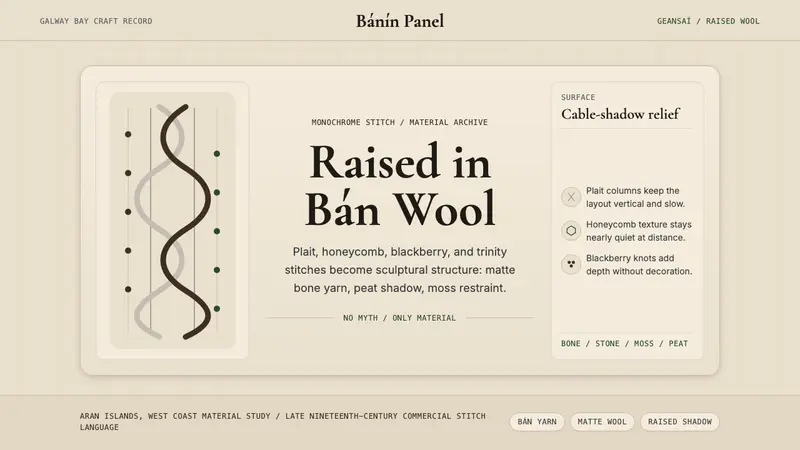 Irish Aran Island Cable KnitMaterial honesty raised in wool. Bone ground, moss ink, and cable columns cast quiet shadow.