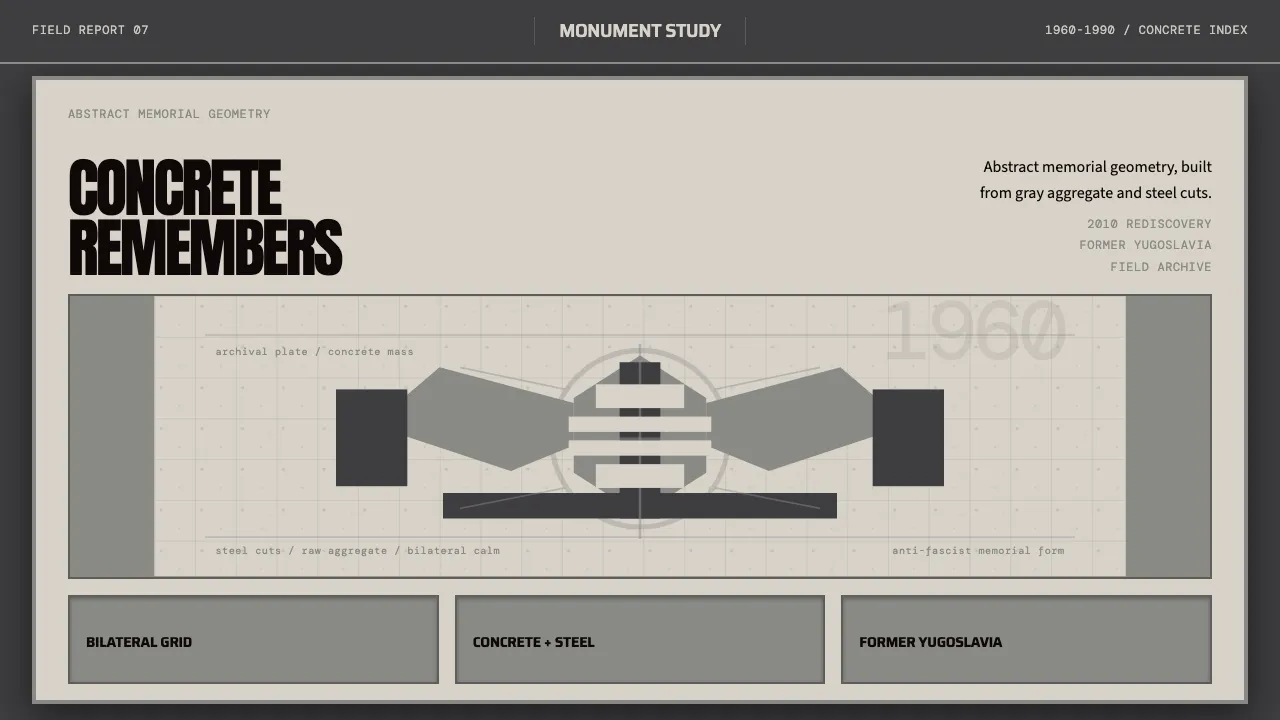
About Spomenik Yugoslav Monument (1960)
The Yugoslav spomenici are abstract concrete-and-steel memorial sculptures commissioned by Tito's socialist Yugoslavia between 1960 and 1990 to commemorate Partisan resistance and anti-fascist victims. Designed by architects like Bogdanović, Džamonja, and Bakić, they reject figurative representation in favor of crystalline polyhedra, biomorphic cantilevers, and soaring concrete wings.
Rediscovered through Jan Kempenaers' 2010 photography book, these monuments became icons of brutalist-modernist aesthetics. This design system channels their austere concrete materiality — gray aggregate surfaces, monumental geometric composition, and the weight of post-fascist trauma rendered into pure form.
Learn more about the Spomenik Yugoslav Monument (1960) style
- Origin
- Former Yugoslavia — Croatia, Bosnia-Herzegovina, Serbia, Montenegro, Slovenia, North Macedonia
- Era
- 1960–1990 commissioned; 2010 international rediscovery
- Key figures
- Bogdan Bogdanović · Dušan Džamonja · Vojin Bakić · Miodrag Živković
- Movements
- Yugoslav socialist-modernist architecture · brutalist concrete monumental tradition · 2010s brutalist-aesthetic revival
Spomenik Yugoslav Monument (1960) design spec
Colors
Typography
The other 11 sections — buttons, cards, spacing, motion, techniques and more — open once you unlock. Download the DESIGN.md or send it to your AI in one click. Unlock once, yours forever.
Sign up nowStyles similar to Spomenik Yugoslav Monument (1960)
Also inspired by architecture & places, with a close feel.
 Dhaka Shaheed MinarSolemn before dawn. Marble columns and one red sun hold the page in civic silence.
 Buzludzha MonumentMonumentality without repair. Stained concrete frames cobalt tesserae, ruby glass and gold.
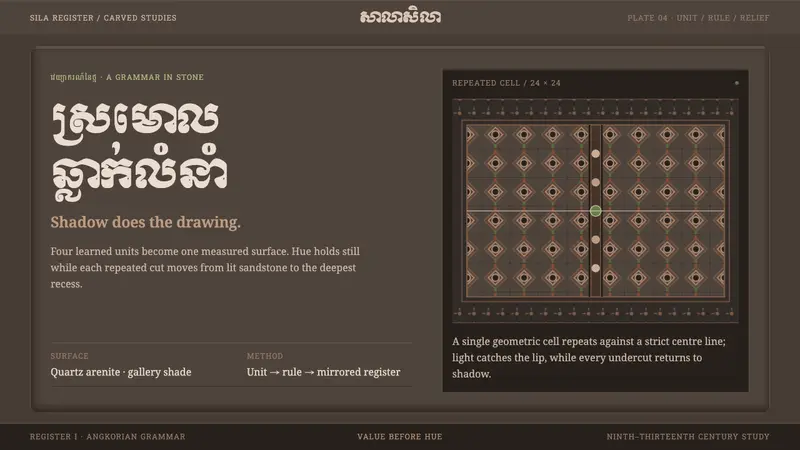 Khmer Kbach MotifShadow carves the grammar. Repeated stone cells turn a narrow sandstone palette into relief.
 Bhutanese Tiger's Nest Cliff MonasterySacred altitude, mineral-dark. Cinnabar tiers and bronze rules climb charcoal granite.