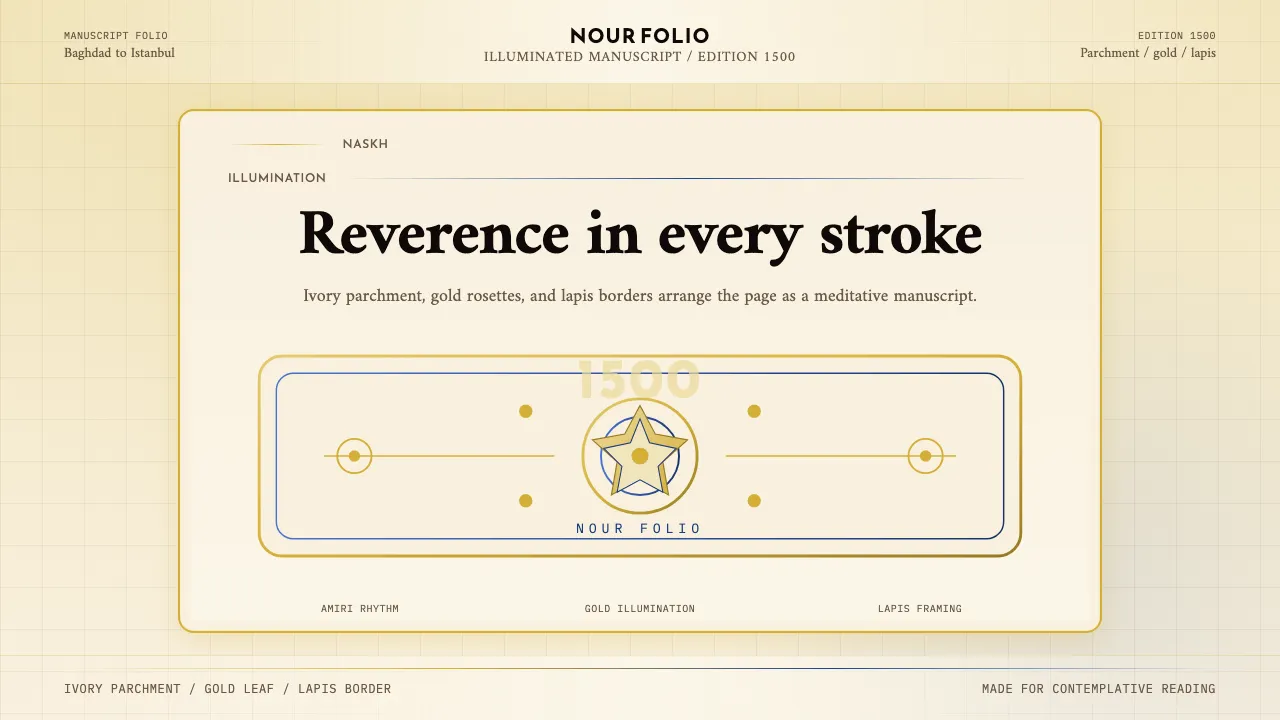
About Naskh Quranic (1500)
Naskh is the flowing, proportioned script that has carried the Qur'an's words for over a millennium. Codified by Ibn Muqla in 10th-century Baghdad and refined across Mamluk, Ottoman, and Mughal courts, it pairs ink-black calligraphy with gold-leaf rosettes, lapis borders, and vermilion verse-markers on aged ivory parchment.
This system translates that sacred manuscript tradition into digital tokens — warm parchment grounds, imperial gold illumination accents, and generous line-heights that honor diacritical marks and the meditative rhythm of the handwritten page.
- Origin
- Pan-Islamic — Baghdad, Cairo, Istanbul, Isfahan, Delhi, Fes
- Era
- Ibn Muqla codified c. 940 CE; peak Mamluk/Ottoman/Mughal production 1400–1700; continuous through modern Qur'an printing
- Key figures
- Ibn Muqla · Ibn al-Bawwab · Yaqut al-Musta'simi · Sheikh Hamdullah
- Movements
- Arabic calligraphic tradition · Islamic manuscript illumination · Qur'an copying tradition
Naskh Quranic (1500) design spec
Colors
Typography
The other 11 sections — buttons, cards, spacing, motion, techniques and more — open once you unlock. Download the DESIGN.md or send it to your AI in one click. Unlock once, yours forever.
Sign up nowStyles similar to Naskh Quranic (1500)
Also inspired by print & type, with a close feel.
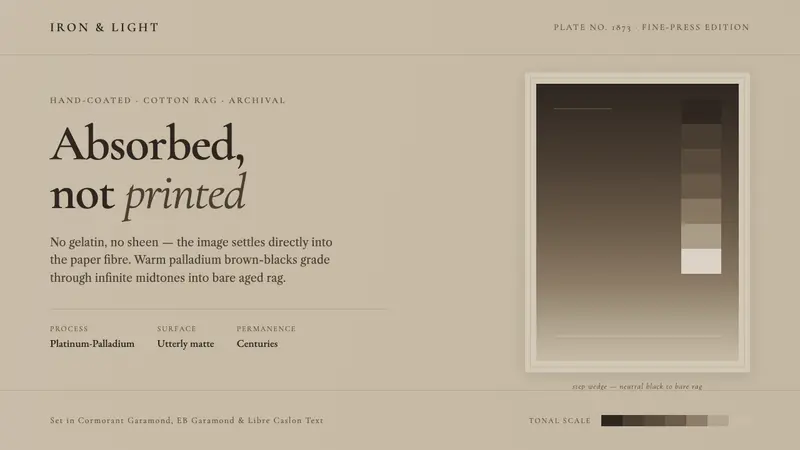 Platinum-Palladium PrintAbsorbed, not printed. Warm palladium brown-blacks grade into aged cotton-rag taupe, utterly matte.
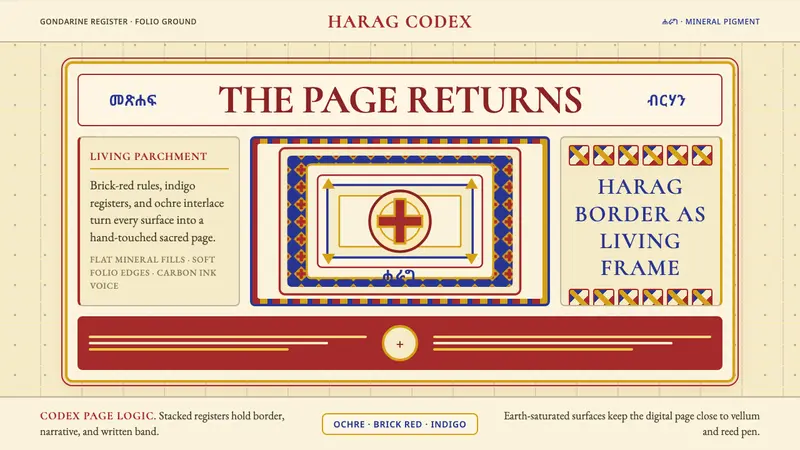 Ethiopian Orthodox ManuscriptSacred page, alive. Brick red, indigo, and ochre harag borders frame a staring icon.
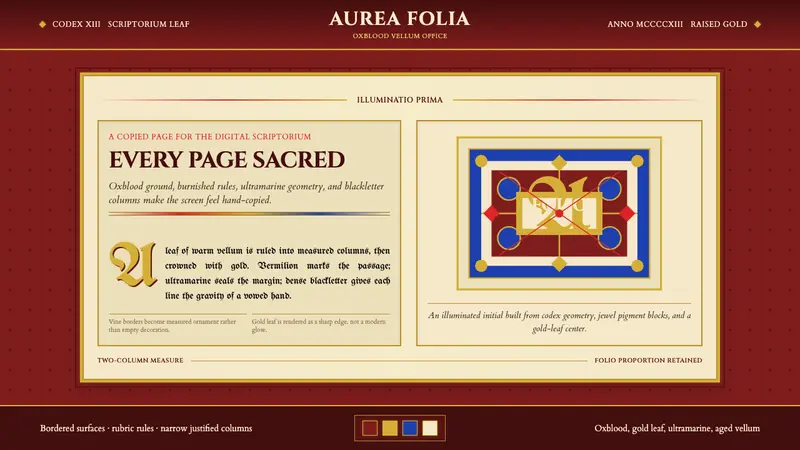 Medieval Illuminated ManuscriptTreats every page as sacred. Oxblood vellum, Cinzel capitals, gold-rule borders.
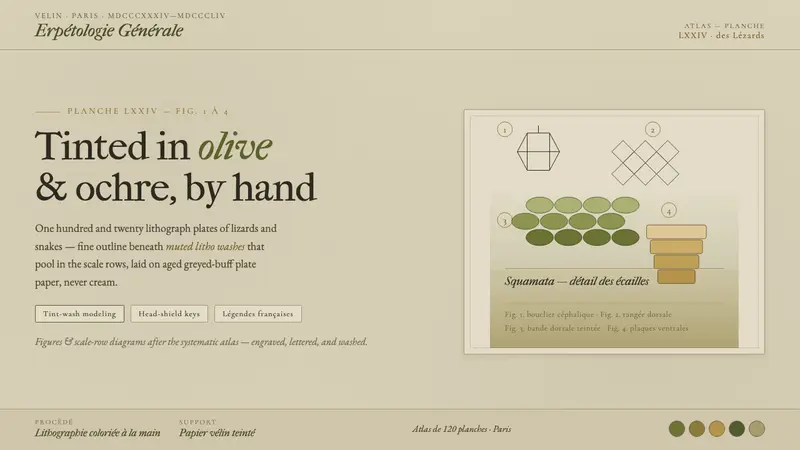 Herpetology Scale PlateA 19th-century herpetology atlas, digitized. Olive-and-ochre litho washes on buff plate paper.