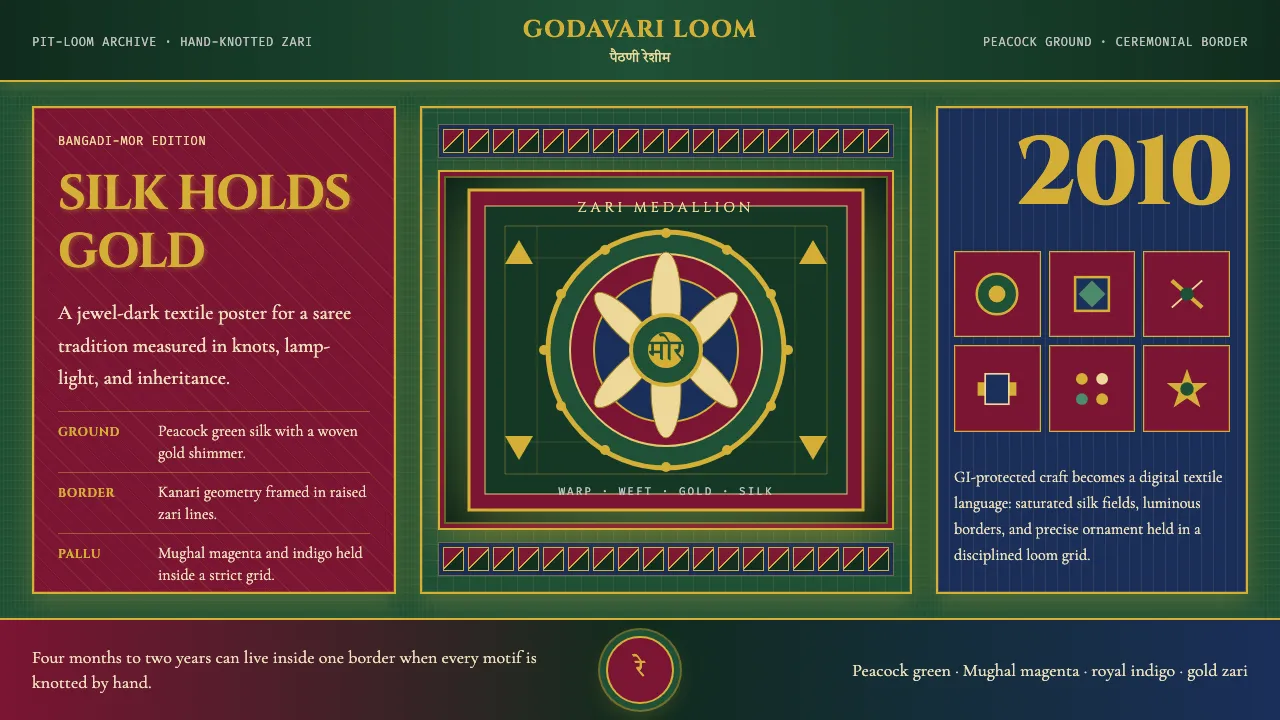
About Maharashtra Paithani Peacock Saree
Paithani is a 2,000-year-old handwoven silk-and-gold-zari saree tradition from the town of Paithan on the banks of the Godavari River in Maharashtra, India. Each saree takes four months to two years to weave on a single pit-loom, with the master weaver knotting individual gold-zari motifs — peacocks, lotuses, parrots, and the iconic bangadi-mor (peacock-in-circle) — into a saturated jewel-colored silk ground.
This design system translates the Paithani's material opulence into digital form: peacock-green silk grounds, raised gold-zari typography, Mughal magenta card surfaces, and dense ornamental borders drawn from the saree's kanari and pallu traditions. Every element aims to convey the weight and sheen of hand-loomed silk thread rather than flat digital color.
Learn more about the Maharashtra Paithani Peacock Saree style
- Origin
- Paithan, Aurangabad district, Maharashtra, India
- Era
- 200 BCE Satavahana origin; peak Peshwa period 1707–1818; GI protection 2010
- Key figures
- Madhuri Desai · Mira Seth · Maharashtra State Handicrafts Development Corporation
- Movements
- Paithani silk weaving · Maharashtrian textile heritage · Deccan court textile tradition
Maharashtra Paithani Peacock Saree design spec
Colors
Typography
The other 11 sections — buttons, cards, spacing, motion, techniques and more — open once you unlock. Download the DESIGN.md or send it to your AI in one click. Unlock once, yours forever.
Sign up nowStyles similar to Maharashtra Paithani Peacock Saree
Also inspired by crafts & folk art, with a close feel.
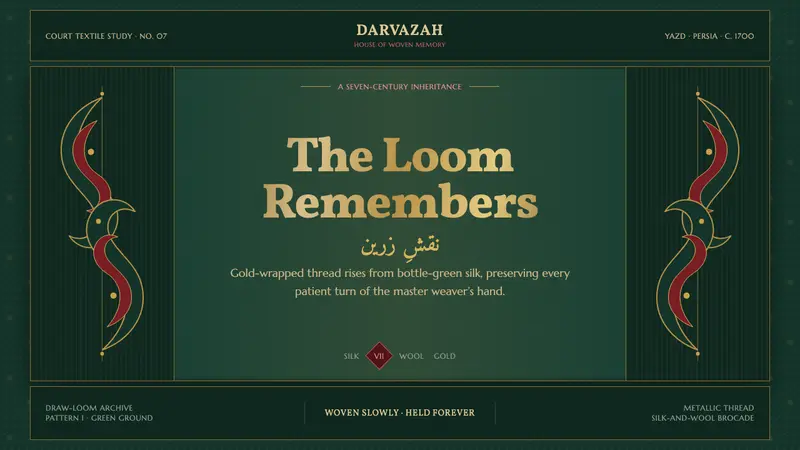 Persian Termeh BotehRoyal brocade, densely alive. Antique-gold boteh climbs across lustrous bottle-green silk.
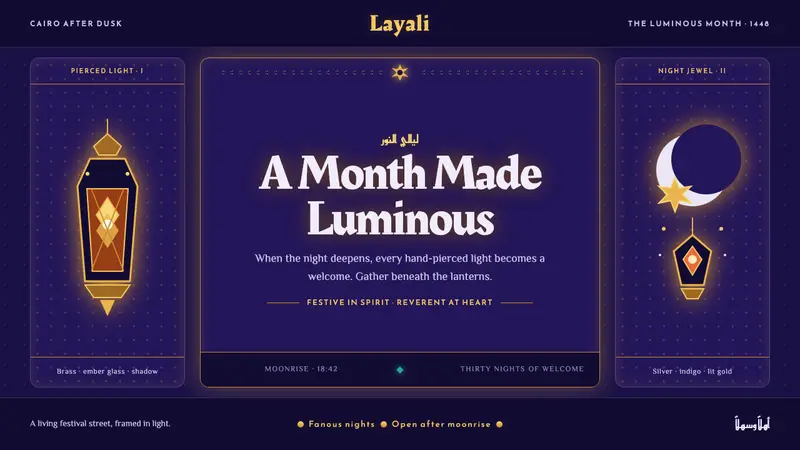 Ramadan Lanterns (Fanous Nights)Night becomes sacred light. Pierced brass and amber glow burn across bottomless indigo.
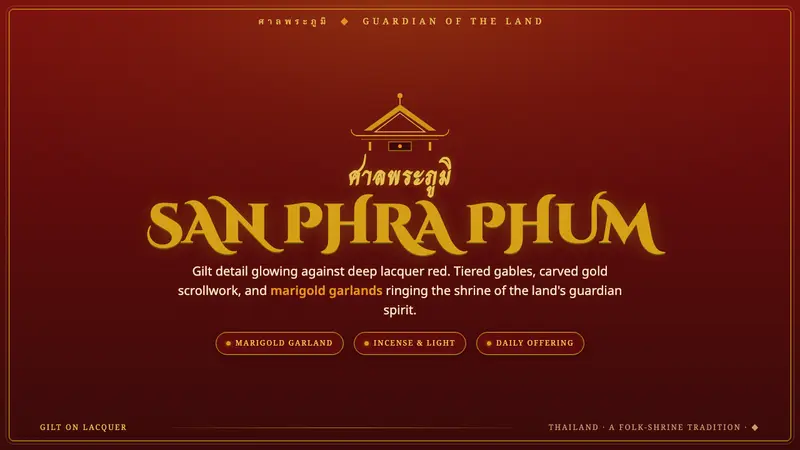 Thai Spirit House (San Phra Phum)Devotion in gilt and lacquer. Gold scrollwork and tiered gables glowing on a deep red shrine cavity.
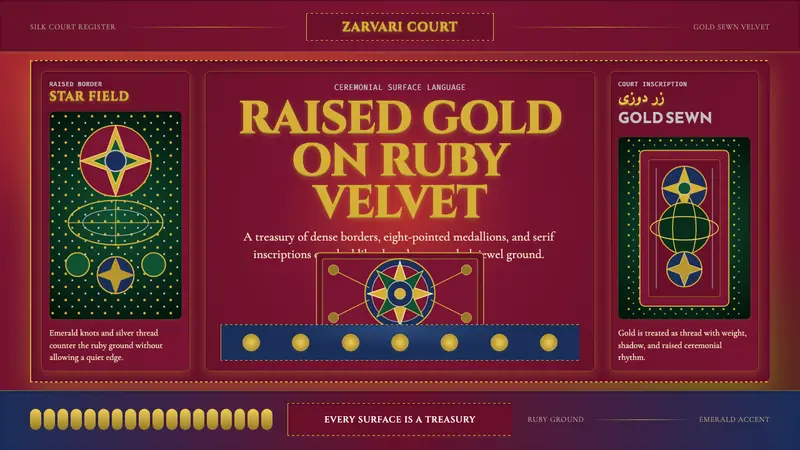 Uzbek Bukhara Gold ZardoziCourtly density. Ruby velvet, gold Cinzel type, and star medallions leave no void.