About Madhubani (Mithila Folk Painting)
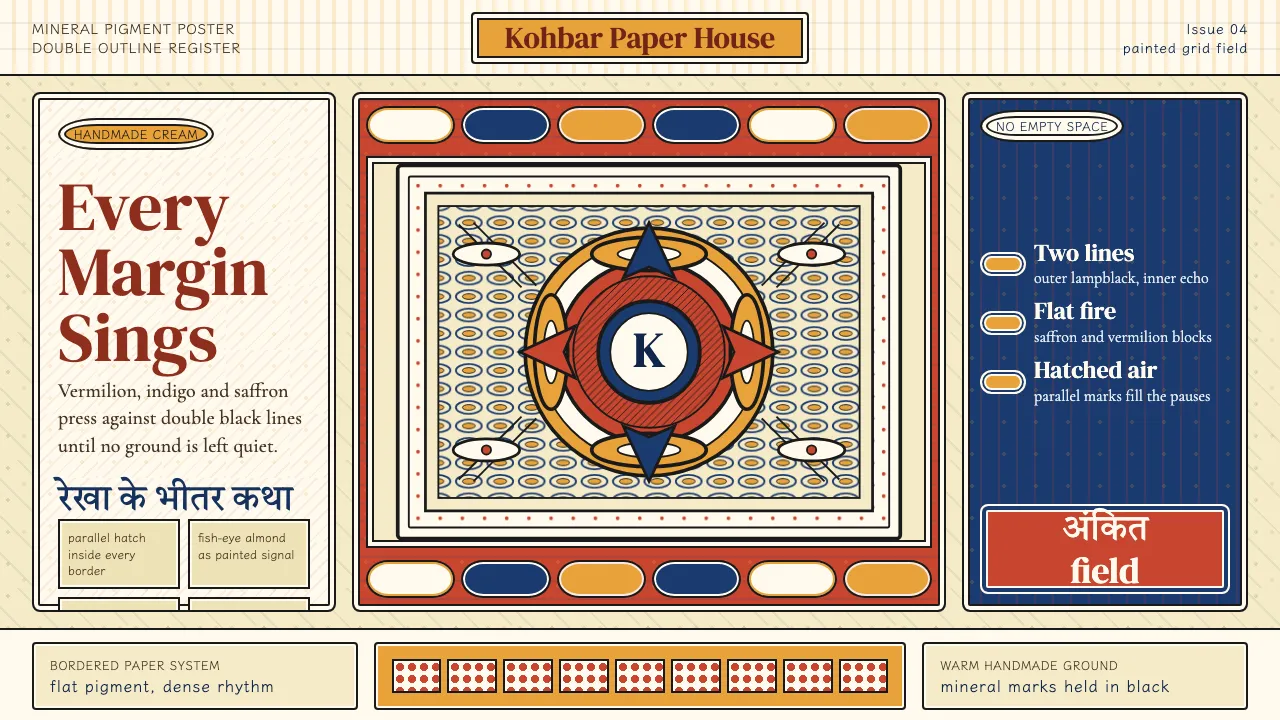
Madhubani — the women-painters' folk tradition of Bihar's Mithila region — turned mud walls into Hindu mythology billboards for at least four centuries. Every figure is outlined twice and filled with parallel hatching; every ground is choked with vine, lotus, fish-scale and bamboo motifs. There is no empty space.
After the 1966 drought drove the All India Handicrafts Board to commission paper paintings for cash income, Sita Devi and her peers carried the tradition into international collections. The discipline is saturated mineral pigment — vermilion, indigo, saffron, lampblack — laid as flat blocks on warm handmade-paper cream, never gradient, never pastel.
Learn more about the Madhubani (Mithila Folk Painting) style
- Origin
- Mithila / Madhubani district, northern Bihar, India (extending into Nepal's Tarai)
- Era
- Oral tradition pre-1600s on mud walls; transitioned to paper after 1966 Bihar drought; active living tradition
- Key figures
- Sita Devi · Ganga Devi · Mahasundari Devi · Baua Devi
- Movements
- Indian folk-painting · women's craft preservation · post-1960s government craft-revival
Madhubani (Mithila Folk Painting) design spec
Colors
Typography
The other 11 sections — buttons, cards, spacing, motion, techniques and more — open once you unlock. Download the DESIGN.md or send it to your AI in one click. Unlock once, yours forever.
Sign up nowStyles similar to Madhubani (Mithila Folk Painting)
Also inspired by crafts & folk art, with a close feel.
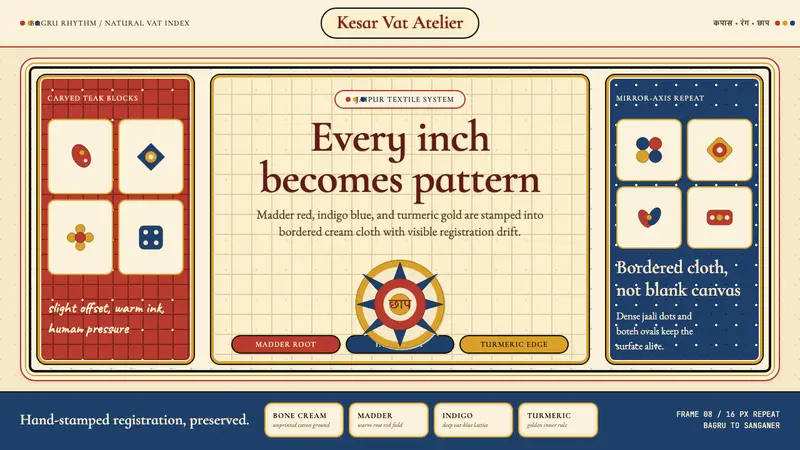 Indian Block PrintPattern claims every inch. Madder, indigo and turmeric stamp dense bordered cloth.
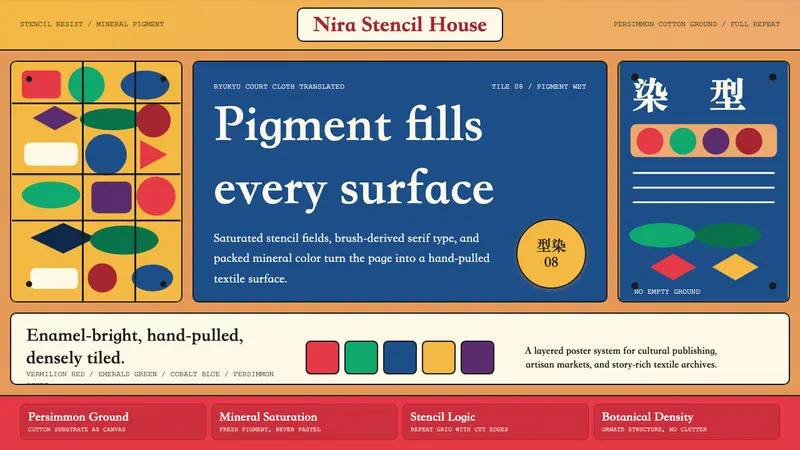 Okinawan Bingata Resist DyeOrnate without clutter. Persimmon ground, vermilion type, emerald-cobalt stencil grids.
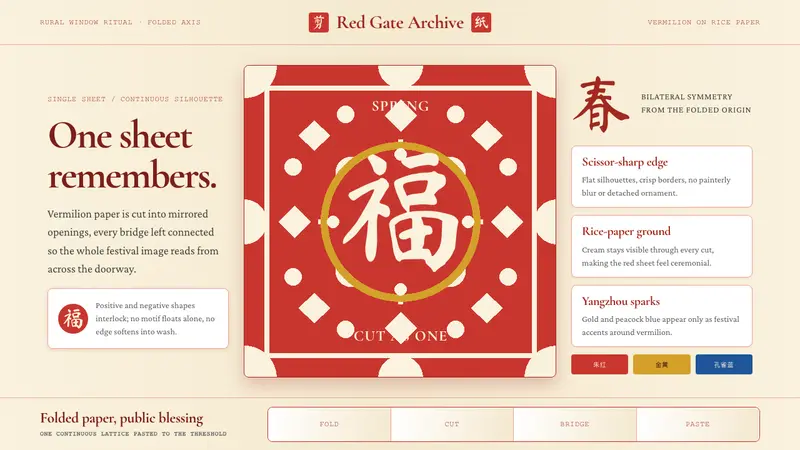 Chinese Jianzhi Paper-CuttingRitual red, cut as one. Vermilion lacework on rice-paper cream locks every shape to the axis.
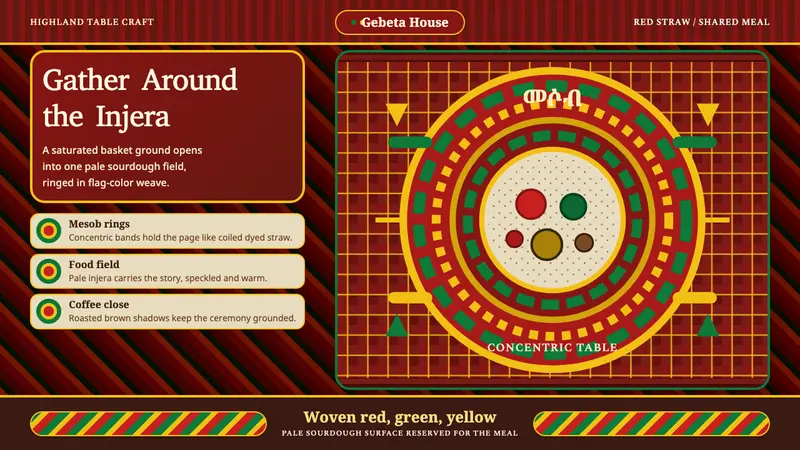 Ethiopian Injera & Mesob SpreadHospitality is woven in. Berbere red, flag bands, and an injera field hold the table.