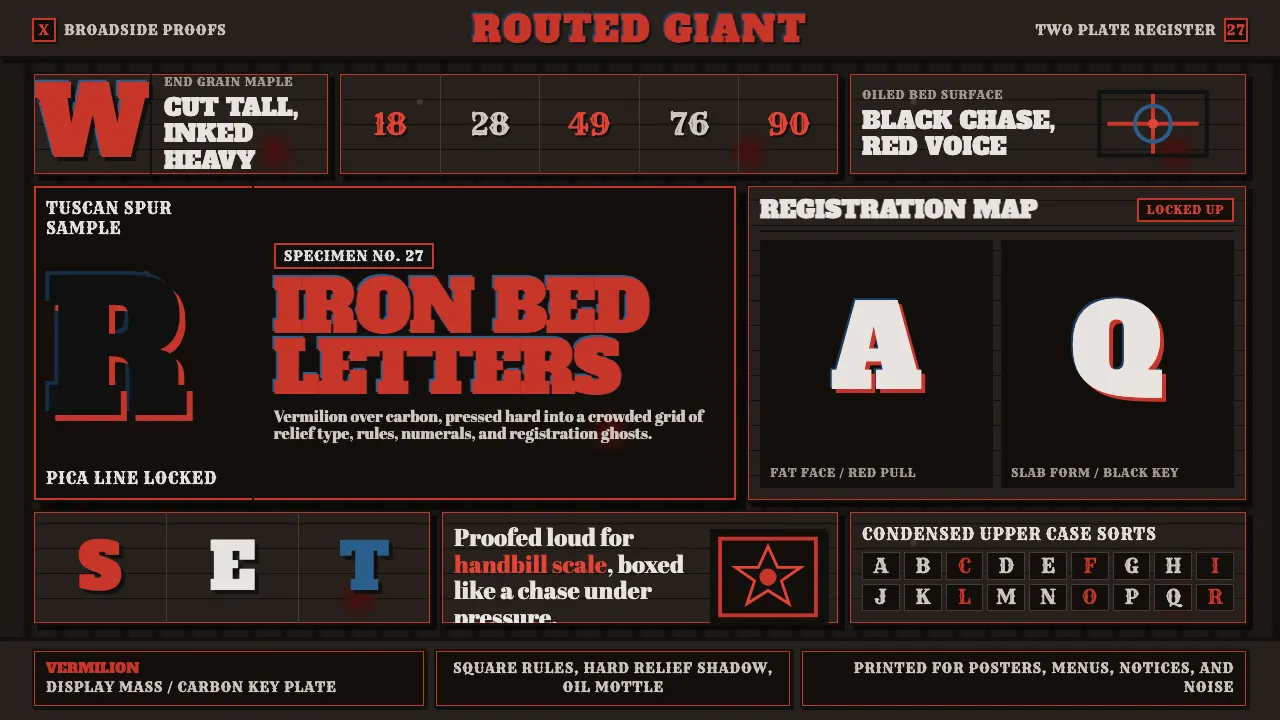
About Wood Type Specimen
Nineteenth-century American wood type was the loud voice of the broadside era — giant relief letters cut from end-grain maple, inked with oil-based vermilion and carbon black, and proofed in tight grids on the iron bed of a press. Faces like Fat Face, Clarendon slab, and ornamented Tuscans were sold through specimen catalogs that crowded the page with mass and contrast. This system rebuilds that surface: heavy display letterforms, two-colour overprint, and the dark, oiled sheen of an inked press bed rather than blank manila stock.
- Origin
- North America — Wisconsin and New England wood-type foundries
- Era
- 1828–1900; American wood-type display printing
- Key figures
- Darius Wells · William Leavenworth · J. Edward Hamilton
- Movements
- Letterpress printing · display typography · type specimen catalogs
Wood Type Specimen design spec
Colors
Typography
The other 11 sections — buttons, cards, spacing, motion, techniques and more — open once you unlock. Download the DESIGN.md or send it to your AI in one click. Unlock once, yours forever.
Sign up nowStyles similar to Wood Type Specimen
Also inspired by print & type, with a close feel.
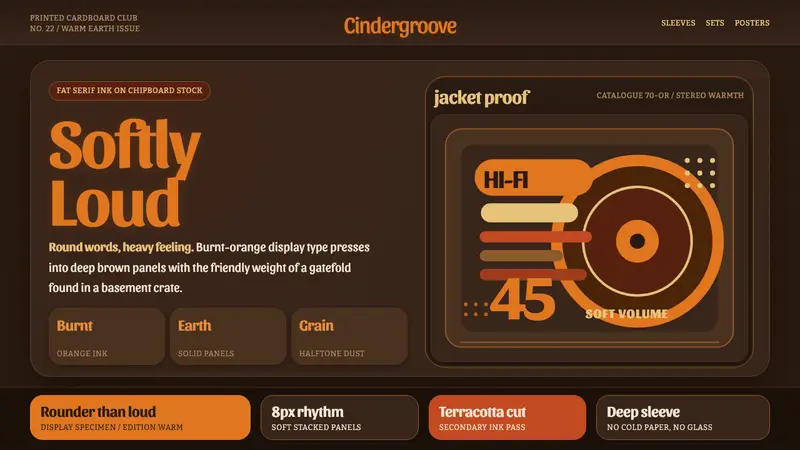 Cooper Black DisplayShouts softly. Burnt-orange Cooper type sinks into deep chipboard brown with halftone warmth.
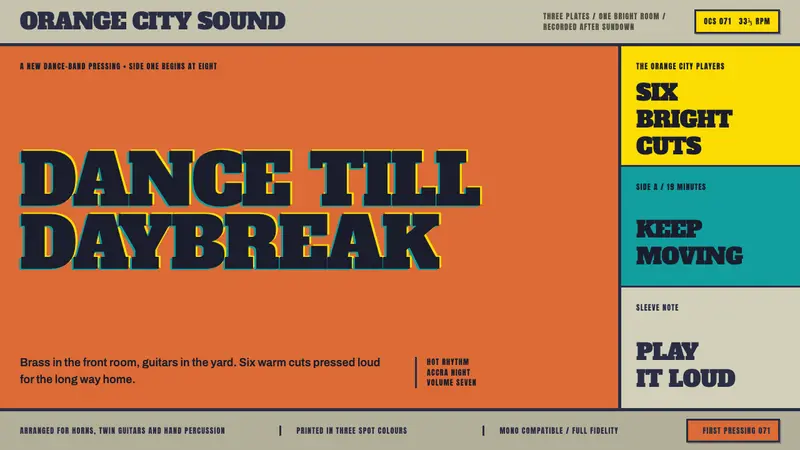 Highlife Record SleevePrint it loud. Hot orange fields and fat slab type keep the sleeve gloriously off-register.
 Beirut Golden-Age PosterFestival glamour after dark. Midnight blue carries foil-gold type and magenta neon geometry.
 Iranian Film PosterCinema shouts in flat ink. Persian lettering clashes orange, turquoise and magenta on red.