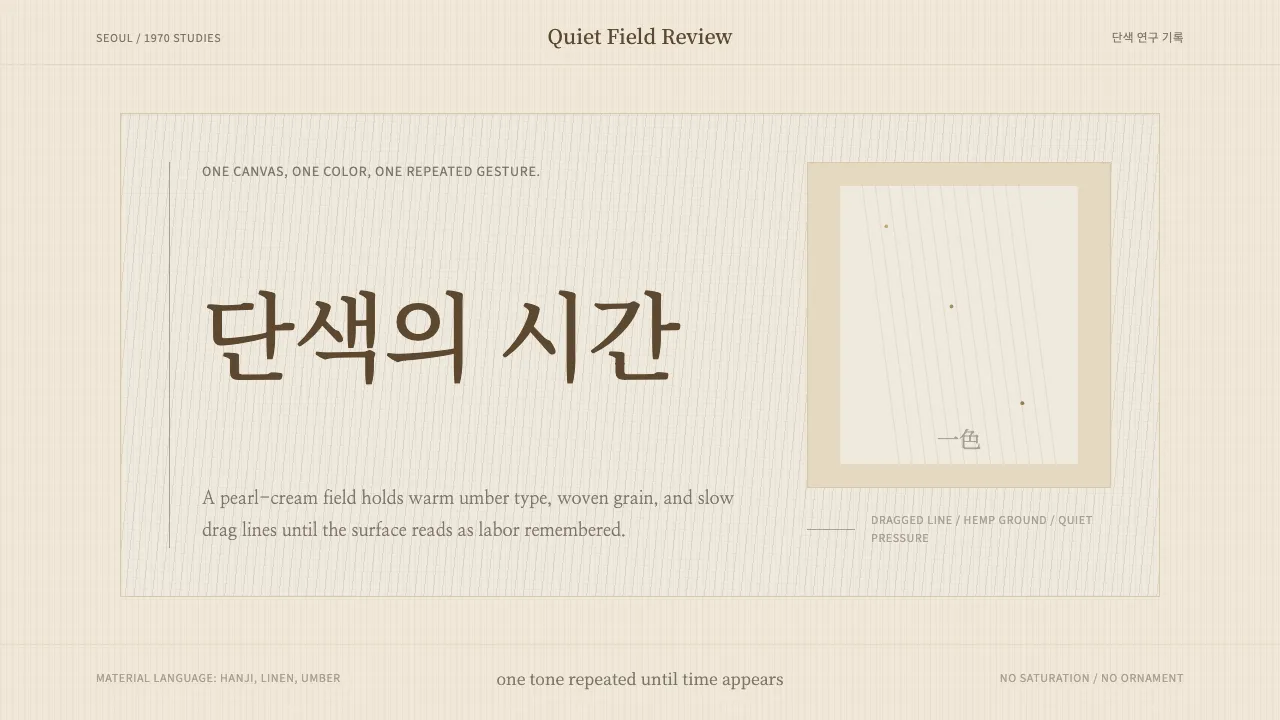
About Korean Dansaekhwa Monochrome
Dansaekhwa (단색화, "monochrome painting") is the 1970s South Korean abstract movement that produced postwar Asia's quietest, most intense single-color canvases. Park Seo-bo, Lee Ufan, Ha Chong-Hyun, Chung Sang-Hwa, Yun Hyong-keun and Kwon Young-Woo dragged, pressed, peeled and knit a single earth tone across raw hemp, linen and mulberry hanji for hours at a time.
As a design system it says: one color, one gesture, repeated until the surface becomes a meditative trace of time and labor. Muted beige, warm grey, pearl-cream and umber on textured cloth — never saturation, never ornament.
- Origin
- South Korea (Seoul)
- Era
- c. 1970–1985 canonical period; rediscovered globally 2010s via Kukje + Tina Kim + Pace + Hauser & Wirth; LACMA 2015 international canonization
- Key figures
- Park Seo-bo · Lee Ufan · Ha Chong-Hyun · Chung Sang-Hwa · Yun Hyong-keun · Kwon Young-Woo
- Movements
- Korean postwar abstraction · Mono-ha cross-pollination · East Asian process-and-material aesthetic
Korean Dansaekhwa Monochrome design spec
Colors
Typography
The other 11 sections — buttons, cards, spacing, motion, techniques and more — open once you unlock. Download the DESIGN.md or send it to your AI in one click. Unlock once, yours forever.
Sign up nowStyles similar to Korean Dansaekhwa Monochrome
Also inspired by art & artists, with a close feel.
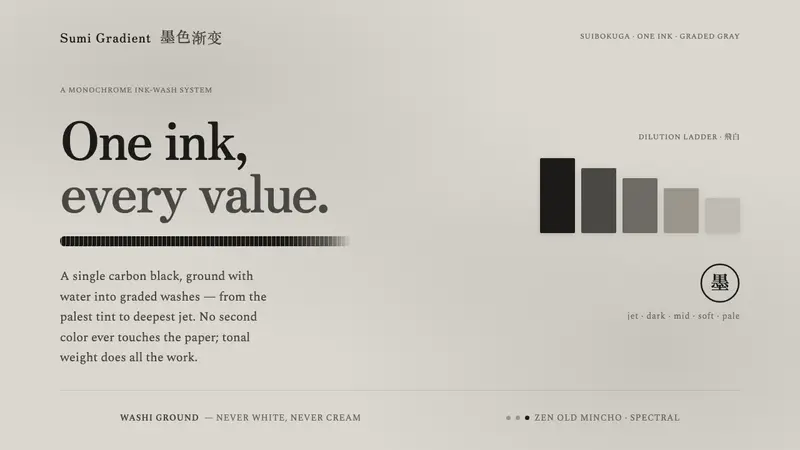 Sumi Grayscale GradientOne ink, every value. A single carbon black diluted into graded grays, marked by a dry-brush stroke.
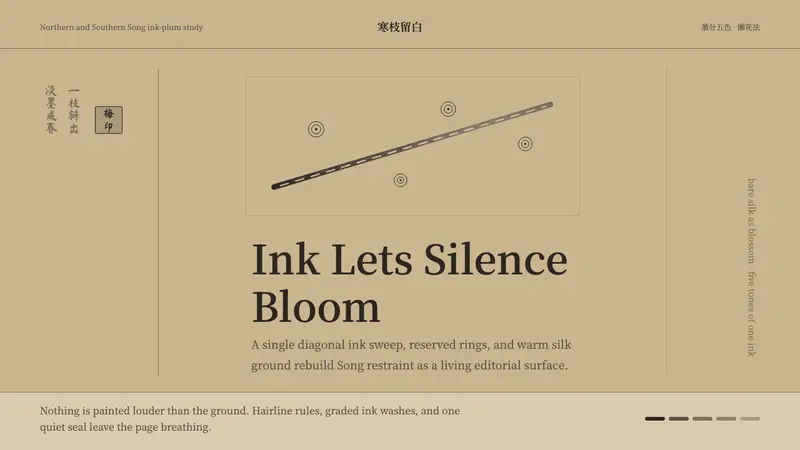 Plum Blossom Ink (宋)Silence carries the ink. Tea-tan ground, reserved blossoms, and one diagonal branch.
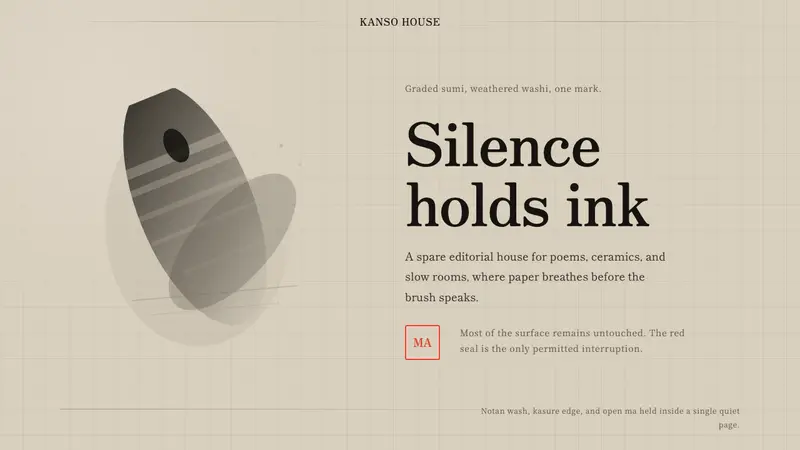 Sumi-e Ink WashRestraint carries weight. Washed black ink floats on oatmeal washi, anchored by one red seal.
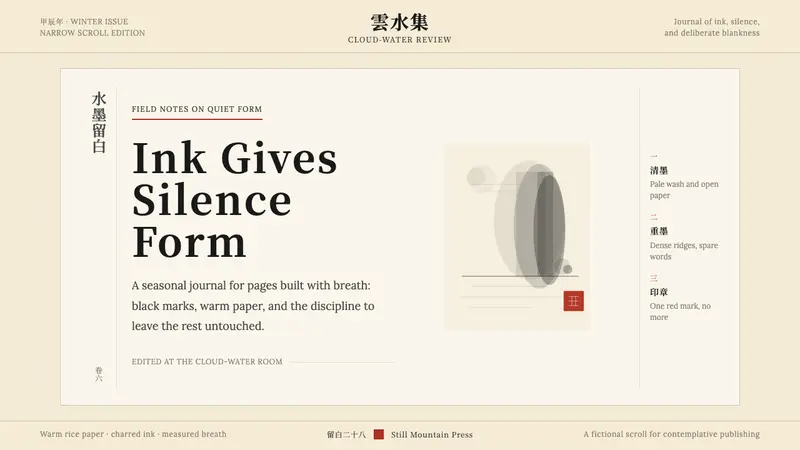 Chinese Ink Wash 水墨A thousand years of restraint. Six tones of ink on rice-paper warmth, a single seal-red as accent.