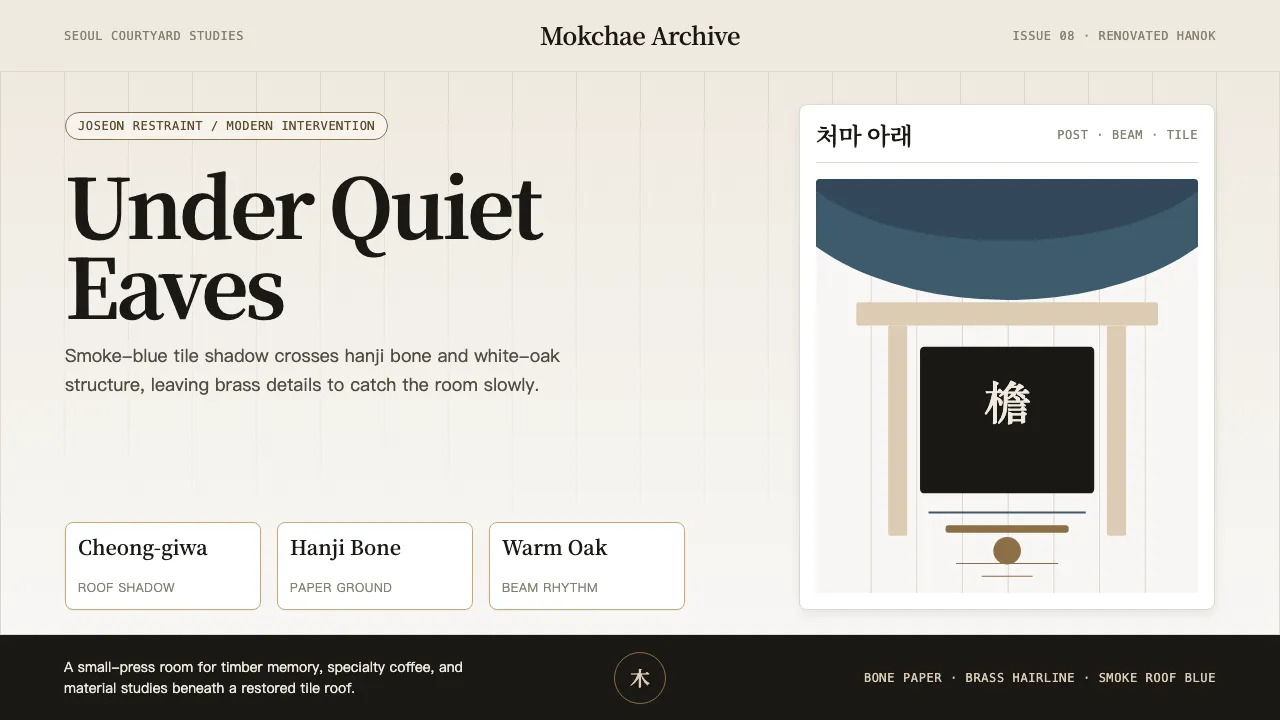
About Korean Hanok Eaves Revival
The Korean Hanok Eaves Revival captures the 2010s–2020s movement of transforming Joseon-era courtyard houses into contemporary cultural spaces — specialty cafés, small-press bookshops, and soap studios — without erasing the timber. Studios like Mass Studies, Guga Urban Architecture, and Doojin Hwang Architects set the register.
The visual language is smoke-blue roof-tile shadow meeting warm white-oak beams, punctuated by brass fixture details. It is restrained but distinctly Korean — Joseon restraint, not Scandinavian minimalism.
- Origin
- Seoul (Bukchon, Ikseon-dong, Seochon), Jeonju — South Korea
- Era
- 2010–present revival; drawing on Joseon dynasty hanok tradition (1392–1897) and 8th-century Silla giwa roofing
- Key figures
- Minsuk Cho · Cho Jung-goo · Hwang Doo-jin · Itami Jun
- Movements
- hanok preservation movement · modern-vernacular hybrid architecture · contemporary Korean specialty coffee culture
Korean Hanok Eaves Revival design spec
Colors
Typography
The other 11 sections — buttons, cards, spacing, motion, techniques and more — open once you unlock. Download the DESIGN.md or send it to your AI in one click. Unlock once, yours forever.
Sign up nowStyles similar to Korean Hanok Eaves Revival
Also inspired by architecture & places, with a close feel.
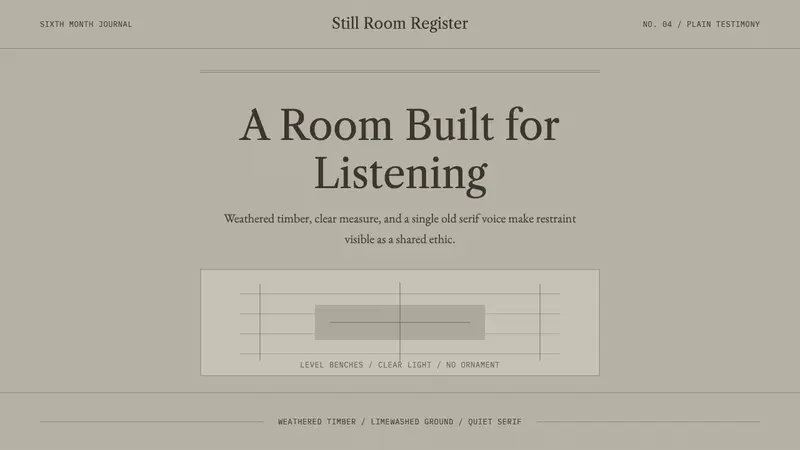 Quaker Plain StyleSilence made visible. Timber gray, Caslon serif, and bench-rule spacing leave only use.
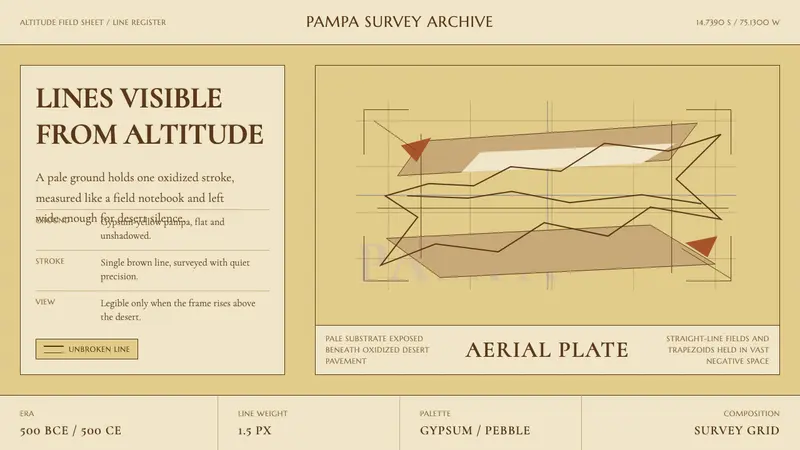 Peruvian Nazca Lines (Geoglyph)Vastness holds the line. Gypsum ground, pebble-brown strokes, and survey-grid silence.
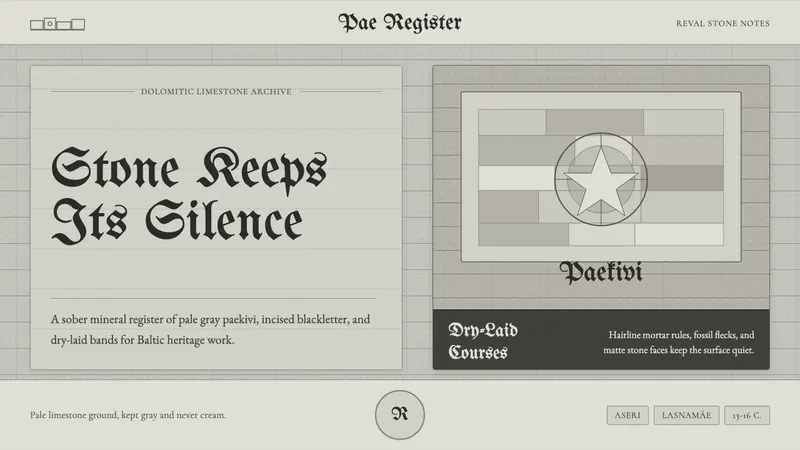 Estonian Limestone GrayStone keeps its silence. Limestone grays, blackletter, and dry-laid bands carry the weight.
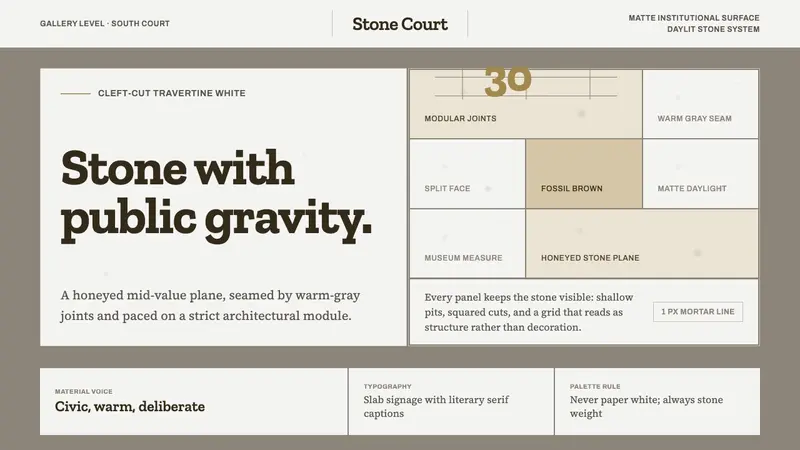 Getty Center Travertine WhiteStone has gravity. Honeyed travertine planes are cut by warm-gray modular seams.