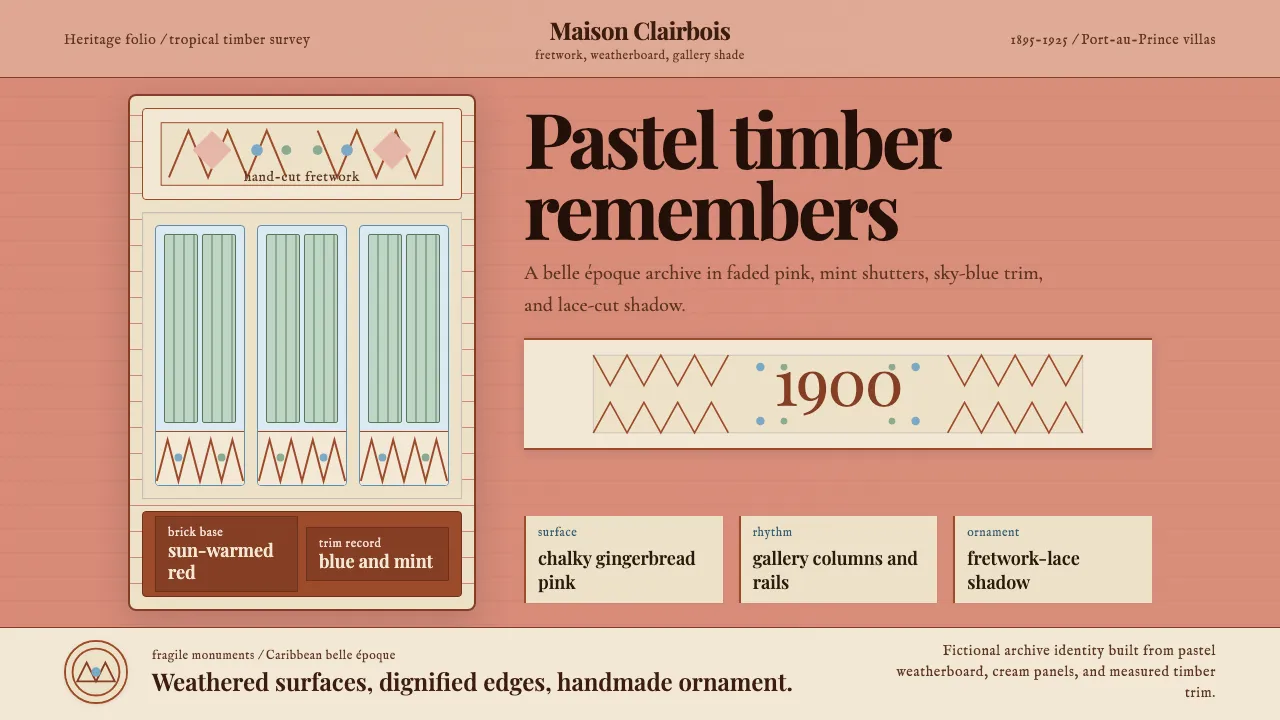
About Haitian Gingerbread House (1900)
Port-au-Prince's gingerbread houses are a uniquely Haitian architectural phenomenon — two-storey timber and brick villas built between 1895 and 1925, crowned with steep mansard roofs, fretwork-lace gables, and wrap-around galleries. Designed by Paris-educated Haitian architects who fused Second Empire French elegance with West African verandah climate-response, they stand as fragile monuments to a Caribbean belle époque.
This design system captures their weathered pastel charm: faded pink weatherboard, mint-green shutters, sky-blue trim, and the intricate shadow-play of hand-cut fretwork ornament against sun-cream surfaces.
- Origin
- Port-au-Prince, Haiti (Pacot, Bois Verna, Turgeau)
- Era
- 1895–1925 peak; UNESCO World Monuments Watch 2010
- Key figures
- Léon Mathon · Georges Baussan · Joseph-Eugène Maximilien · Anghelen Arrington Phillips
- Movements
- Haitian belle époque architecture · French Second Empire colonial adaptation · climate-responsive Caribbean timber building
Haitian Gingerbread House (1900) design spec
Colors
Typography
The other 11 sections — buttons, cards, spacing, motion, techniques and more — open once you unlock. Download the DESIGN.md or send it to your AI in one click. Unlock once, yours forever.
Sign up nowStyles similar to Haitian Gingerbread House (1900)
Also inspired by architecture & places, with a close feel.
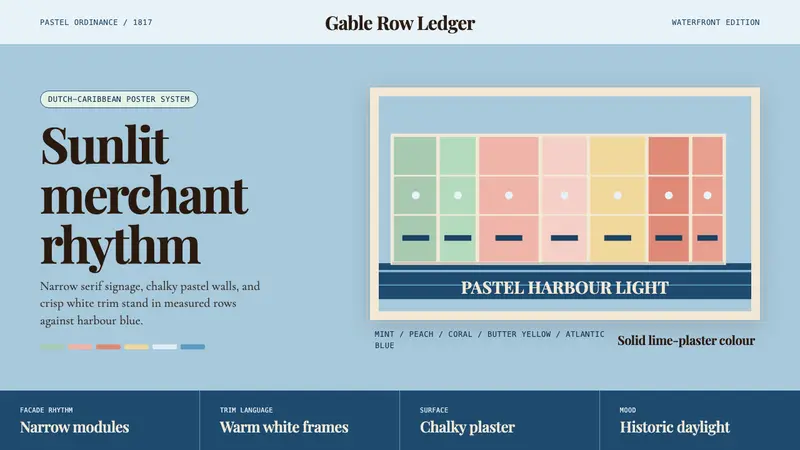 Curaçao Handelskade PastelPastel order feels sunlit. Coral, mint, and serif gables march across sky blue.
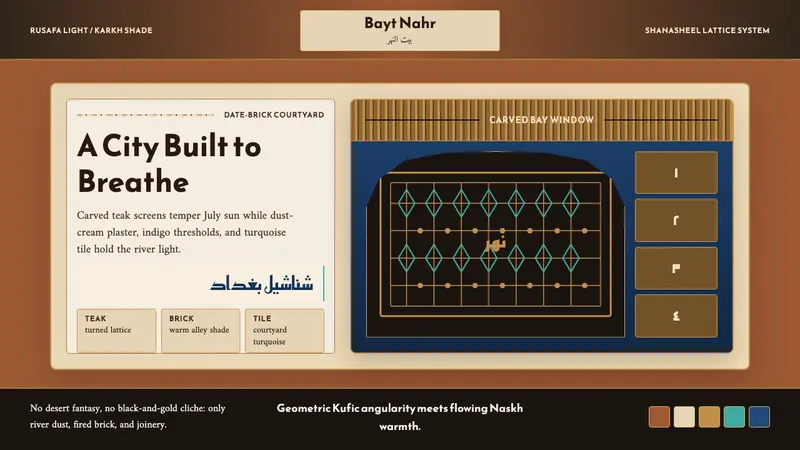 Iraqi Baghdad Shanasheel HouseBreathes through ornament. Date-brick ground, teak lattice, and turquoise tile frame the page.
 Jordanian Petra Rose NabataeanGeology feels monumental. Crevice umbra, rose strata, and Cinzel capitals carve the page.
 Egyptian Hassan Fathy Vernacular (1945)Earth remembers craft. Burnt brick, sand-gold vaults, and indigo doors carry the warmth.