About Gujarati Bandhani Tie-Dye
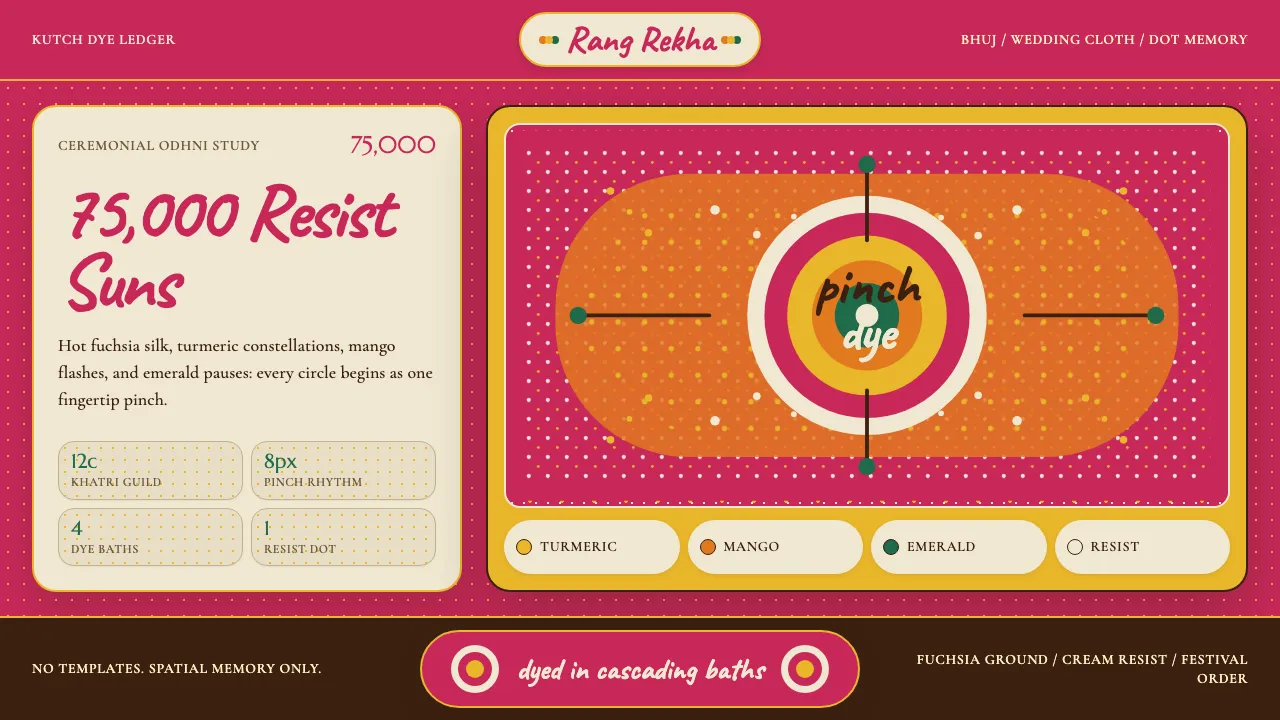
Gujarati bandhani is the world's most precise tie-dye tradition. Khatri dyers in Kutch pinch silk into tens of thousands of microdots, then dye in cascading baths — yellow, red, green, black — so each untied dot reveals a tiny resist-circle of pure colour. A single wedding odhni can carry over 75,000 hand-pinched dots.
This design system channels that festival-loud energy: a hot fuchsia ground saturated with turmeric yellow constellations, mango orange accents, and cream dot-fields that echo the maharas peacock and chand moon motifs of ceremonial cloth. Every element is built from the dot — the fundamental unit of bandhani.
- Origin
- India — Gujarat (Kutch, Jamnagar, Bhuj, Mandvi); Rajasthan (Bikaner, Sikar)
- Era
- 4th-century Ajanta origins; Khatri guild since 12th c.; peak 18th–19th c.
- Key figures
- Abdul Aziz Khatri · Eiluned Edwards · Yashodhara Agrawal
- Movements
- Khatri tie-dye guild · Kutchi material culture · Saurashtra wedding-textile economy
Gujarati Bandhani Tie-Dye design spec
Colors
Typography
The other 11 sections — buttons, cards, spacing, motion, techniques and more — open once you unlock. Download the DESIGN.md or send it to your AI in one click. Unlock once, yours forever.
Sign up nowStyles similar to Gujarati Bandhani Tie-Dye
Also inspired by crafts & folk art, with a close feel.
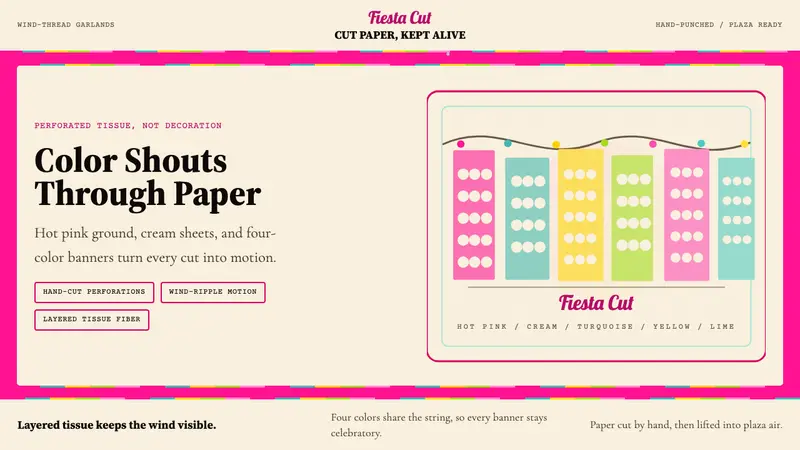 Mexican Papel Picado TissueFiesta cut paper. Hot pink, turquoise, yellow banners and hand-cut perforations.
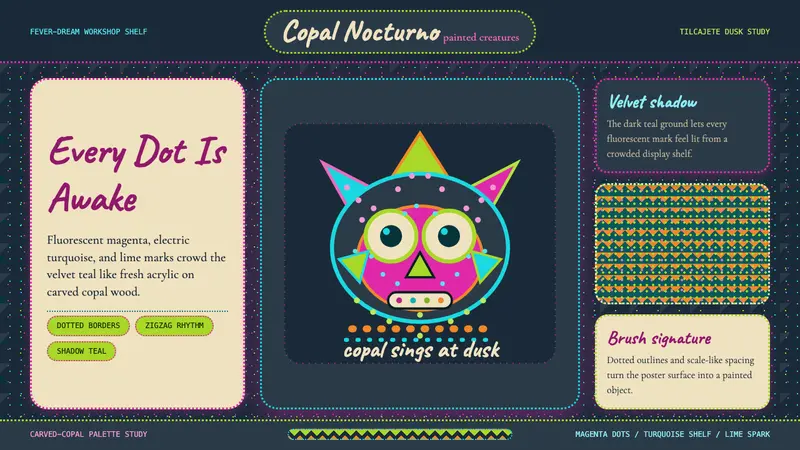 Mexican Alebrije Oaxaca (Linares 1936)Fever craft glows. Velvet teal carries magenta dots, turquoise zigzags, and Caveat script.
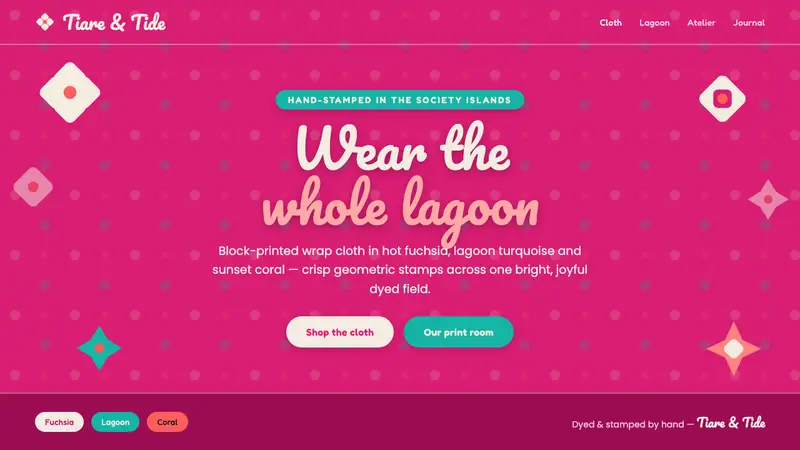 Tahitian Pareu PrintWear the whole lagoon. White hibiscus block-printed on hot-fuchsia cloth, with turquoise and coral.
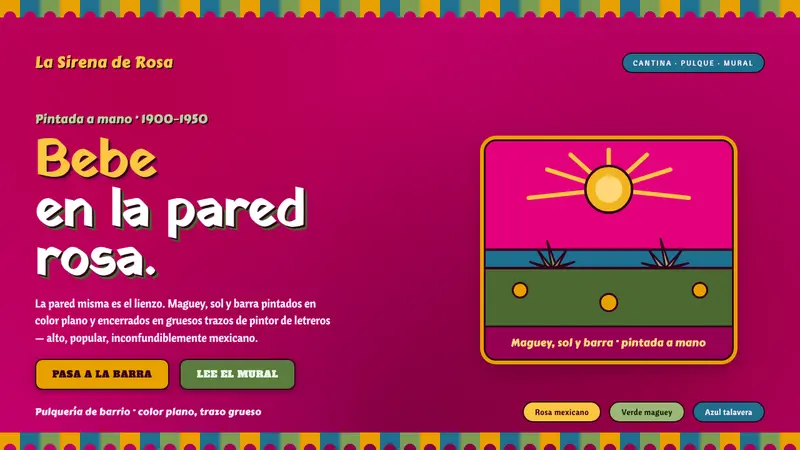 Mexican Pulquería MuralThe wall is the canvas. Hot rosa-mexicano plaster, maguey green and marigold in folk lettering.