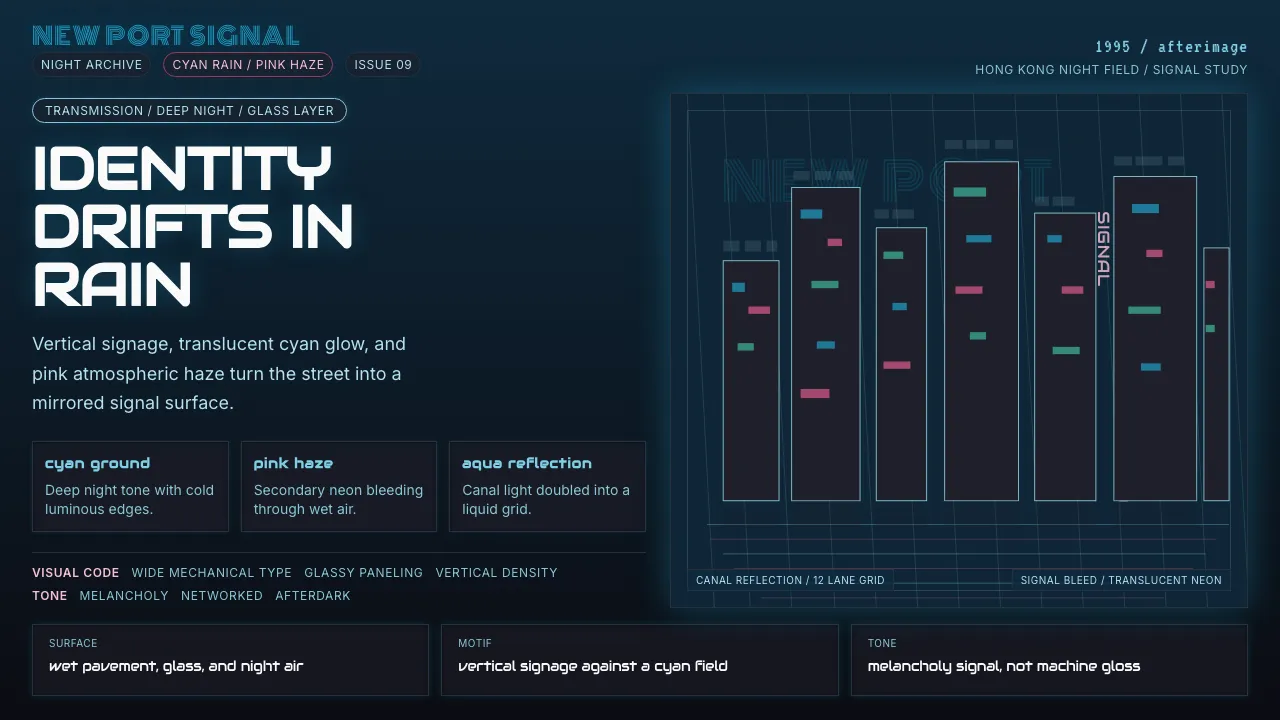
About Ghost in the Shell 1995 Cyber
Mamoru Oshii's 1995 *Ghost in the Shell* defined the visual language of cyberpunk cinema — rain-soaked Hong Kong streets rendered in saturated cyan and pink neon, dense kanji signage towering vertically, canal water doubling every light source into shimmering abstraction. The film's melancholy philosophy of identity dissolving into networks finds its visual corollary in translucent layers, atmospheric glow, and the perpetual night of New Port City.
This system captures that specific color grading — the deep cyan-night ground, the hot-pink secondary neon, the aqua water-reflection moments — alongside the geometric-futuristic typography and sharp angular hardware aesthetic that Production I.G painted frame by frame.
- Origin
- Tokyo, Japan (production); Hong Kong, China (visual setting)
- Era
- 1989 manga; 1995 animated film; influence continuous through 2024
- Key figures
- Mamoru Oshii · Masamune Shirow · Hiromasa Ogura · Kenji Kawai
- Movements
- Japanese cyberpunk anime · Hong Kong-aesthetic Asian-future cinema · philosophical anime tradition
Ghost in the Shell 1995 Cyber design spec
Colors
Typography
The other 11 sections — buttons, cards, spacing, motion, techniques and more — open once you unlock. Download the DESIGN.md or send it to your AI in one click. Unlock once, yours forever.
Sign up nowStyles similar to Ghost in the Shell 1995 Cyber
Also inspired by film, games & music, with a close feel.
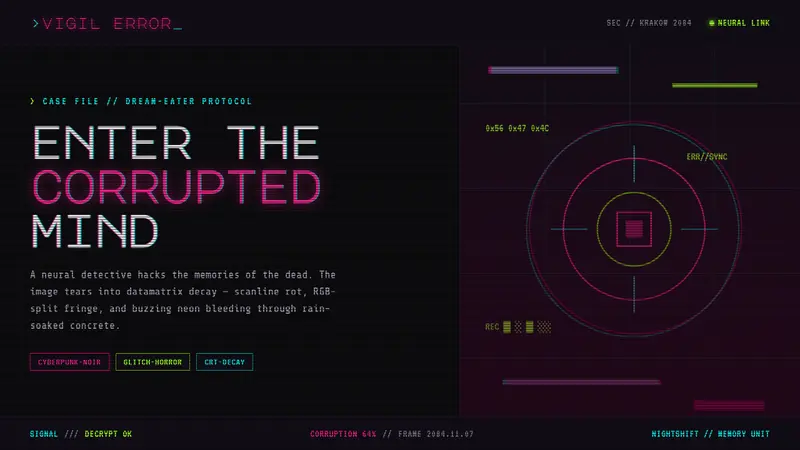 ObserverTech, but corrupted. Neon magenta and acid green tear through rain-black concrete on CRT scanlines.
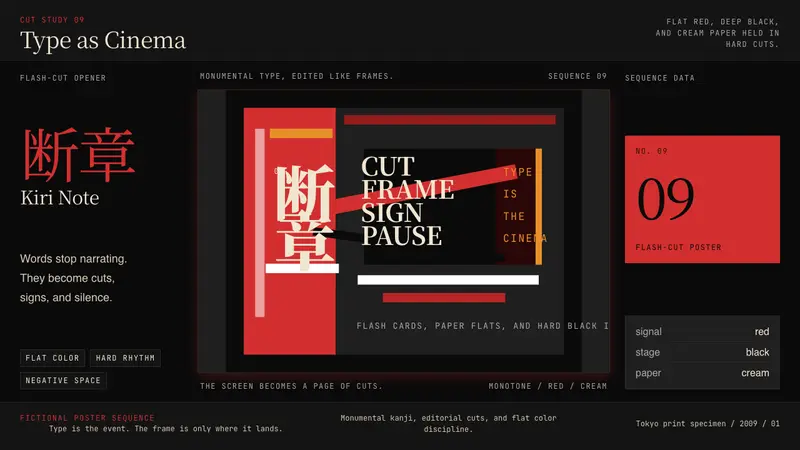 SHAFT Monogatari TypographyType becomes cinema. Red cuts, black flats, and monumental kanji steer the frame.
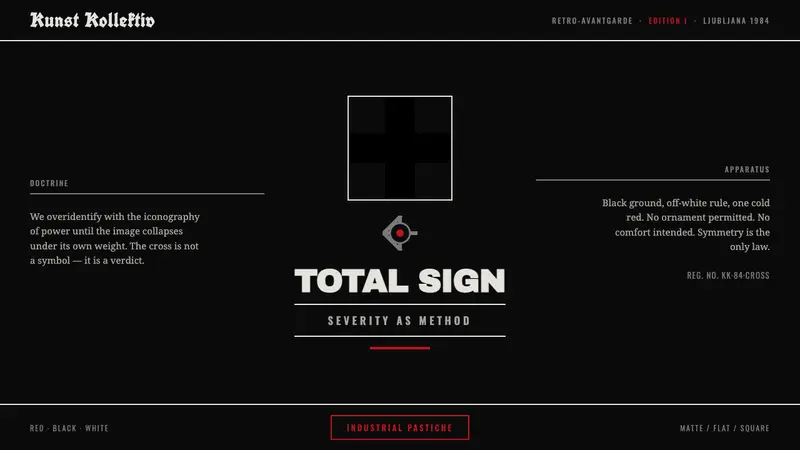 NSK / Laibach Retro-AvantgardePower's iconography turned into critique. Malevich black cross on matte black, struck with cold blood-red.
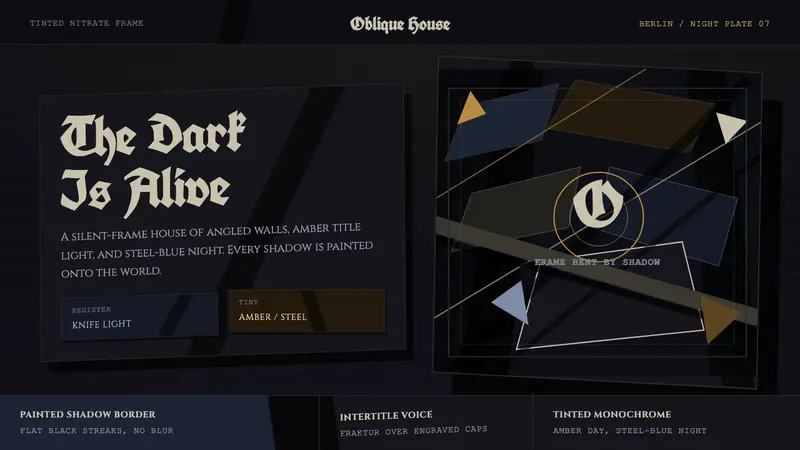 German Expressionist CinemaDread is painted, not cast. Amber type, steel-blue flats, and oblique shadows bend the frame.