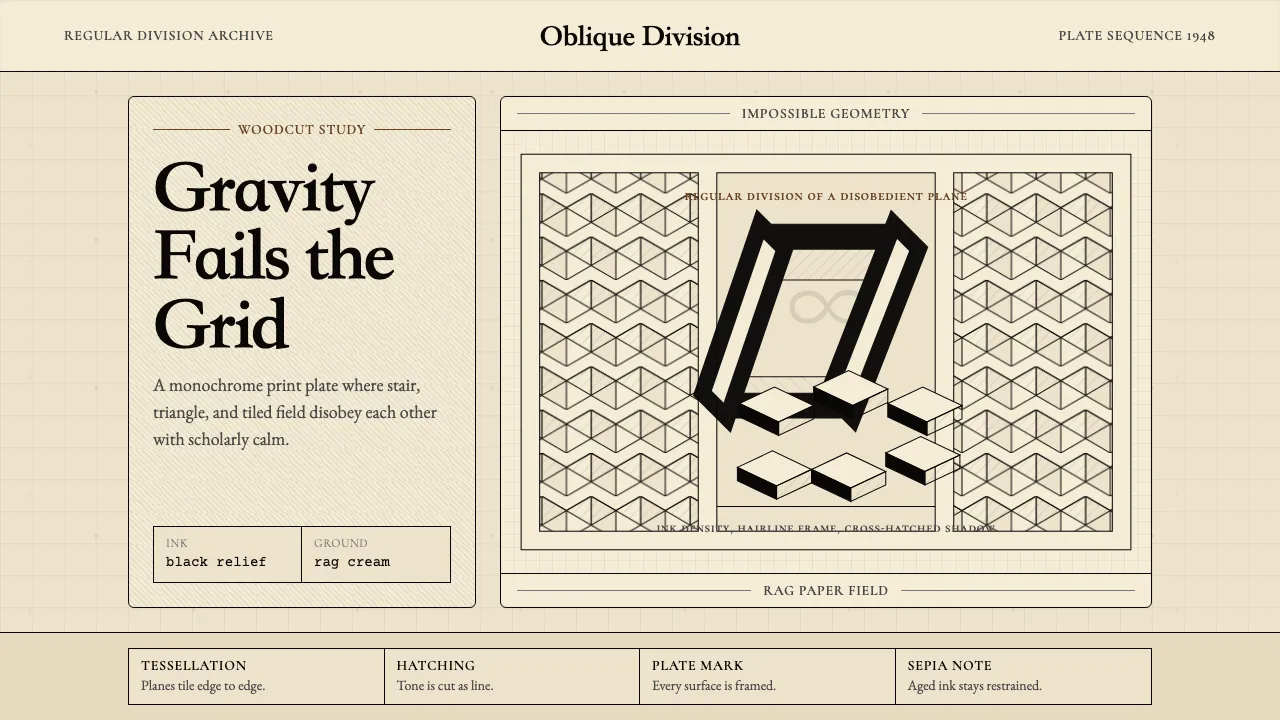
About M.C. Escher Impossible
M.C. Escher's hand-cut woodblocks and lithographic stones produced the most recognized geometric optical illusions of the 20th century — tessellating metamorphoses, infinite staircases, and impossible architectures rendered in pure ink-black on warm rag paper. This system channels that monochrome printmaking discipline: cross-hatched shadows, hairline borders, and the warm cream of handmade paper as its ground truth.
Every element references the labor-intensive craft of relief printing — slight ink-density variation at edges, visible paper fiber, and the sharp geometry of hand-cut blocks rather than machine precision.
- Origin
- Netherlands — Leeuwarden, Italy, Spain (Alhambra), Switzerland
- Era
- 1937–1972; peak production 1937–1965; rediscovered 1960s–70s
- Key figures
- Maurits Cornelis Escher · Roger Penrose · H.S.M. Coxeter · Bruno Ernst
- Movements
- 20th-century woodcut and lithography revival · geometric mathematical art · Op Art lineage
M.C. Escher Impossible design spec
Colors
Typography
The other 11 sections — buttons, cards, spacing, motion, techniques and more — open once you unlock. Download the DESIGN.md or send it to your AI in one click. Unlock once, yours forever.
Sign up nowStyles similar to M.C. Escher Impossible
Also inspired by art & artists, with a close feel.
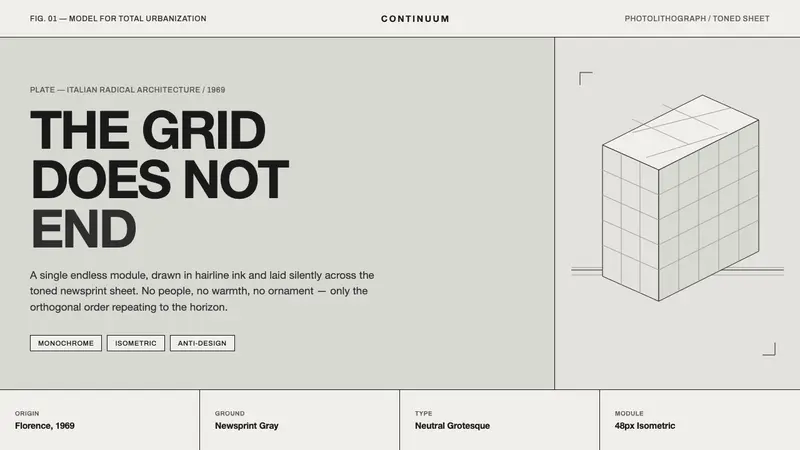 Superstudio Continuous MonumentThe grid does not end. Hairline black isometric ruling on toned newsprint-gray, deadpan Helvetica.
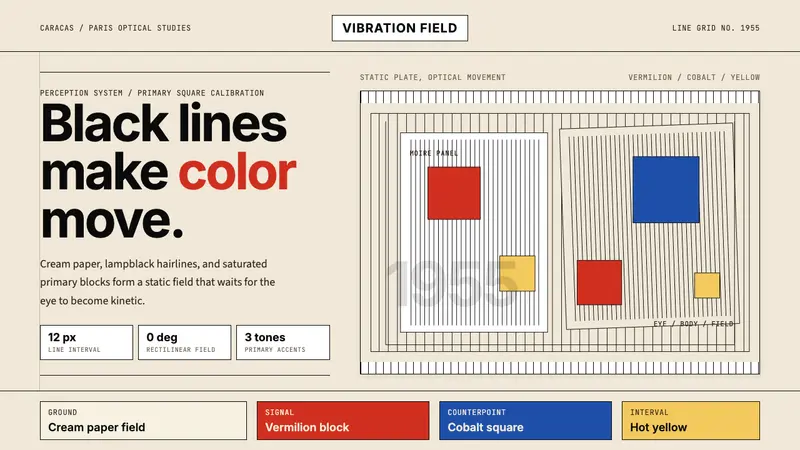 Jesús Soto Kinetic Art (Venezuela)Perception is the medium. Cream ground, black-line grids, and primary squares make motion.
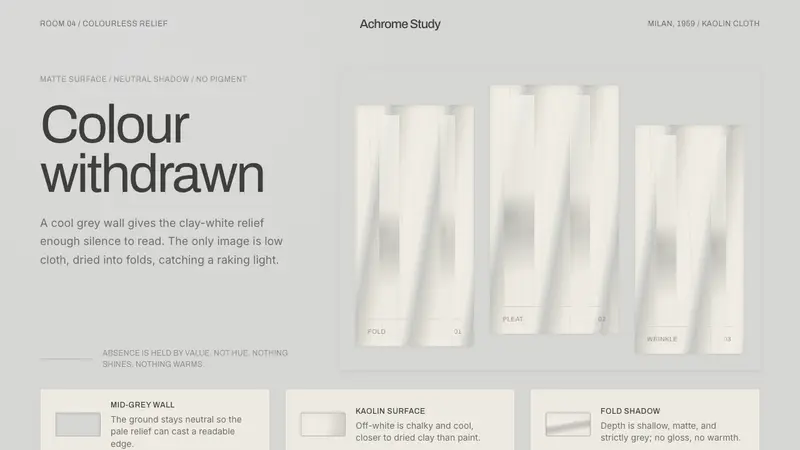 Piero Manzoni AchromeColour withdrawn. Kaolin off-white reliefs on mid-grey cast cool fold-shadows.
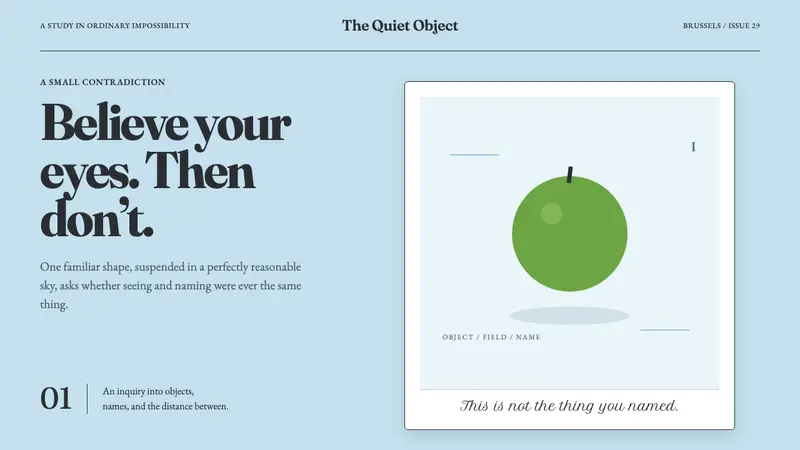 Magritte Surrealism (1929)Ordinary things tell quiet lies. A flat cerulean sky suspends one green interruption.