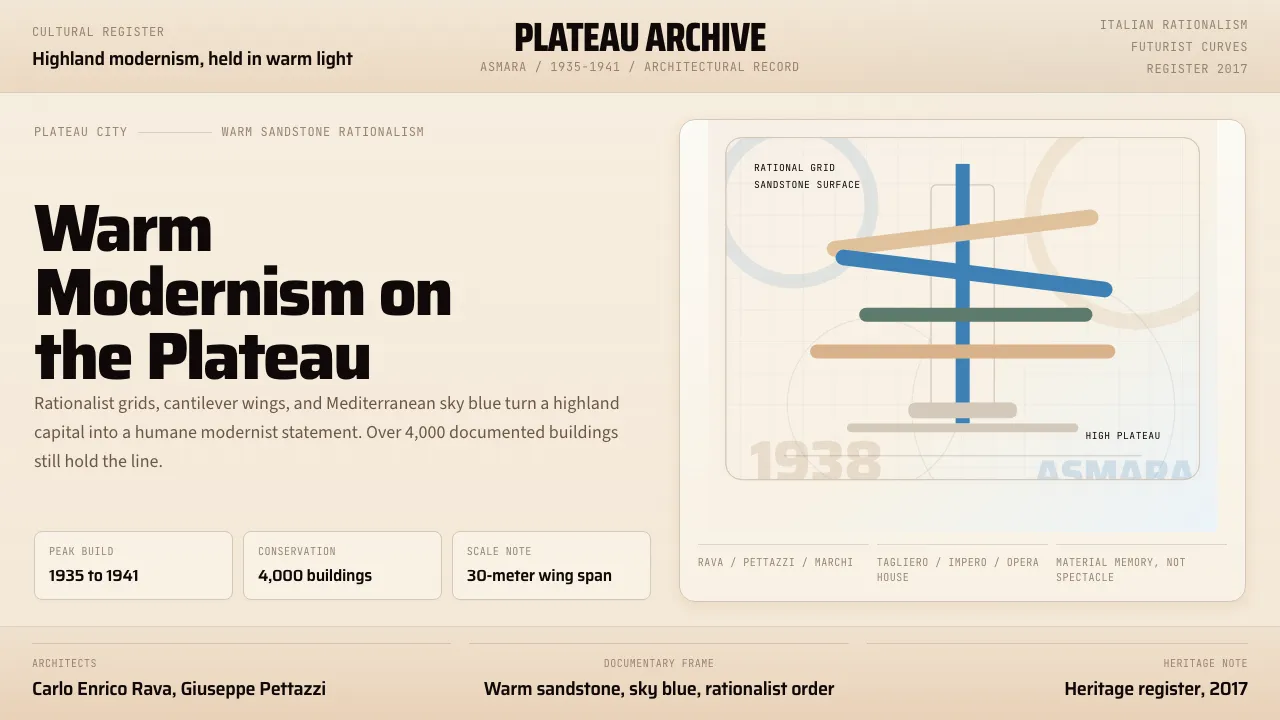
About Eritrean Asmara Italian Modernism
Asmara sits at 2,325 meters on the Eritrean plateau — a city where Italian Rationalist architects, freed from fascist conservatism back home, built the most concentrated collection of 1930s modernist architecture outside Europe. The Fiat Tagliero gas station's 30-meter cantilever wings, Cinema Impero's Art Deco facade, and over 4,000 documented buildings form a living museum of what European modernism nearly became.
This design system channels that warm sandstone stucco, the Mediterranean sky blue, and the curvilinear futurist geometry into a digital vocabulary — monumental yet humane, modern yet rooted in place.
Learn more about the Eritrean Asmara Italian Modernism style
- Origin
- Asmara, Eritrea
- Era
- 1935–1941 peak construction; UNESCO inscription 2017
- Key figures
- Carlo Enrico Rava · Giuseppe Pettazzi · Bruno Sclafani · Carlo Marchi
- Movements
- Italian Rationalism · Italian Futurism · Novecento
Eritrean Asmara Italian Modernism design spec
Colors
Typography
The other 11 sections — buttons, cards, spacing, motion, techniques and more — open once you unlock. Download the DESIGN.md or send it to your AI in one click. Unlock once, yours forever.
Sign up nowStyles similar to Eritrean Asmara Italian Modernism
Also inspired by architecture & places, with a close feel.
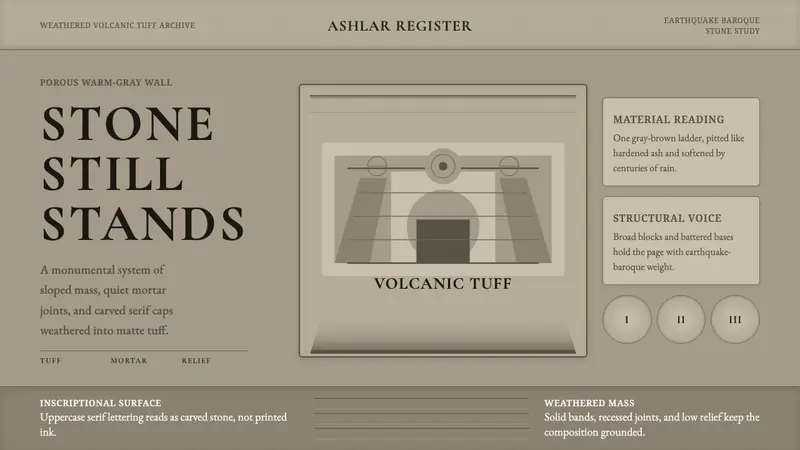 Philippine Adobe TuffStone refuses polish. Warm tuff gray, incised serif caps, and buttress-heavy bands.
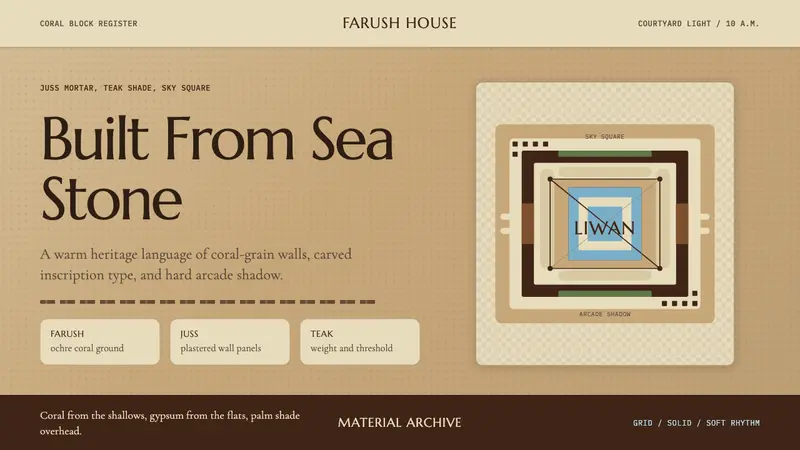 Emirati Bait Al Naboodah Coral HouseFeels built, not styled. Coral ochre, teak brown, and a sky-square courtyard grid.
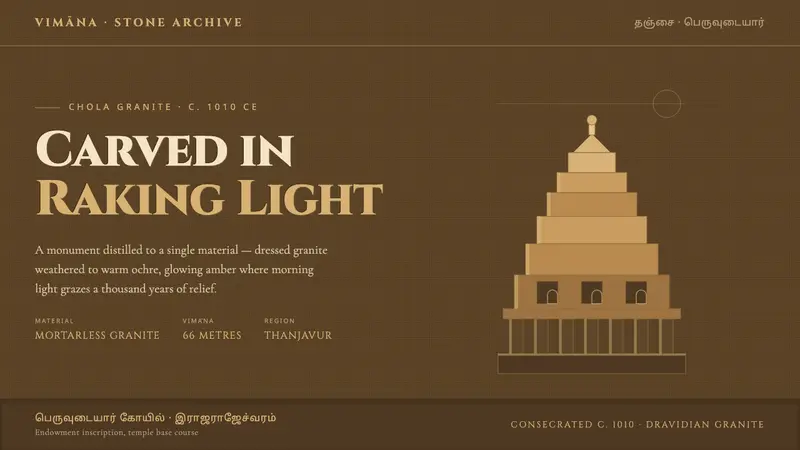 Brihadeeswarar Temple GraniteStone that glows at dawn. Weathered ochre grounds, amber relief edges, inscriptional Cinzel caps.
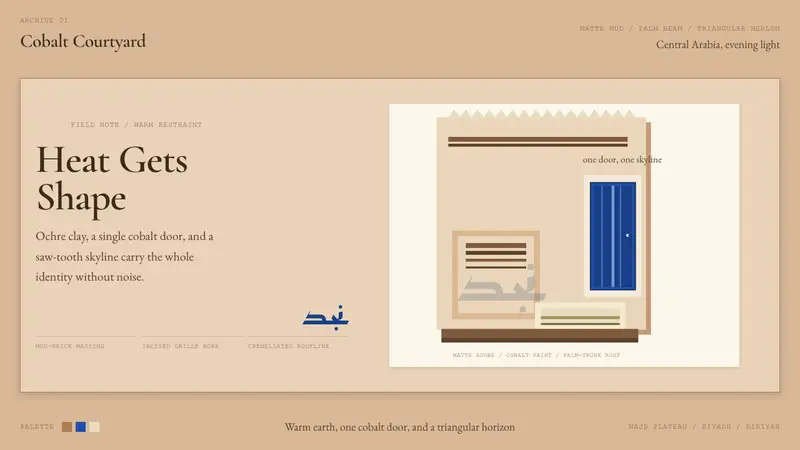 Saudi Najdi Vernacular ArchitectureHeat gets shape. Ochre clay, a single cobalt door, and a saw-tooth skyline.