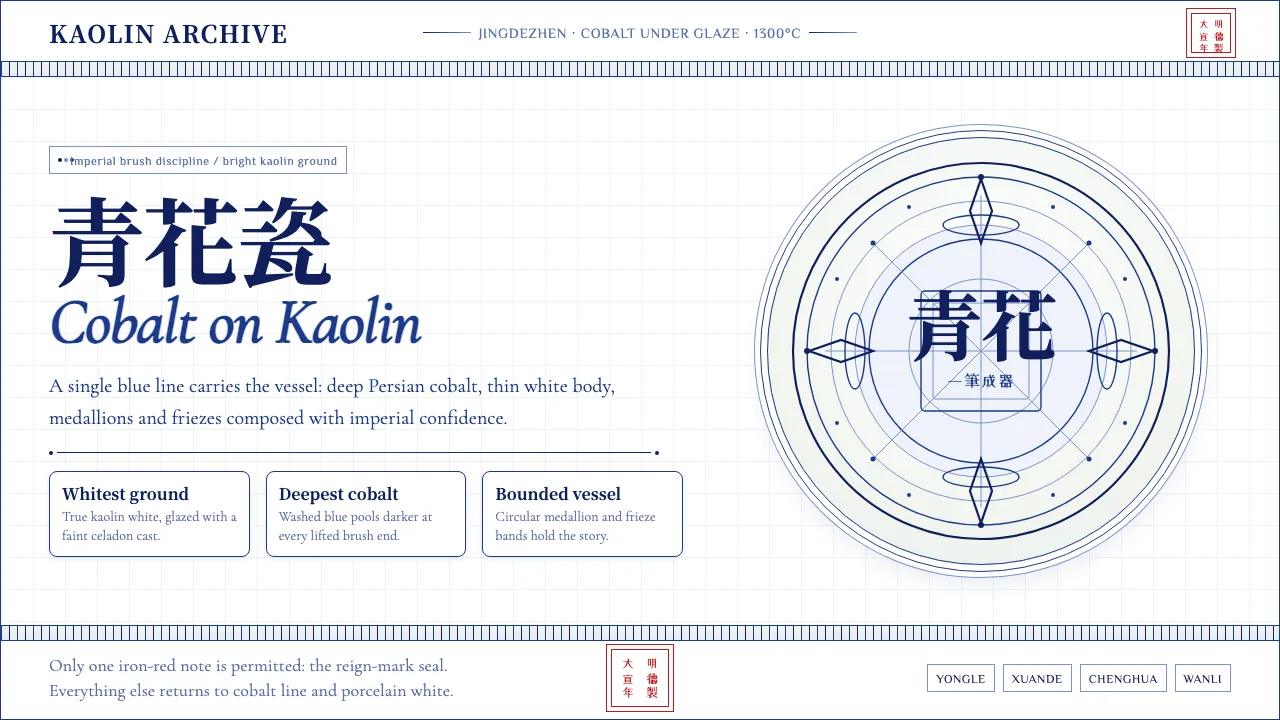
About Ming Blue-and-White Porcelain
Ming Blue-and-White is the porcelain that Delft spent two centuries trying to imitate — Jingdezhen kilns under the Yongle, Xuande, Chenghua, and Wanli emperors firing the most coveted luxury object of 15th-to-17th-century world trade. Pure kaolin white, painted with Persian cobalt oxide, fired at 1300°C until the body sang.
The discipline says thinnest body, whitest ground, deepest blue, most calligraphic brush — and dragons, peonies, lotuses, and scholars wrapping the entire form. Every jar is a moving narrative. The voice is imperial-confident, not folk: a single cobalt line carries the whole composition.
- Origin
- Jingdezhen, Jiangxi Province, China
- Era
- 1330–1644 Yuan-Ming (peak: Yongle 1402–1424, Xuande 1425–1435, Chenghua 1465–1487, Wanli 1573–1620)
- Key figures
- Yongle Emperor · Xuande Emperor · Tang Ying · Jingdezhen master painters
- Movements
- Yuan-Ming-Qing imperial porcelain · Maritime Silk Road export trade · Kraak ware export porcelain
Ming Blue-and-White Porcelain design spec
Colors
Typography
The other 11 sections — buttons, cards, spacing, motion, techniques and more — open once you unlock. Download the DESIGN.md or send it to your AI in one click. Unlock once, yours forever.
Sign up nowStyles similar to Ming Blue-and-White Porcelain
Also inspired by crafts & folk art, with a close feel.
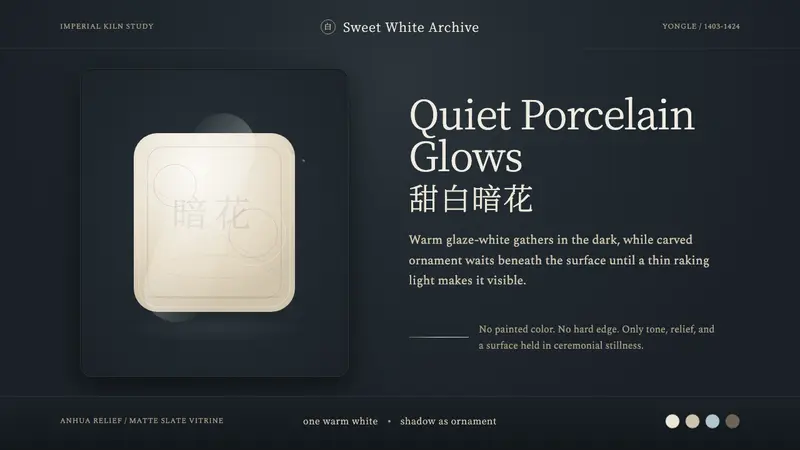 Jingdezhen BlancQuiet porcelain glows. Warm glaze-white on slate reveals hidden anhua incisions.
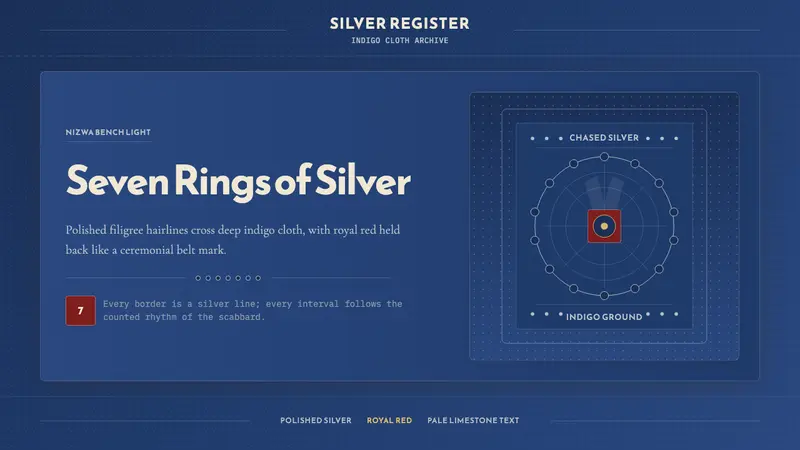 Omani Khanjar Silver DaggerFormal craft gleams. Silver hairlines and seven-ring rhythm rest on indigo cloth.
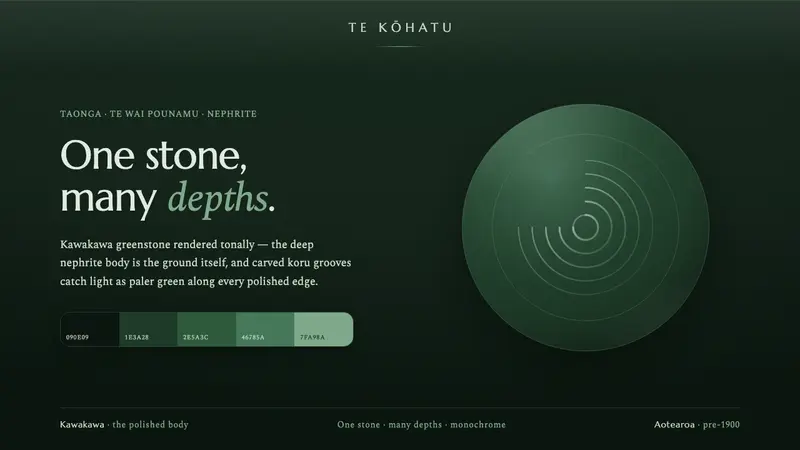 Pounamu Greenstone MonoOne stone, many depths. Tonal kawakawa greenstone, carved koru grooves catching paler light.
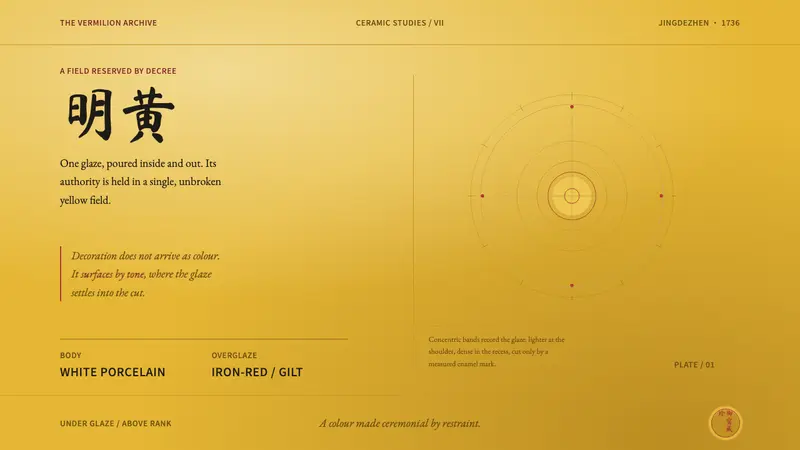 Qing Imperial YellowImperial restraint, not decoration. Egg-yolk glaze and one iron-red mark command the field.