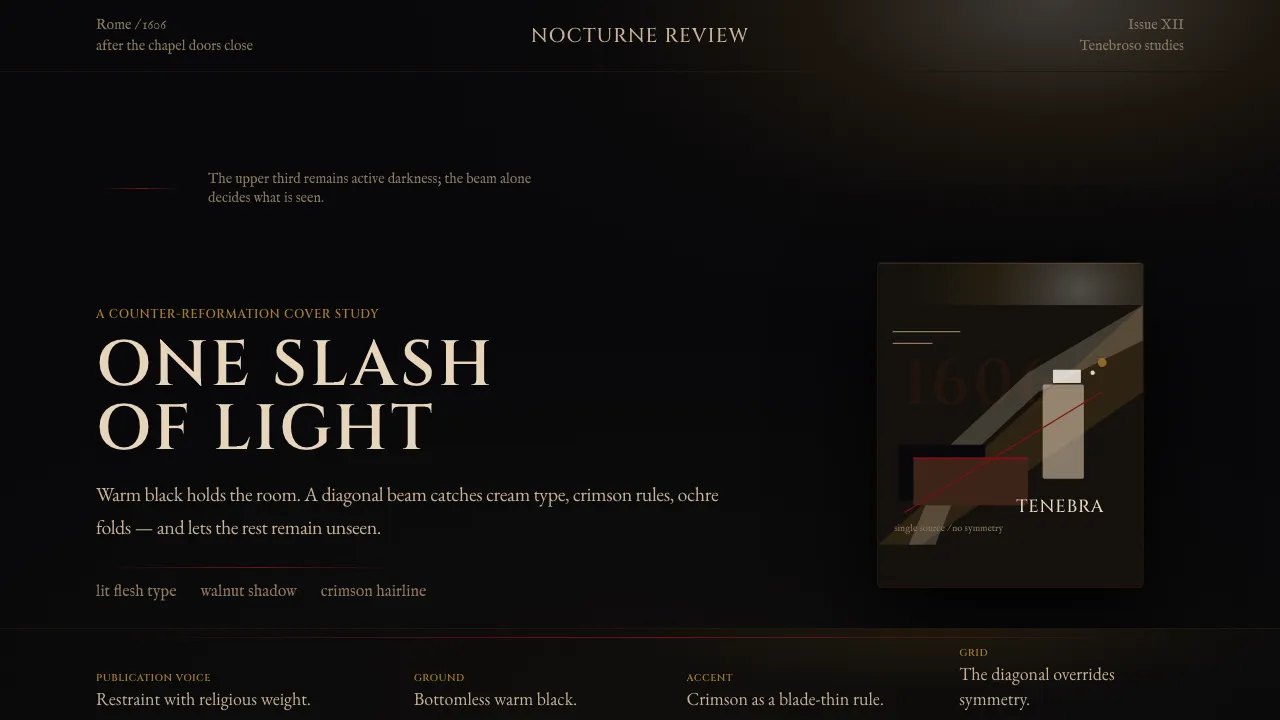
About Caravaggio Tenebrism
Caravaggio invented the spotlight. Around 1600 in Rome, he plunged the canvas into a bottomless black ground and let one hard raking light from the upper corner pick out a hand, a face, a dirty sole of a foot — and nothing else. The aesthetic says: one slash of light against active darkness, and a peasant Madonna out-glows any gold-haloed Byzantine queen.
Translated to interface, tenebrism is restraint with religious weight. Vast warm-black fields. Content emerges from the dark like polished walnut. Crimson hairlines, ochre folds, lit-flesh cream type. The diagonal of the light is the layout grid; symmetry is forbidden.
- Origin
- Rome, Naples, Malta, Sicily, Italy
- Era
- 1592–1610 (Caravaggio's working life); tenebrism school continued through Ribera, Zurbarán, La Tour, Gentileschi until c. 1650
- Key figures
- Michelangelo Merisi da Caravaggio · Artemisia Gentileschi · Jusepe de Ribera · Georges de La Tour
- Movements
- Early Baroque · Caravaggism · Spanish Golden Age tenebrism
Caravaggio Tenebrism design spec
Colors
Typography
The other 11 sections — buttons, cards, spacing, motion, techniques and more — open once you unlock. Download the DESIGN.md or send it to your AI in one click. Unlock once, yours forever.
Sign up nowStyles similar to Caravaggio Tenebrism
Also inspired by art & artists, with a close feel.
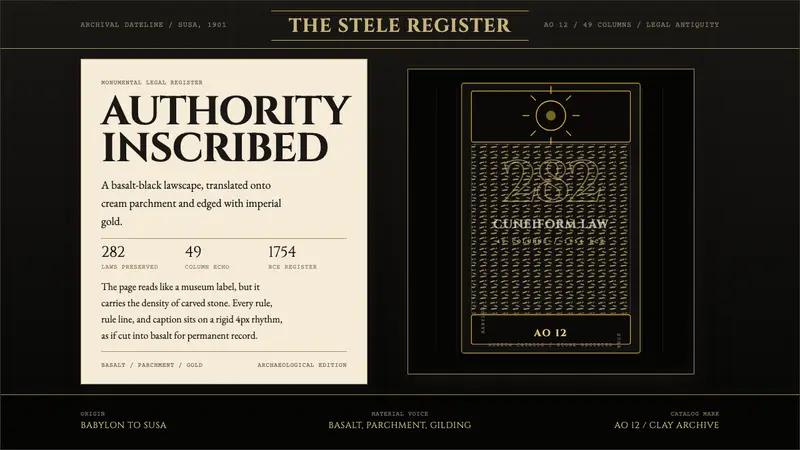 Babylonian Hammurabi SteleAuthority carved in stone. Basalt-black grids, parchment panels, and imperial gold.
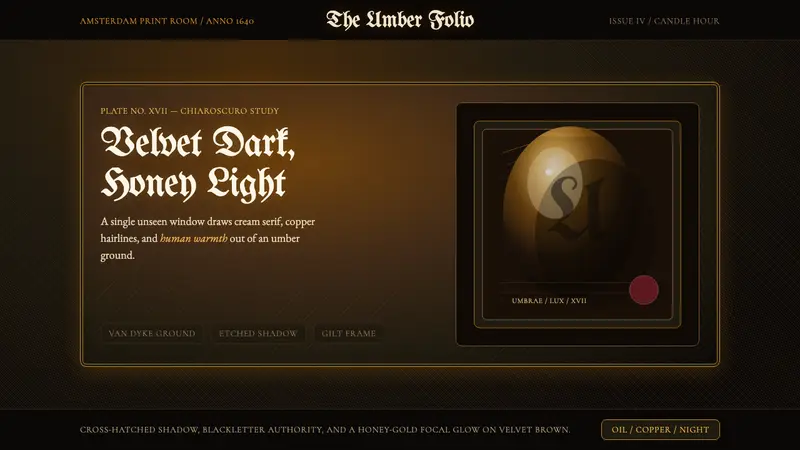 Rembrandt BaroqueDarkness becomes theatre. Honey-gold spotlight and blackletter rise from Van Dyke brown.
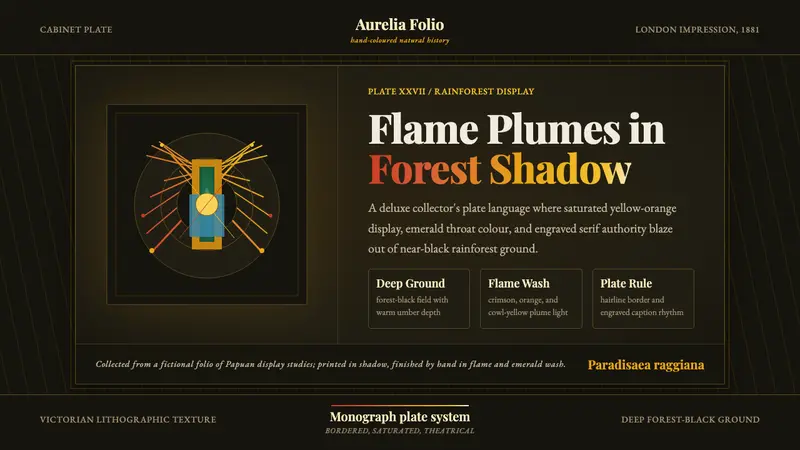 Bird of Paradise MonographTheatrical plate-book darkness. Flame plumes blaze from a bordered forest-black monograph.
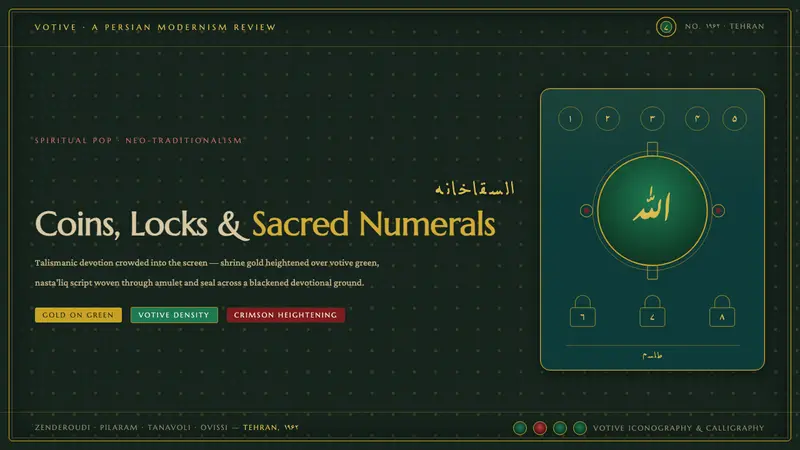 Saqqakhaneh MovementSpiritual Pop with a shrine pulse. Coins, locks and nasta'liq in gold over blackened votive green.