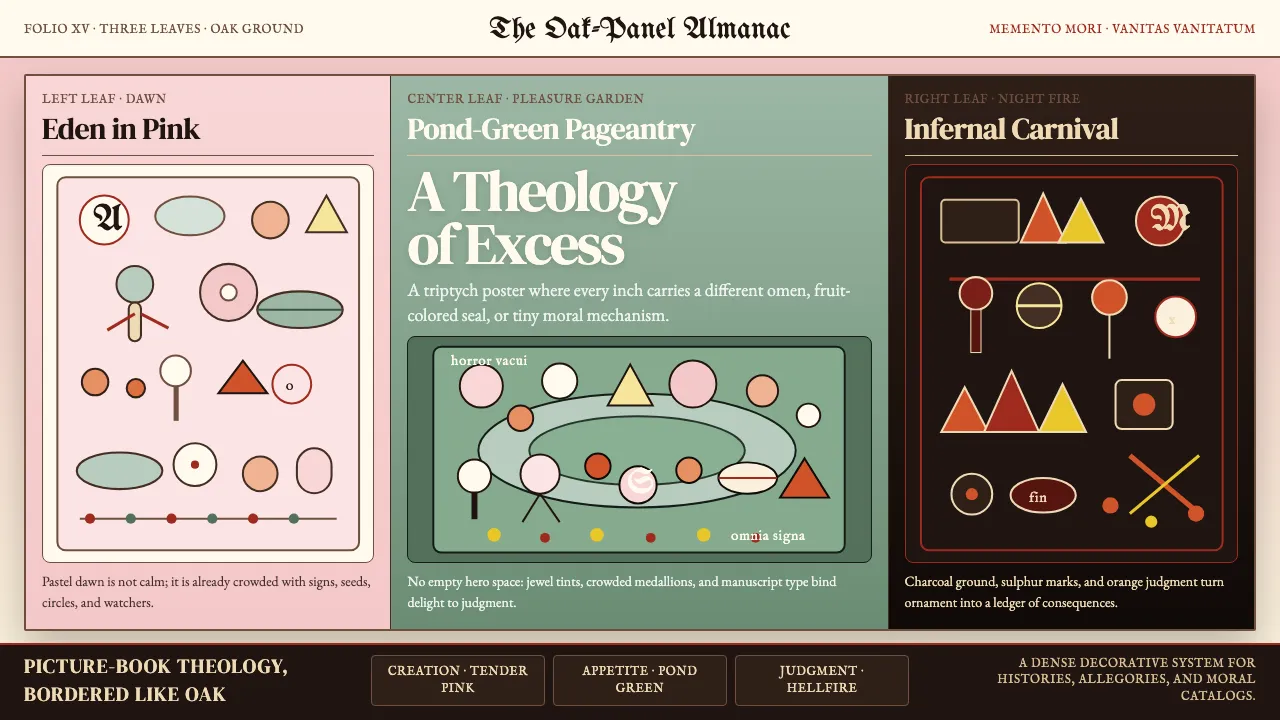
About Bosch — Garden of Earthly Delights
Hieronymus Bosch's Garden of Earthly Delights is medieval Europe's most populous, hallucinatory, theologically-dense single picture — a three-panel oak triptych where Eden's pastel-pink dawn, a million naked humans frolicking with giant strawberries, and a black-fire infernal carnival form one continuous moral narrative.
The aesthetic insists every square inch deserve a different fantastical creature, a different fruit, a different micro-narrative — and the whole still hold together as a theological book in pictures. Jewel-toned pastels collide with Hellfire-orange; horror-vacui density never relents.
Learn more about the Bosch — Garden of Earthly Delights style
- Origin
- 's-Hertogenbosch, Burgundian-Habsburg Low Countries; later Spain
- Era
- c. 1495–1505 (Bosch lived c. 1450–1516); painted in 's-Hertogenbosch, collected by Philip II of Spain 1591, transferred to Prado 1939
- Key figures
- Hieronymus Bosch · Engelbrecht II of Nassau · Philip II of Spain · Pieter Bruegel the Elder
- Movements
- Northern Renaissance · devotio moderna · Flemish painting tradition
Bosch — Garden of Earthly Delights design spec
Colors
Typography
The other 11 sections — buttons, cards, spacing, motion, techniques and more — open once you unlock. Download the DESIGN.md or send it to your AI in one click. Unlock once, yours forever.
Sign up nowStyles similar to Bosch — Garden of Earthly Delights
Also inspired by art & artists, with a close feel.
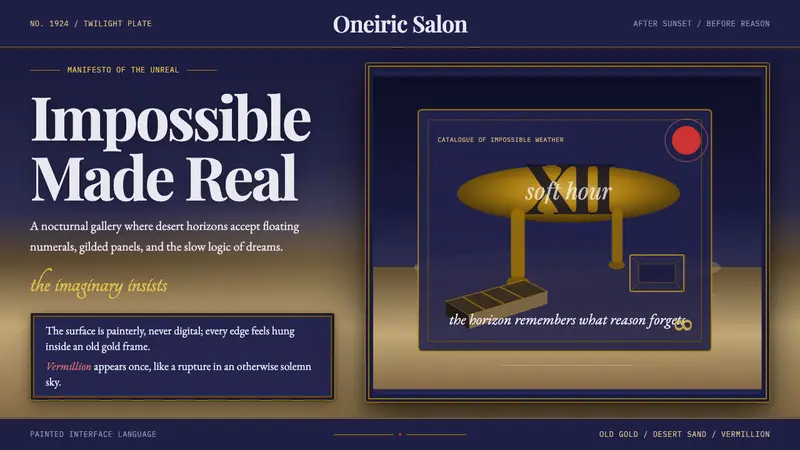 Surrealism (Dalí / Magritte)Impossible feels real. Twilight blue, old gold frames, and serif type stage dream logic.
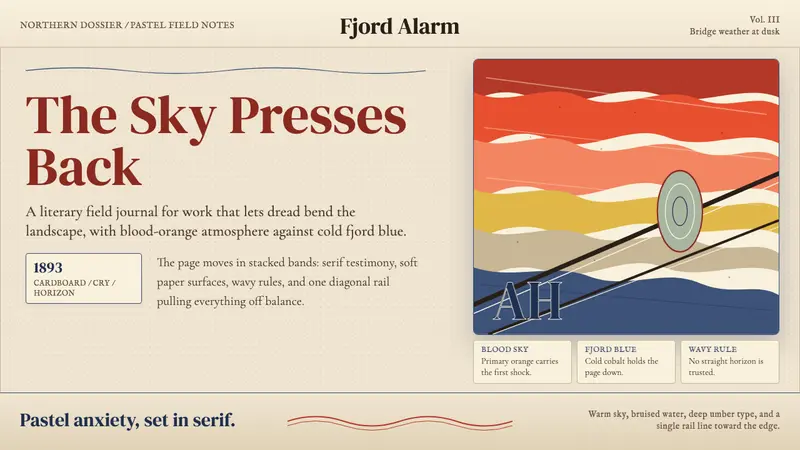 Munch — The ScreamAnxiety bends the page. Blood orange bands, cobalt fjord, and serif type tilt off axis.
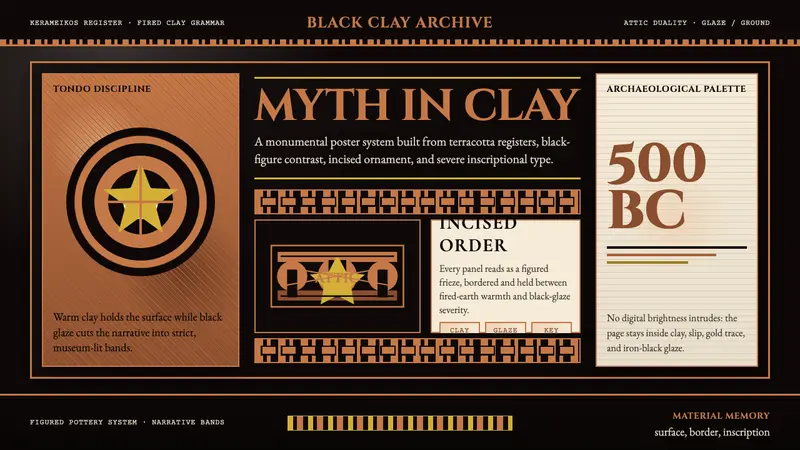 Greek Vase Attic (500 BC)Archaeological severity. Jet-black glaze, terracotta bands, and meander borders frame the page.
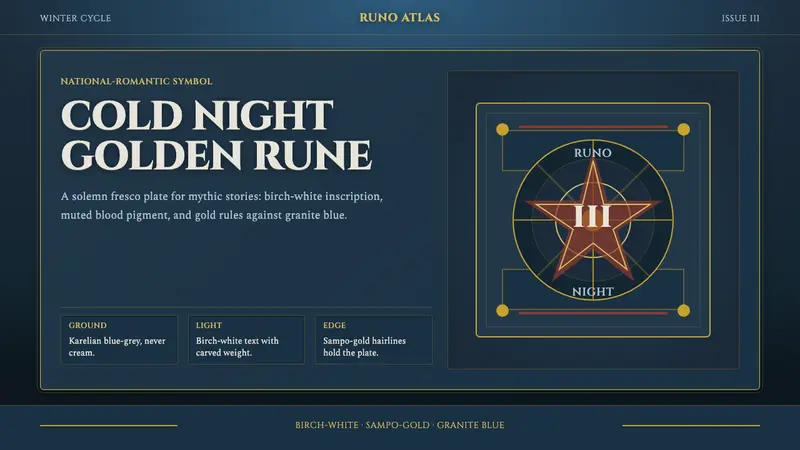 Finnish Kalevala EpicEpic weight in cold night. Birch-white Cinzel, Sampo-gold rules, blue-grey fresco panels.