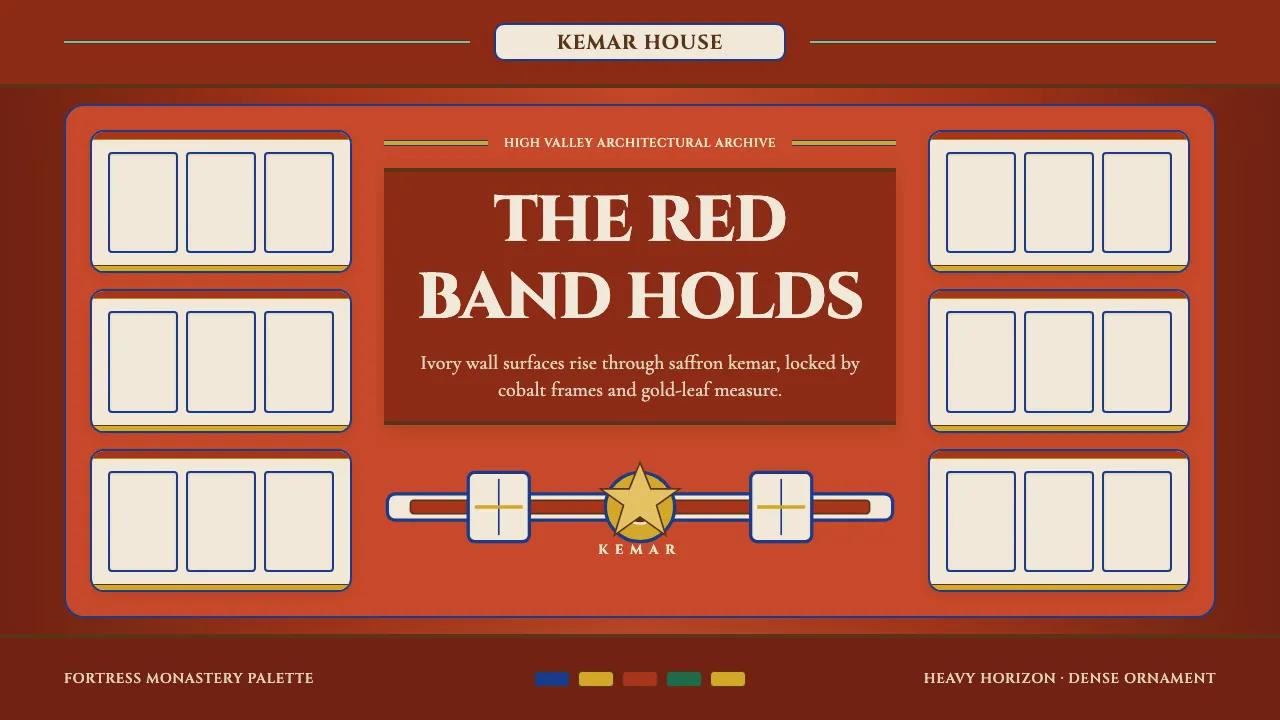
About Bhutanese Dzong (Fortress Red)
Bhutanese dzong architecture is the most assertively painted fortress-monastery tradition in the Himalayas. Codified in the 1630s under Zhabdrung Ngawang Namgyal, these massive compounds stamp whitewashed earthen walls, deep saffron-red kemar bands, and cobalt-and-gold painted window cornices onto valley confluences from Punakha to Trongsa.
This design system puts the kemar band front and center — the saffron-red ceremonial stripe becomes the page itself, with ivory whitewash and cobalt window-frame accents emerging as surface and highlight. Typography draws from carved timber capitals and monumental serif letterforms, grounding every element in the heavy horizontality and dense ornamentation of dzong architecture.
- Origin
- Bhutan (Punakha, Paro, Thimphu, Trongsa valleys)
- Era
- 1630s codified; Punakha Dzong founded 1637; continuous tradition
- Key figures
- Zhabdrung Ngawang Namgyal · Zowo Penjor · Michael Aris · Christian Schicklgruber
- Movements
- Drukpa Kagyu monastic architecture · Bhutanese fortress-monastery (dzong) · Himalayan timber polychromy
Bhutanese Dzong (Fortress Red) design spec
Colors
Typography
The other 11 sections — buttons, cards, spacing, motion, techniques and more — open once you unlock. Download the DESIGN.md or send it to your AI in one click. Unlock once, yours forever.
Sign up nowStyles similar to Bhutanese Dzong (Fortress Red)
Also inspired by architecture & places, with a close feel.
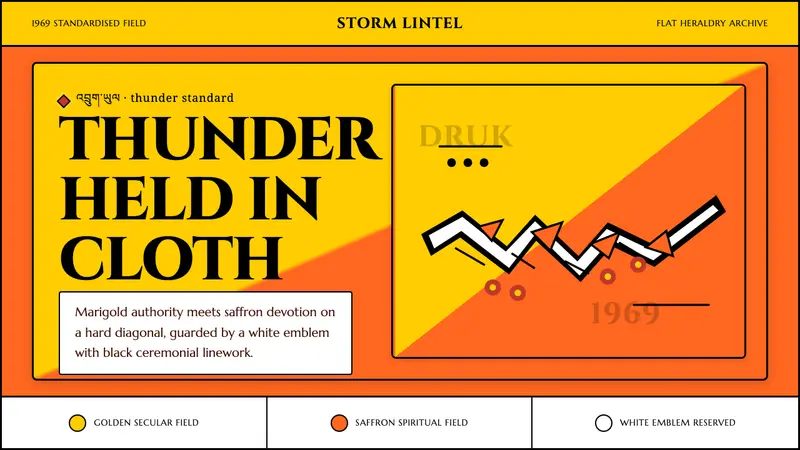 Bhutan Thunder Dragon Flag (1969)Heraldry hits like thunder. Marigold and saffron split hard around a white emblem.
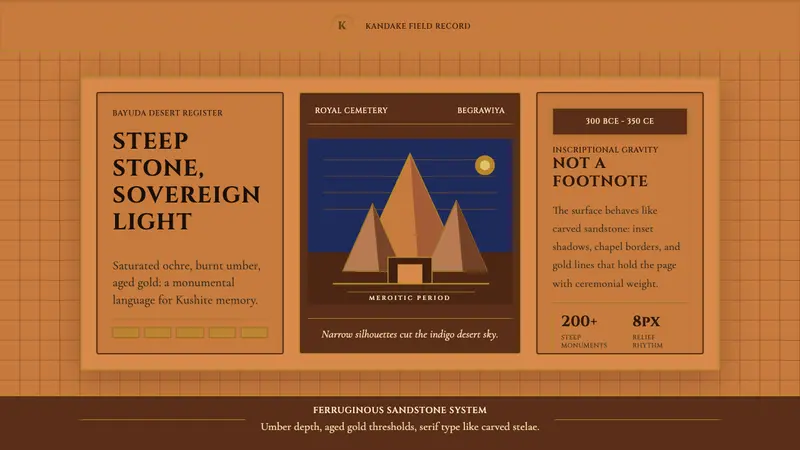 Sudanese Nubian Meroë PyramidMonumental, not muted. Ochre sandstone, umber depth, gold borders, and Cinzel stelae type.
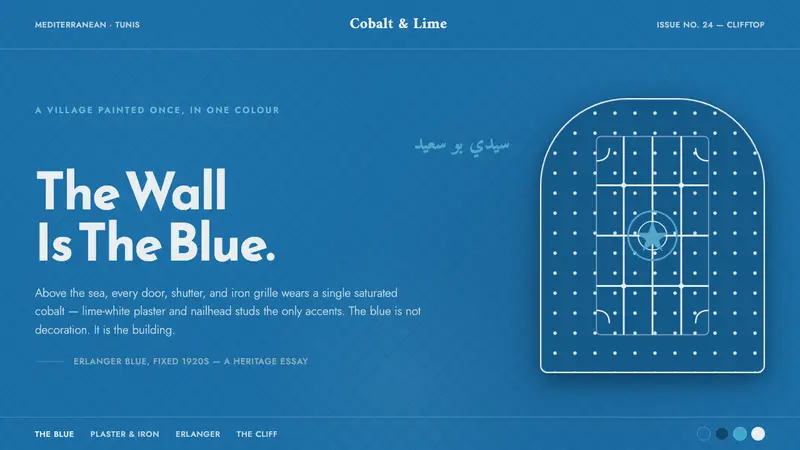 Sidi Bou Said BlueThe village is the blue. Saturated cobalt ground, white plaster frames, iron lattice in Reem Kufi.
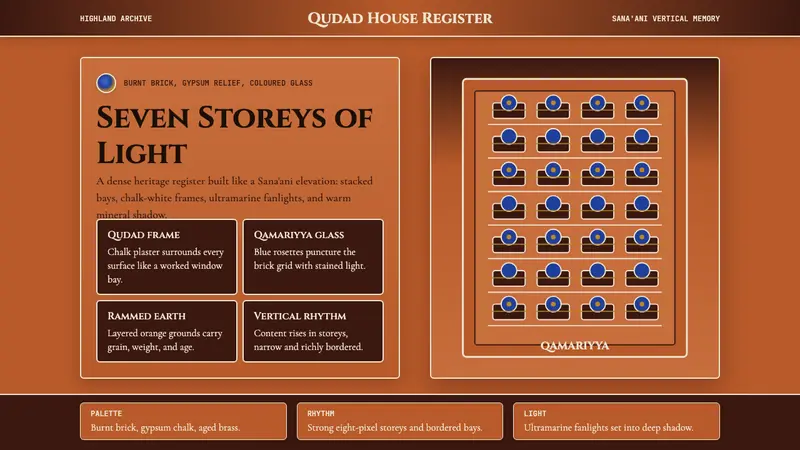 Yemeni Sana'a Old City Tower-HouseVertical memory, densely framed. Brick orange, gypsum white, and blue rosettes stack upward.