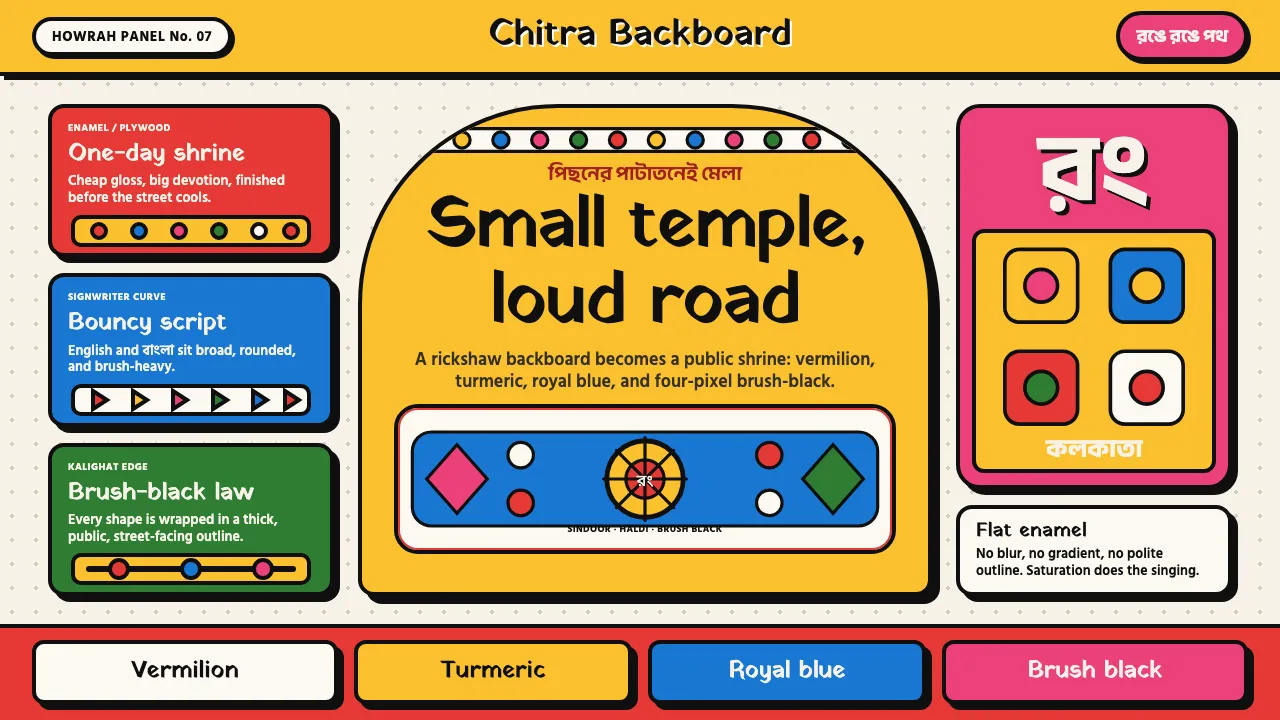
About Bengali Rickshaw Art
Bengali rickshaw art is South Asia's most accessible folk illustration — untrained painters in cramped Howrah stalls hand-paint the rear backboard of every cycle-rickshaw with Durga slaying Mahishasura, a peacock on a Bollywood heroine, a tiger in saturated forest, a Tagore verse in flowing Bengali. The vocabulary descends from Kalighat patua scrolls and Battala woodblocks, filtered through god-poster calendar art.
Every panel is cheap synthetic enamel on plywood, finished in a day. Vermilion and turmeric form the foundational chord; thick brush-black outlines — the Kalighat hallmark — wrap every shape. The ethos: a backboard is a small temple, so paint it like one, even if only the rider behind sees it.
- Origin
- West Bengal — Kolkata, Howrah, Murshidabad (India)
- Era
- 1900–present; cycle-rickshaw lineage flourishes 1950s–2010s
- Key figures
- anonymous Howrah workshop masters · Naya village patua scroll painters · Kalighat Bazaar painters · Raja Ravi Varma (calendar-art lineage)
- Movements
- Kalighat patua painting · Battala woodblock prints · Bombay calendar god-poster art
Bengali Rickshaw Art design spec
Colors
Typography
The other 11 sections — buttons, cards, spacing, motion, techniques and more — open once you unlock. Download the DESIGN.md or send it to your AI in one click. Unlock once, yours forever.
Sign up nowStyles similar to Bengali Rickshaw Art
Also inspired by crafts & folk art, with a close feel.
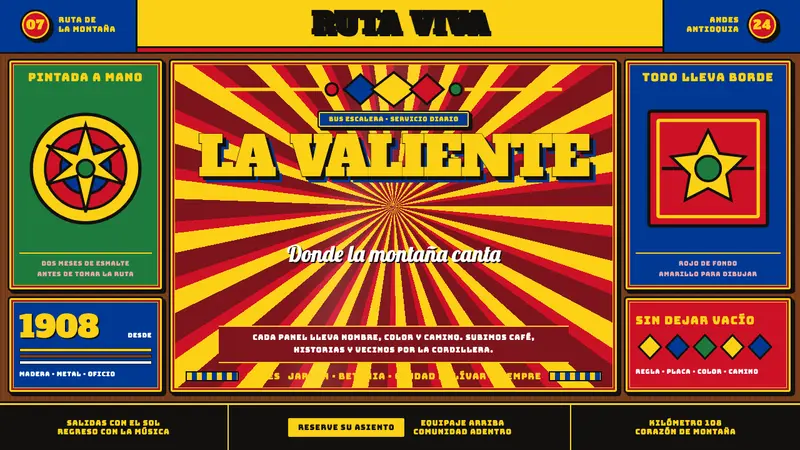 Colombian Chiva BusNothing is left unpainted. Flag-yellow rules, slab lettering and black keylines fill every red panel.
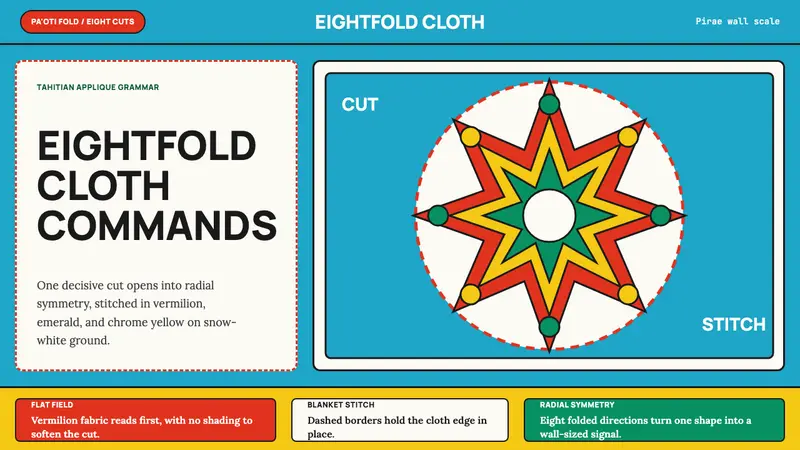 Tahitian Tifaifai (Appliqué Quilt)Flat fields command the room. Vermilion radial applique sits on Pacific cyan and snow white.
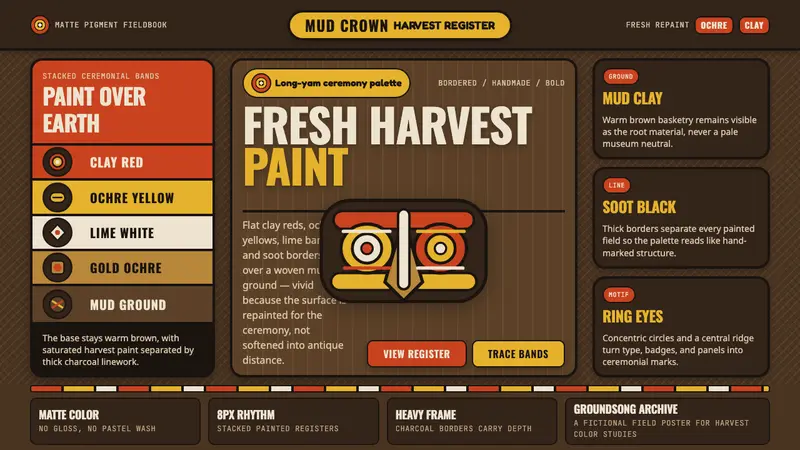 Sepik Yam Mask AbelamFresh harvest power. Clay red and ochre bands strike over warm mud-brown ground.
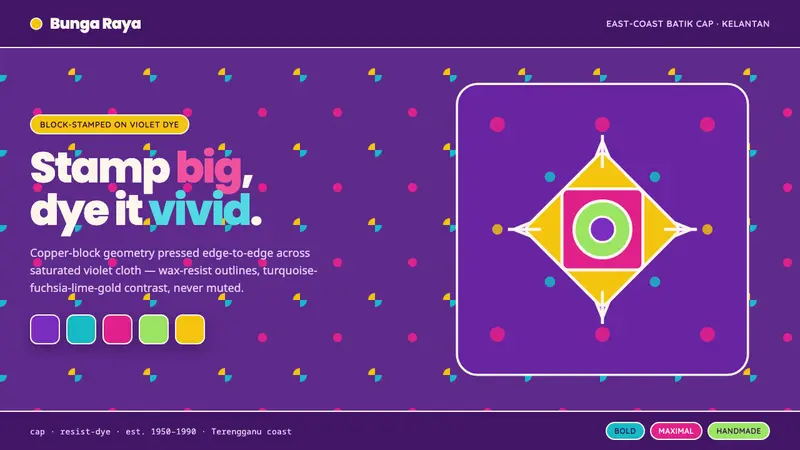 Kelantan Block BatikBright Malay batik, not Javanese brown. Oversized hibiscus stamped turquoise-fuchsia-gold on violet.