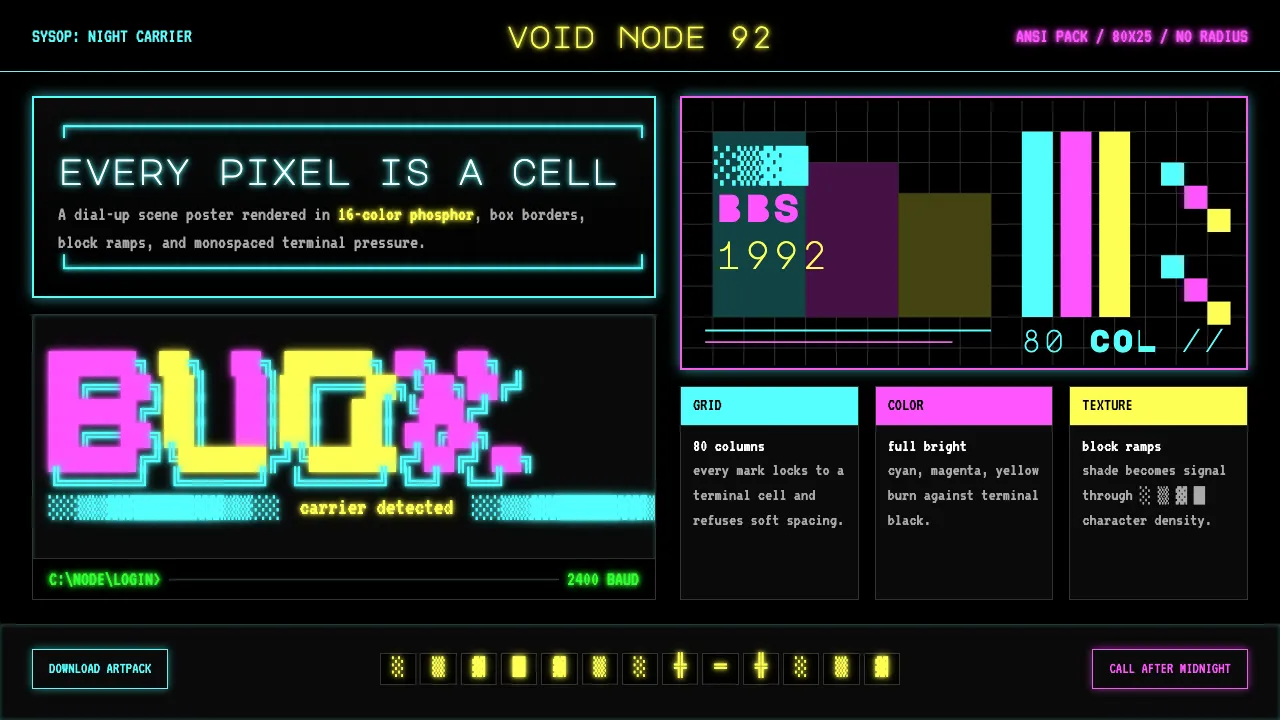
About ASCII Art BBS (1992)
The BBS ASCII-art scene of 1990–1996 turned the 80×25 terminal grid into a canvas. Working within the brutal constraint of 16 CGA/VGA colors and 256 character codes, crews like ACiD, iCE, and the ANSI Outlaws produced thousands of logo screens, door-game menus, and scene-zine headers — all rendered in box-drawing characters and block-shade ramps.
This system encodes that phosphor-on-void aesthetic: pure terminal black, saturated neon cyan/magenta/yellow, monospaced type at every scale, zero border-radius, and CRT scanline glow on every surface. Every pixel is a character cell.
- Origin
- USA — Texas, California, Illinois; Sweden, Netherlands, Germany
- Era
- 1987–1996 golden age; modern revival via 16colo.rs and Discord
- Key figures
- RaD Man (ACiD) · Force Ten (iCE) · Spear (ANSI Outlaws) · Jason Scott (textfiles.com)
- Movements
- ANSI art · demoscene · pre-Internet hacker subculture · zine culture
ASCII Art BBS (1992) design spec
Colors
Typography
The other 11 sections — buttons, cards, spacing, motion, techniques and more — open once you unlock. Download the DESIGN.md or send it to your AI in one click. Unlock once, yours forever.
Sign up nowStyles similar to ASCII Art BBS (1992)
Also inspired by pop culture, with a close feel.
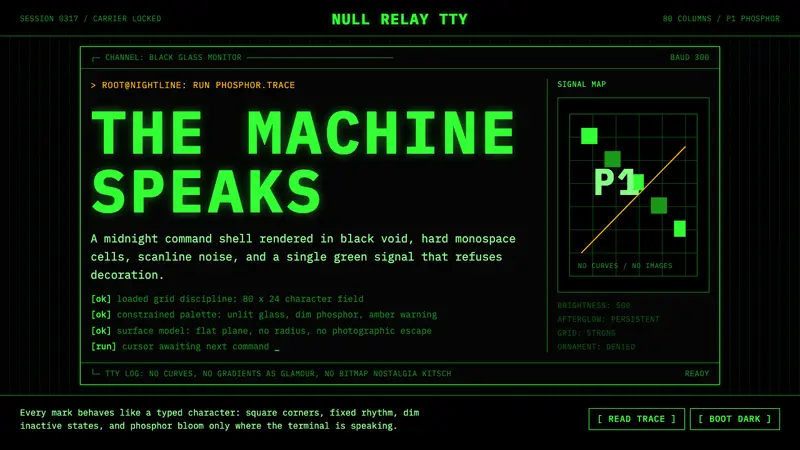 CLI Hacker Phosphor Green (1985)Pure terminal myth. Black glass, P1 green mono type, scanlines, and rigid 80-column order.
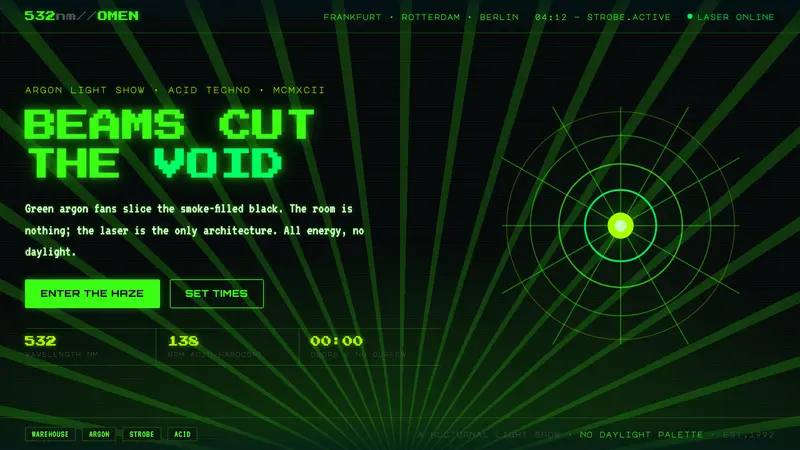 Acid Rave Laser Show 1992Beams cut the void. Argon green on pitch-black smoke, pixel marquee type, additive laser-fan glow.
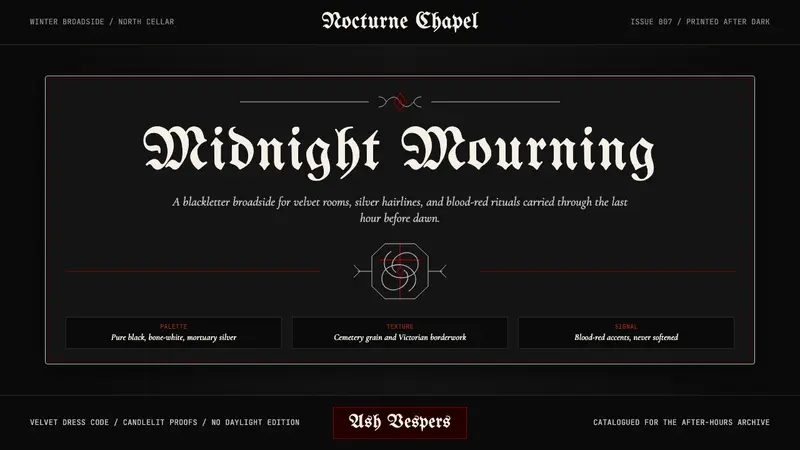 Traditional GothPost-punk in Victorian mourning. Black, blood red, bone white — Bauhaus album sleeve as interface.
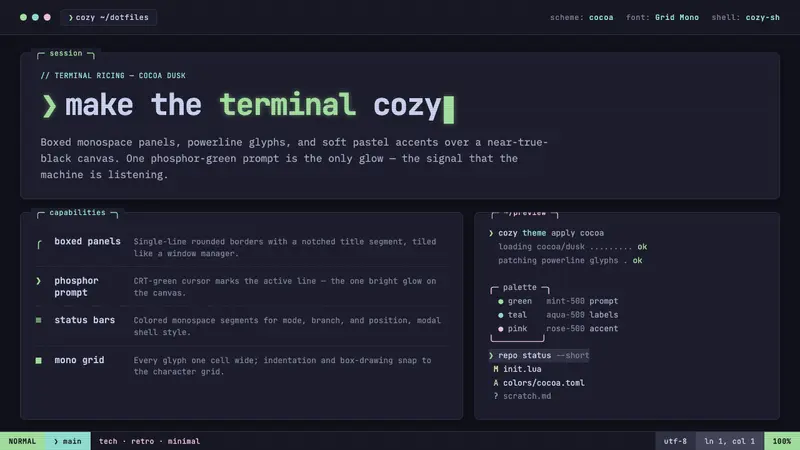 Cozy Terminal TUI RevivalMake the terminal cozy. Boxed mono panels in Catppuccin Mocha, lit by one phosphor-green prompt.