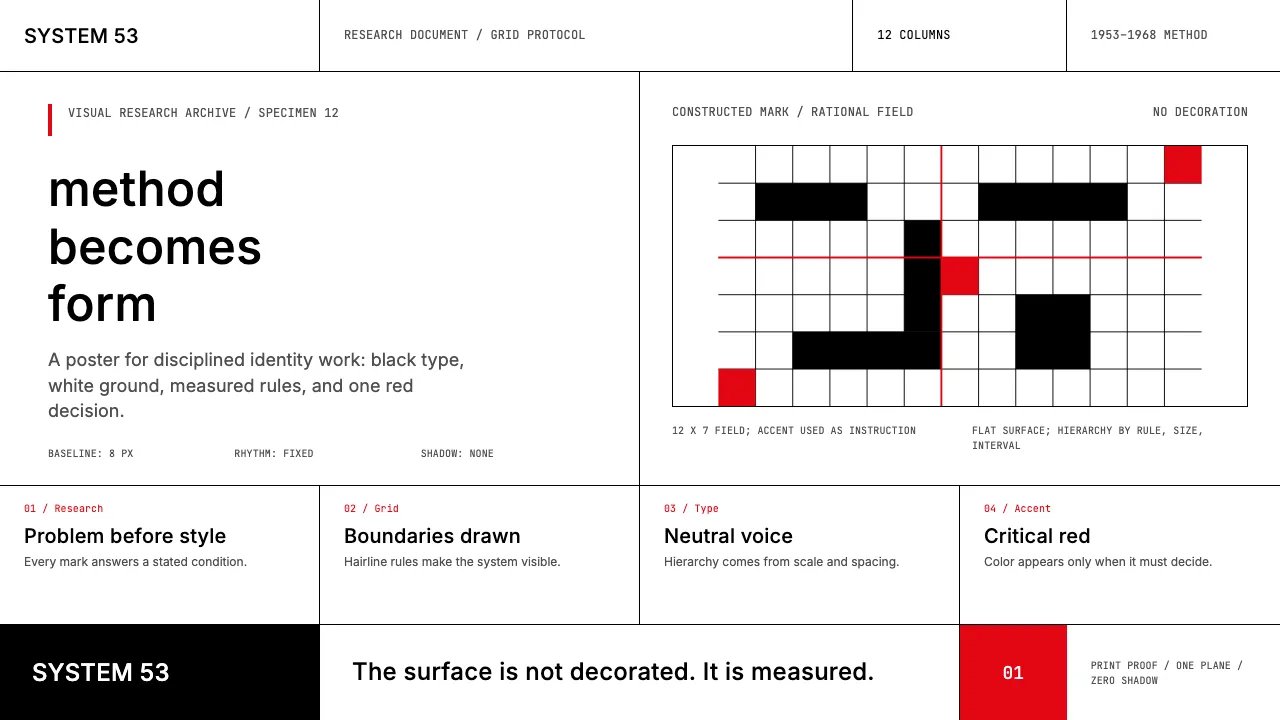
About Ulm School (HfG Ulm)
The Hochschule für Gestaltung Ulm (HfG Ulm) was the postwar school that distilled Bauhaus idealism into scientific method. Founded in 1953, it ran for fifteen years and produced some of the most influential corporate identity and product design of the twentieth century — Lufthansa, Braun, the Munich 1972 Olympics pictograms.
This design system captures HfG Ulm's uncompromising visual language: pure black type on white ground, mathematical grid systems, hairline rules as the primary organizational device, and a single red accent used with surgical intent. There are no gradients, no rounded corners, no decorative gestures — only structure, clarity, and disciplined restraint.
- Origin
- Ulm, West Germany
- Era
- 1953 founded; peak 1955–1968; closed 1968
- Key figures
- Otl Aicher · Max Bill · Tomás Maldonado · Hans Gugelot
- Movements
- Postwar functionalism · Swiss-typography-aligned systematic design · Semiotic design theory
Ulm School (HfG Ulm) design spec
Colors
Typography
The other 11 sections — buttons, cards, spacing, motion, techniques and more — open once you unlock. Download the DESIGN.md or send it to your AI in one click. Unlock once, yours forever.
Sign up nowStyles similar to Ulm School (HfG Ulm)
Also inspired by design movements, with a close feel.
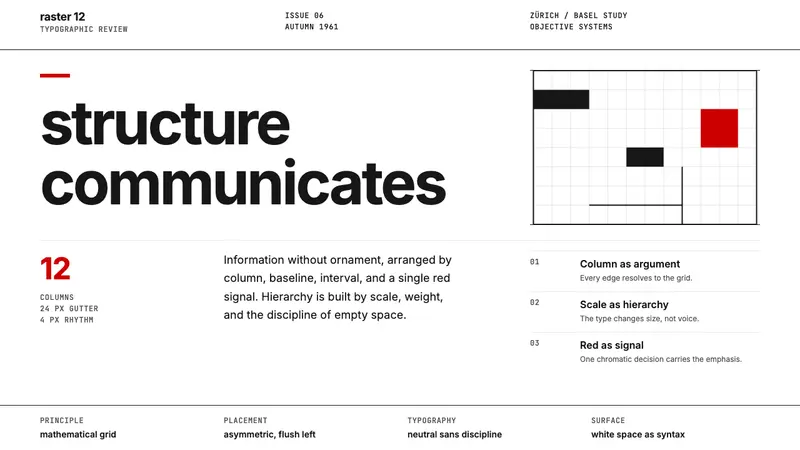 Swiss International StyleObjectivity made visible. Inter scale, white space, and one red block expose the grid.
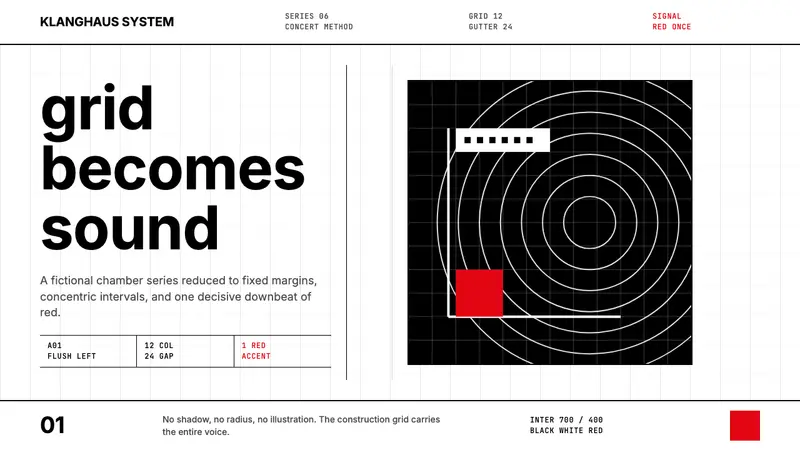 Müller-Brockmann GridOrder becomes force. Black-white 12-column grid, Inter type, one red downbeat.
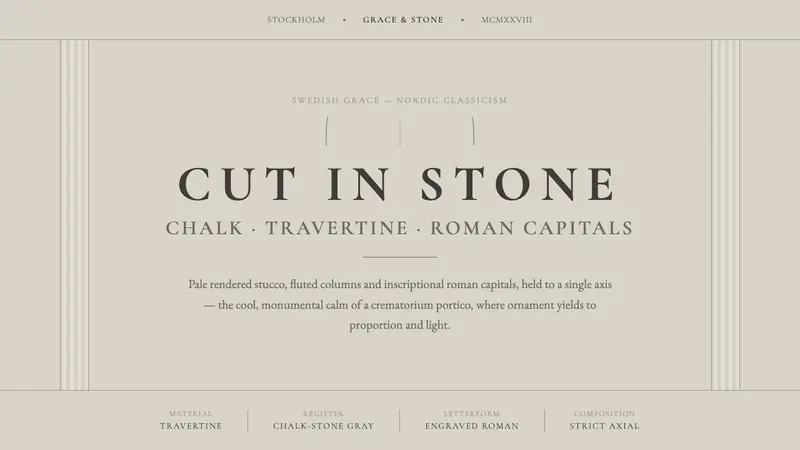 Nordic Classicism (Asplund)Stone, not cream. Engraved Trajan capitals on cool chalk stucco, fluted columns, strict axial calm.
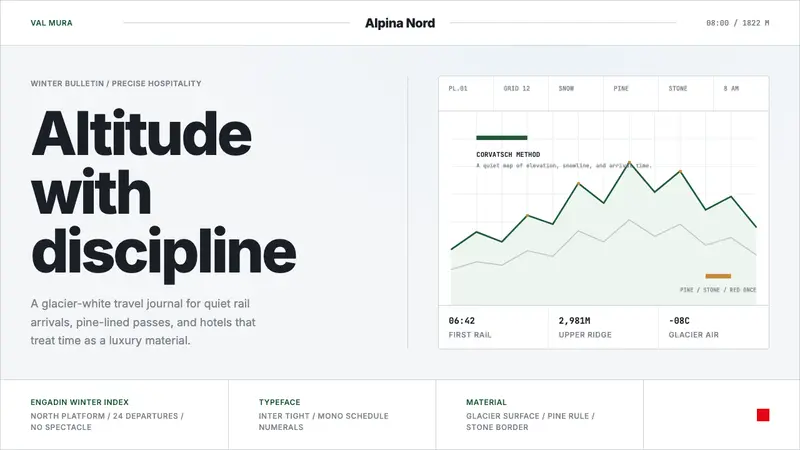 Swiss Alps GraubündenAlpine precision, restrained. Glacier white, pine rules, and tight Inter grid the silence.