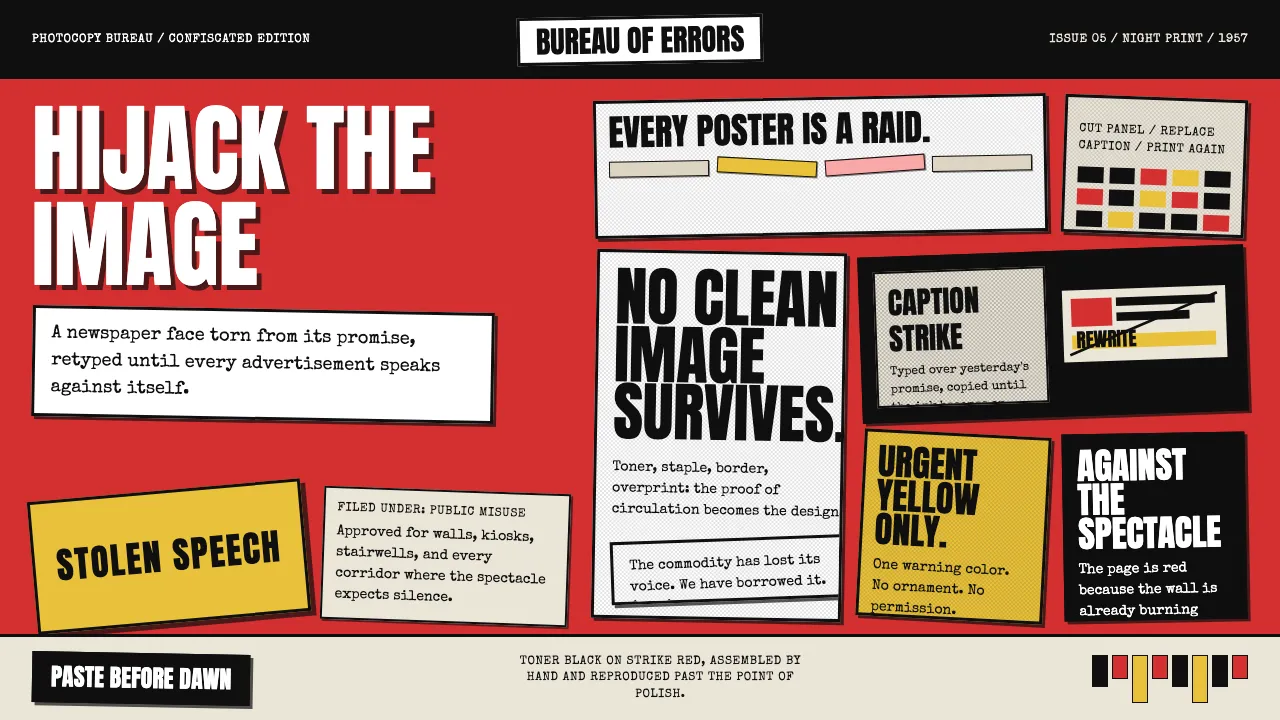
About Situationist Détournement (1957)
The Situationist International weaponized the image. From 1957 to 1972, Guy Debord, Asger Jorn, and their co-conspirators practiced détournement — seizing advertisements, comics, and religious paintings, then jamming revolutionary theory into the speech bubbles. The result was a visual language of photocopy grain, toner black, and hand-typed captions that felt like contraband.
This system captures the agitprop collage aesthetic of the SI journal and the May '68 Atelier Populaire posters: strike-red grounds, brutalist typewriter text, rough-cut comic panels, and the unmistakable texture of a message reproduced five times on a 1968 office Xerox.
- Origin
- Paris, Copenhagen, Strasbourg, Brussels
- Era
- 1957–1972; visual peak May 1968 Paris
- Key figures
- Guy Debord · Asger Jorn · Raoul Vaneigem · Michèle Bernstein
- Movements
- Situationism · post-Surrealist political art · May 1968 poster aesthetic
Situationist Détournement (1957) design spec
Colors
Typography
The other 11 sections — buttons, cards, spacing, motion, techniques and more — open once you unlock. Download the DESIGN.md or send it to your AI in one click. Unlock once, yours forever.
Sign up nowStyles similar to Situationist Détournement (1957)
Also inspired by design movements, with a close feel.
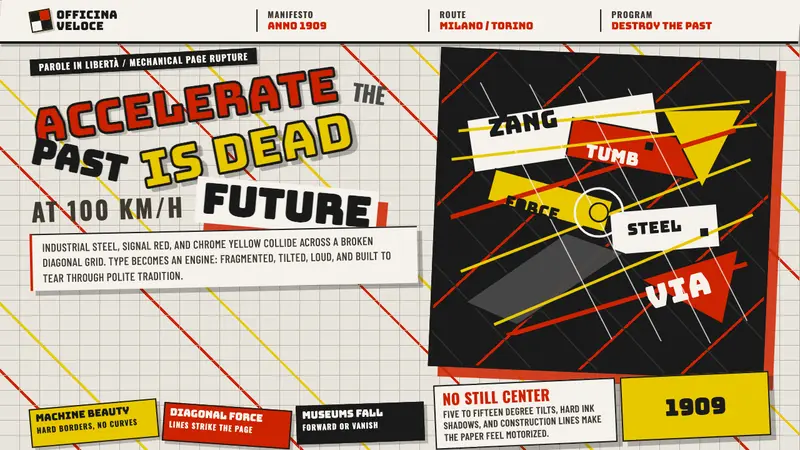 Italian Futurism (Marinetti 1909)Speed murders tradition. Signal red and chrome yellow slash a broken diagonal grid.
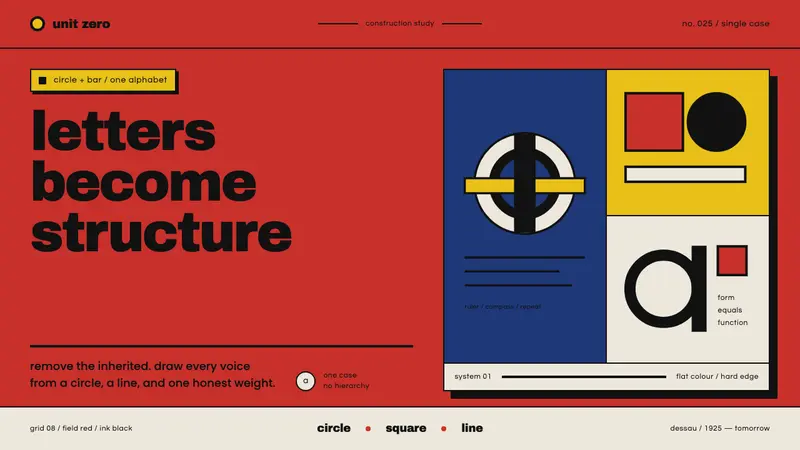 Bayer Universal BauhausLetters become structure. Bauhaus red, primary blocks, and black circle-bar forms enforce order.
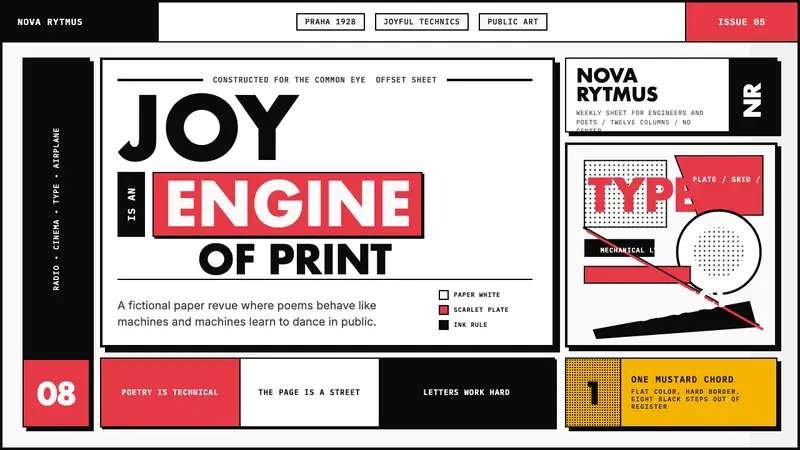 Czech Devětsil Avant-GardeJoy is engineered. Scarlet ink blocks and rotated sans type collide on an asymmetric grid.
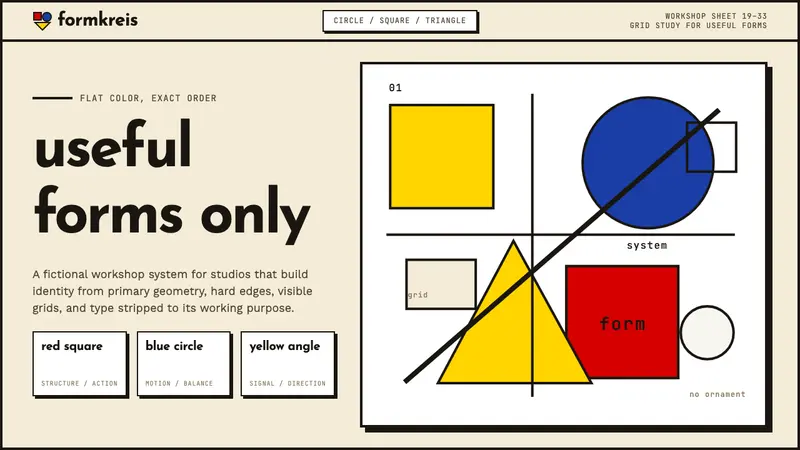 Bauhaus WeimarForm follows revolution. Primary red-blue-yellow on cream, hard shadows, no ornament — pure form.