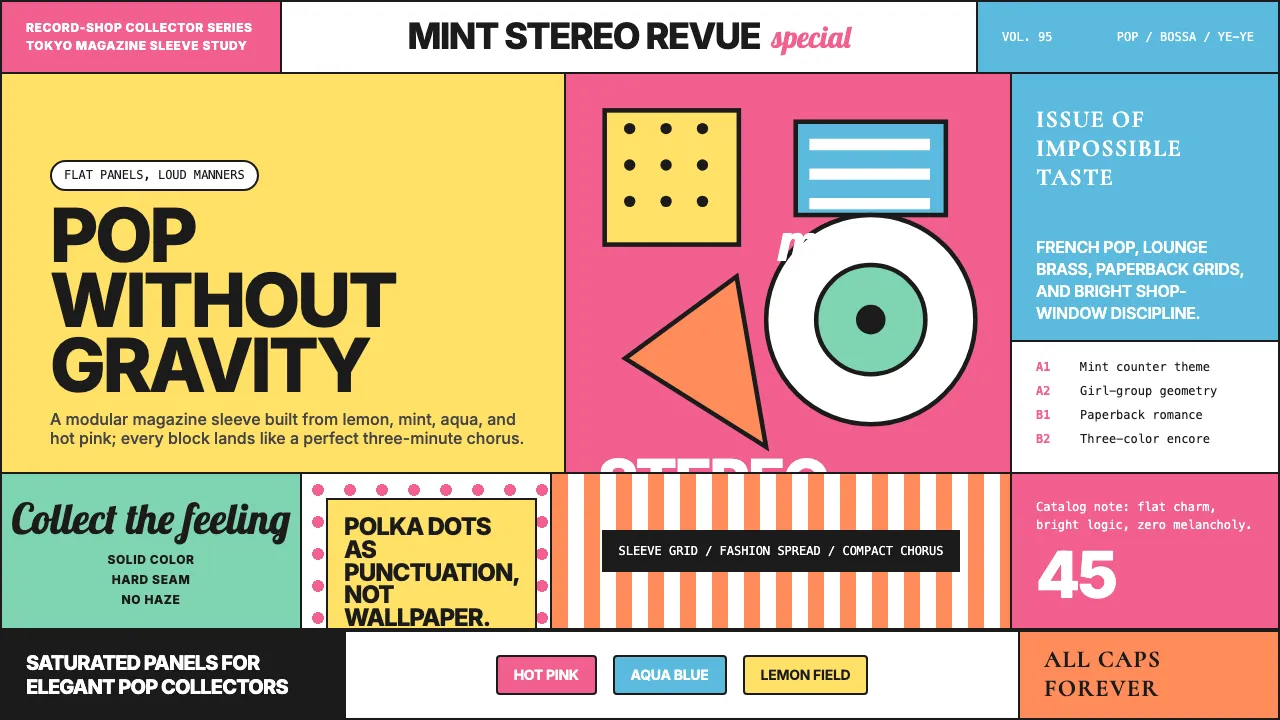
About Shibuya-kei (Flipper's Guitar, 1995)
Shibuya-kei was a micro-movement born in the record shops of Shibuya — HMV, Tower, WAVE — where Tokyo collectors fused French Yé-yé, Bossa Nova, and Bacharach into a deliriously sophisticated retro-pop sound. Every album sleeve was a tiny art-history museum: Saul Bass compositions, Penguin Books typography, polka dots and solid color blocks arranged like a fashion-magazine spread.
This design system captures that energy — saturated panes of hot pink, mint, lemon, and aqua tiled into modular flat layouts, Helvetica stacked in tight all-caps blocks, retro script flourishes, and mid-century graphic confidence. It is pop without irony, glamour without gravity.
Learn more about the Shibuya-kei (Flipper's Guitar, 1995) style
- Origin
- Shibuya, Tokyo, Japan
- Era
- 1989–1999 (Flipper's Guitar debut 1989; Pizzicato Five international 1993; Cornelius Fantasma 1997)
- Key figures
- Yasuharu Konishi · Keigo Oyamada · Kenji Ozawa · Maki Nomiya
- Movements
- Shibuya-kei · Japanese retro-pop · post-Pizzicato wave
Shibuya-kei (Flipper's Guitar, 1995) design spec
Colors
Typography
The other 11 sections — buttons, cards, spacing, motion, techniques and more — open once you unlock. Download the DESIGN.md or send it to your AI in one click. Unlock once, yours forever.
Sign up nowStyles similar to Shibuya-kei (Flipper's Guitar, 1995)
Also inspired by film, games & music, with a close feel.
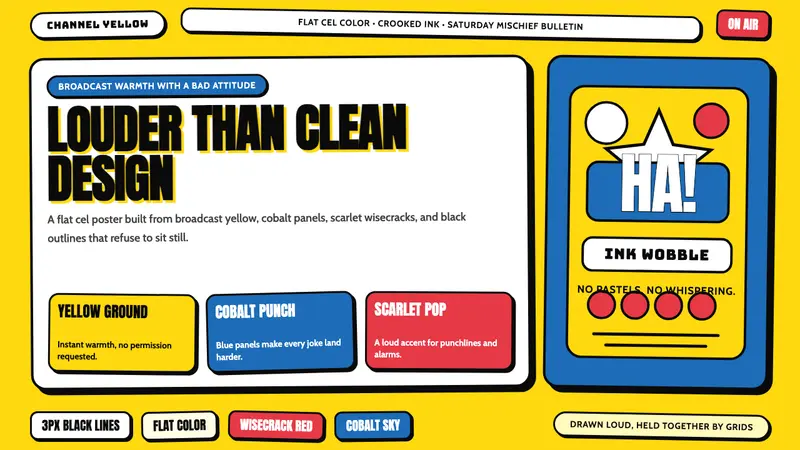 The Simpsons YellowCartoon warmth misbehaves. Yellow ground, cobalt panels, thick wobbly black lines.
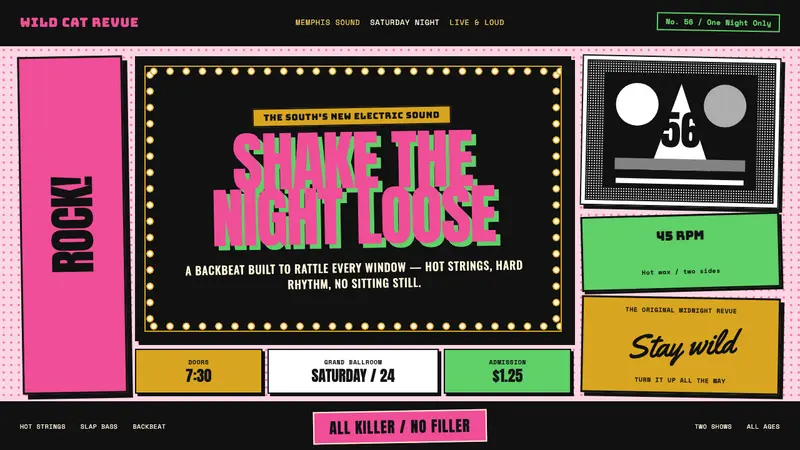 Elvis Presley (1956)Rock learned to shout. Bubblegum pink, acid green and jailhouse type land with black slam shadows.
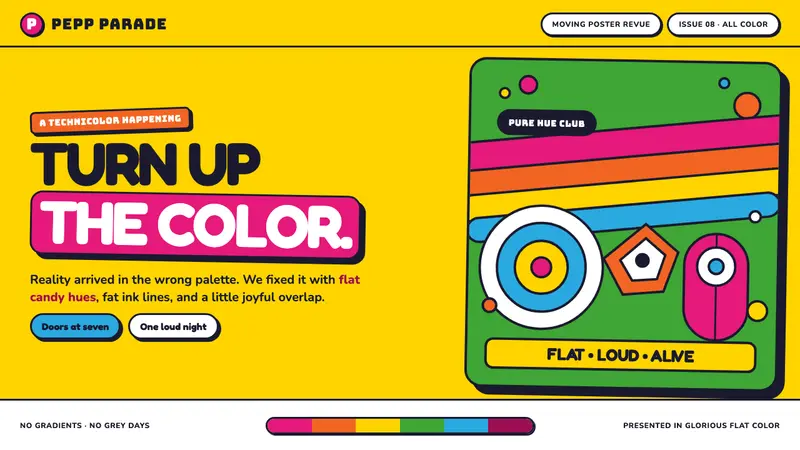 Yellow Submarine (Edelmann pop)Reality, recolored for joy. Candy-flat hues, fat ink outlines, and bouncing overlap.
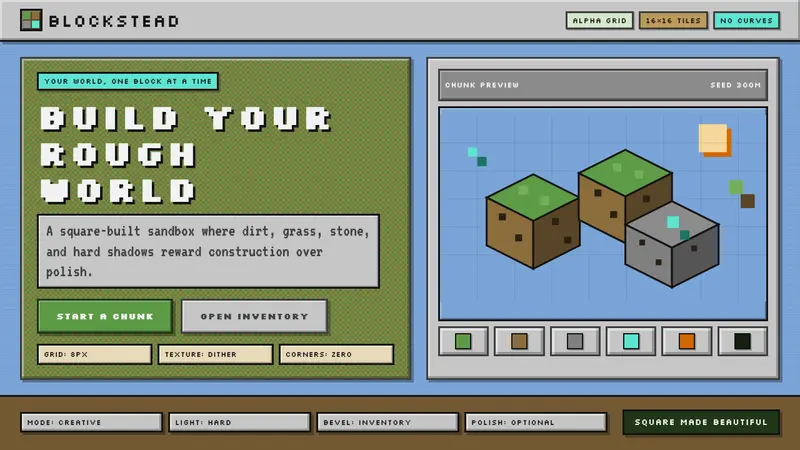 Minecraft VoxelUgly becomes buildable. Grass green, dirt brown, hard bevels, and 16×16 grids make the world yours.