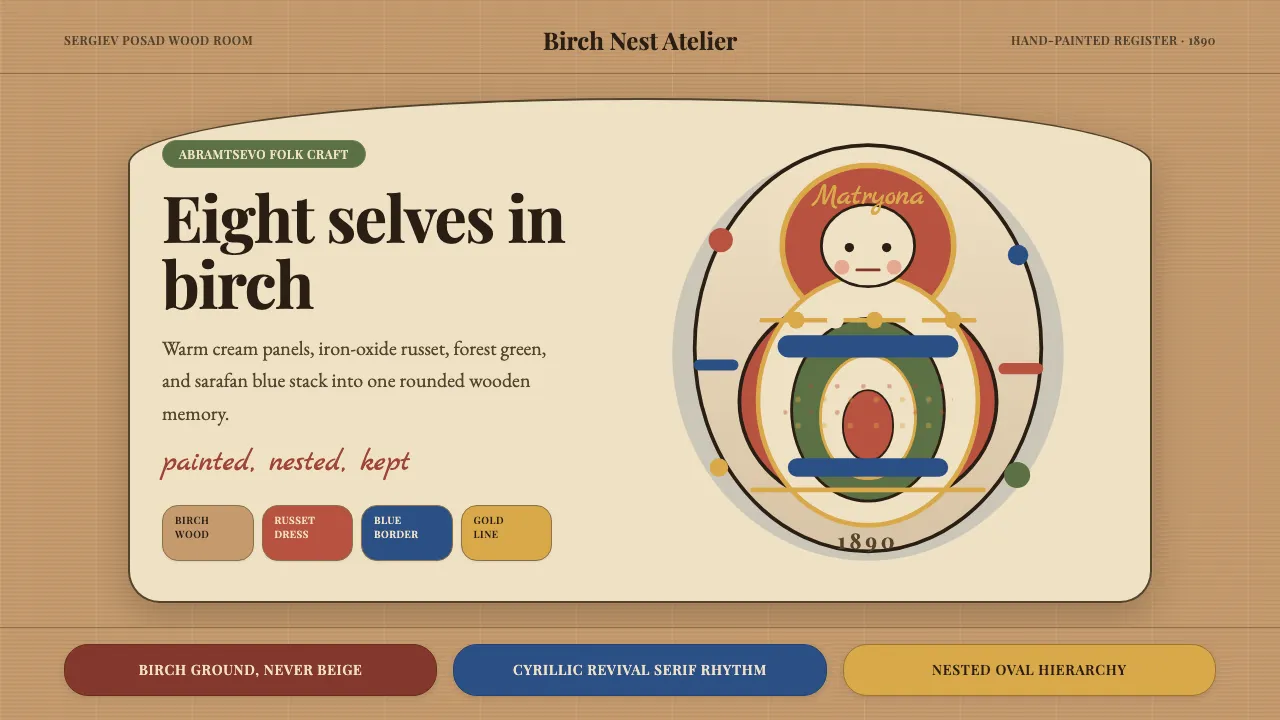
About Russian Matryoshka 1890
In 1890, painter Sergei Malyutin and wood-turner Vasily Zvyozdochkin created the first matryoshka at Savva Mamontov's Abramtsevo workshop — an eight-doll set depicting a peasant girl named Matryona holding a black rooster. It won a bronze medal at the 1900 Paris Universal Exposition and became Russia's most recognizable folk object.
This design system channels the material truth of that original set: warm birch-wood surfaces, hand-painted russet and cream, Cyrillic letterforms from Russian Revival printing, and the egg-oval silhouette that nests seven smaller selves inside one.
- Origin
- Abramtsevo / Sergiev Posad, Russia
- Era
- 1890 (first carved set); Paris debut 1900; peak Russian Revival 1890–1917
- Key figures
- Sergei Malyutin · Vasily Zvyozdochkin · Savva Mamontov · Elizaveta Mamontova
- Movements
- Russian Revival · Abramtsevo Art Circle · Narodnost nationalism
Russian Matryoshka 1890 design spec
Colors
Typography
The other 11 sections — buttons, cards, spacing, motion, techniques and more — open once you unlock. Download the DESIGN.md or send it to your AI in one click. Unlock once, yours forever.
Sign up nowStyles similar to Russian Matryoshka 1890
Also inspired by crafts & folk art, with a close feel.
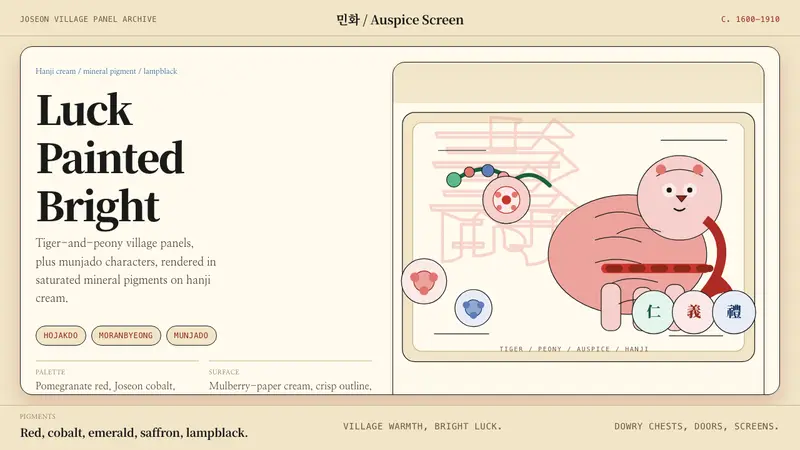 Korean Minhwa (Joseon Folk Painting)Cheerful prosperity over restraint. Mineral reds, cobalt, and lampblack on hanji cream.
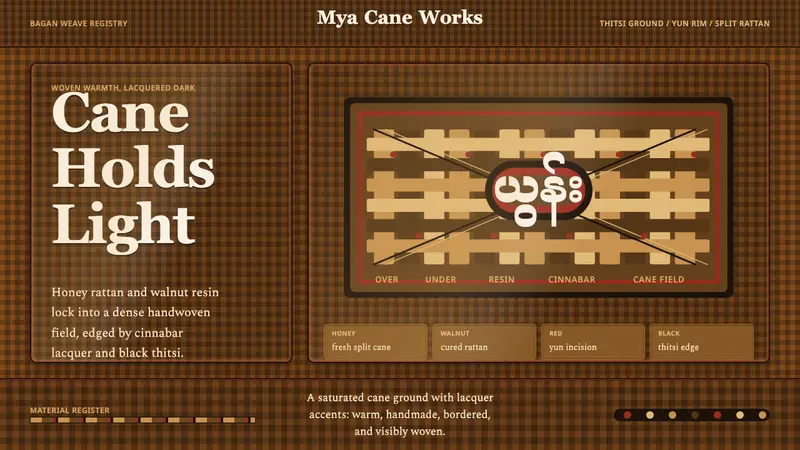 Burmese Cane RattanWoven warmth holds the page. Walnut cane lattice glows with cinnabar rim lines.
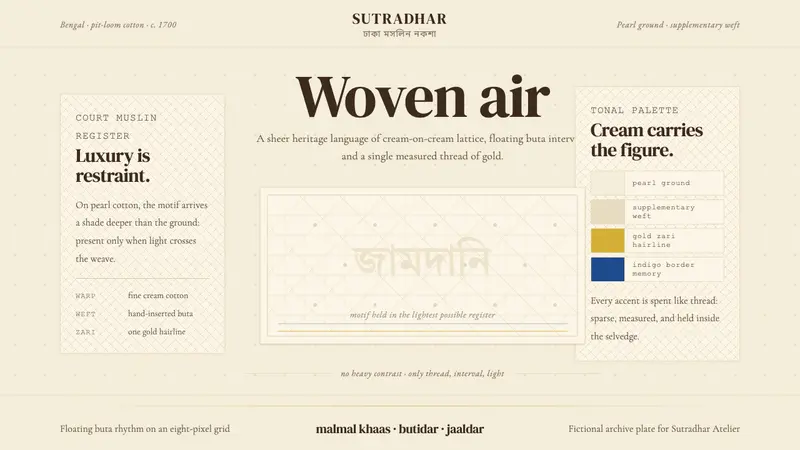 Bengali Jamdani WeavingLuxury whispers. Pearl cream, tonal buta, and one gold hairline make woven air visible.
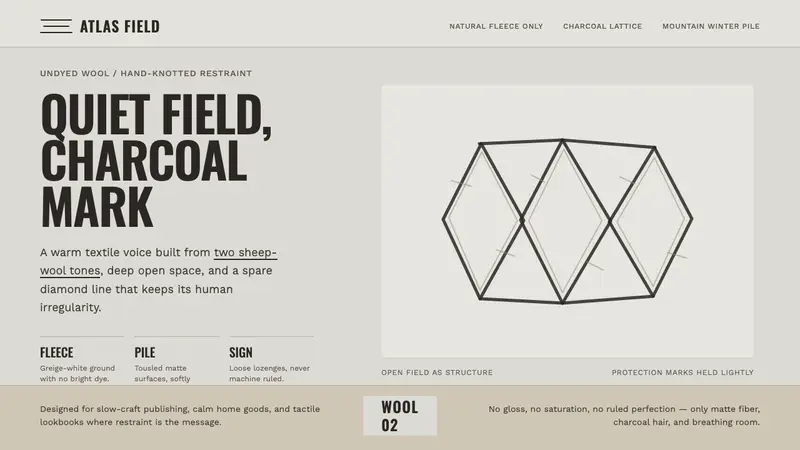 Beni Ourain Berber CarpetRestraint feels tactile. Greige wool field, Oswald type, and a loose charcoal lattice.