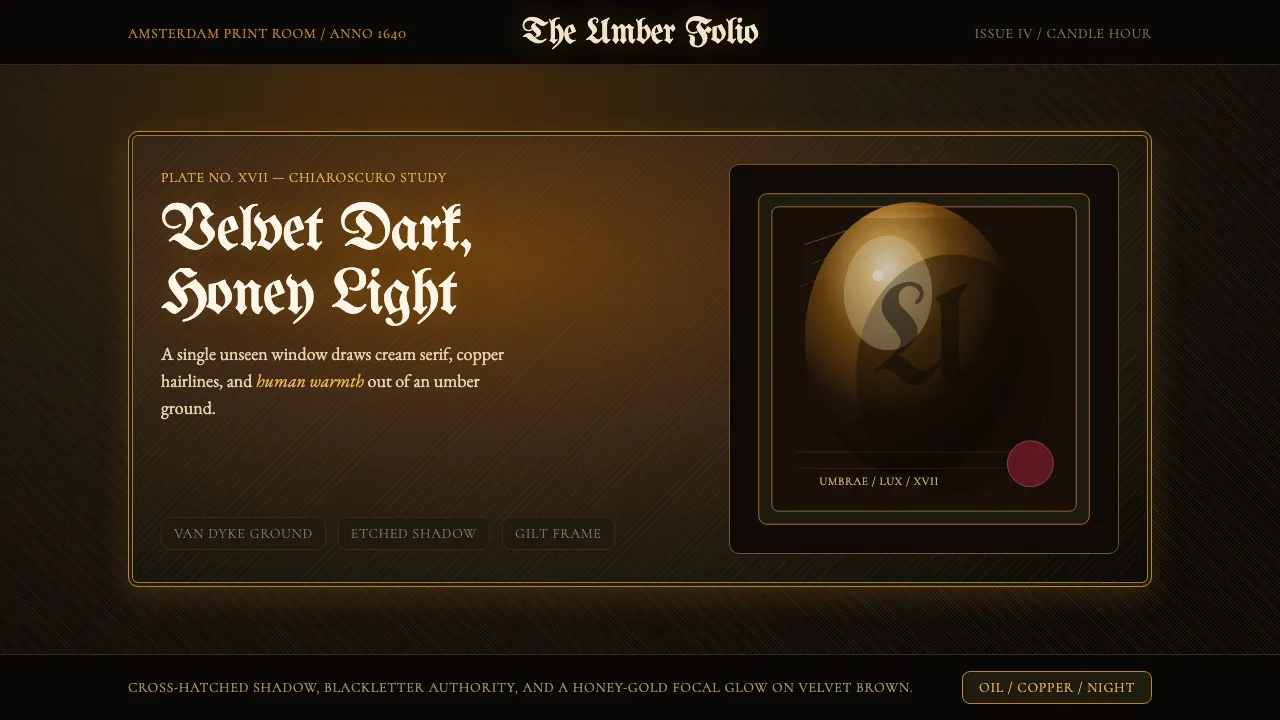
About Rembrandt Baroque
Rembrandt's chiaroscuro — a single face lit by an unseen window, emerging from velvet darkness — defines the Baroque dramatic spotlight. This system translates that 17th-century oil-and-etching vocabulary into interface design: honey-gold highlights on deep Van Dyke brown, blackletter headings, cross-hatch texture, and the warm earth-pigment palette of a Dutch master's studio.
- Origin
- Netherlands — Leiden & Amsterdam, Dutch Republic
- Era
- 1606–1669; peak production 1640s Amsterdam
- Key figures
- Rembrandt van Rijn · Saskia van Uylenburgh · Pieter Lastman · Frans Hals
- Movements
- Dutch Golden Age · European Baroque · Printmaking Revival
Rembrandt Baroque design spec
Colors
Background
Surface
Primary
Secondary
Accent
Text
Typography
Cormorant DisplayHeadings
EB GaramondBody
Cormorant SCMono
Unlock for 1 credit
The other 11 sections — buttons, cards, spacing, motion, techniques and more — open once you unlock. Download the DESIGN.md or send it to your AI in one click. Unlock once, yours forever.
Sign up nowHave an account? Sign in
Styles similar to Rembrandt Baroque
Also inspired by art & artists, with a close feel.
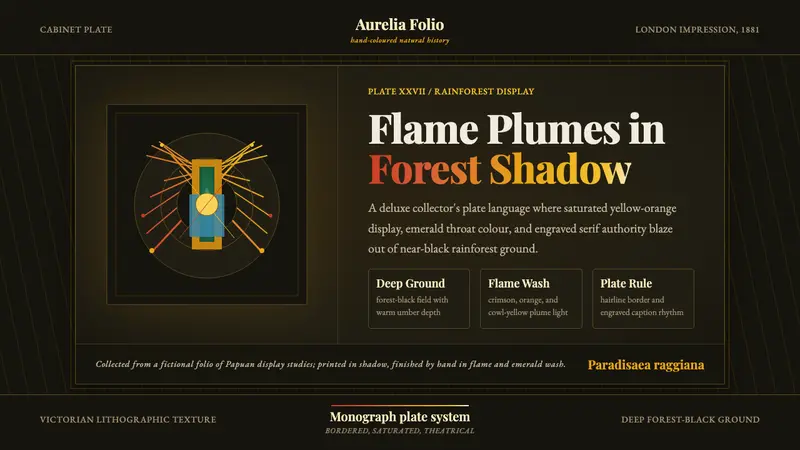 Bird of Paradise MonographTheatrical plate-book darkness. Flame plumes blaze from a bordered forest-black monograph.
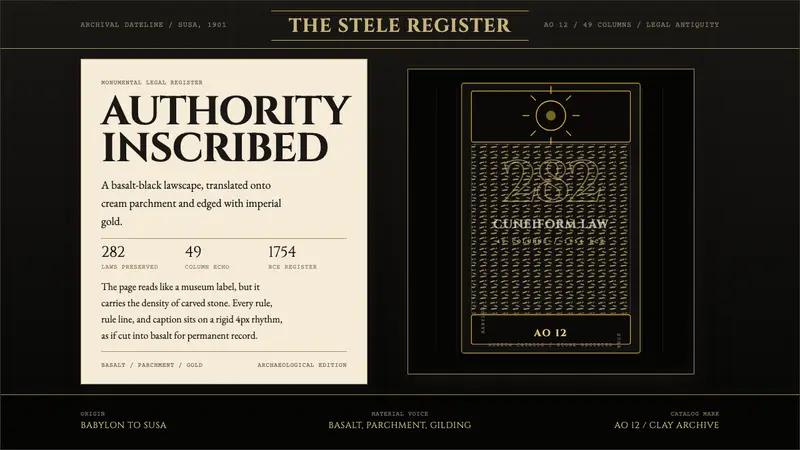 Babylonian Hammurabi SteleAuthority carved in stone. Basalt-black grids, parchment panels, and imperial gold.
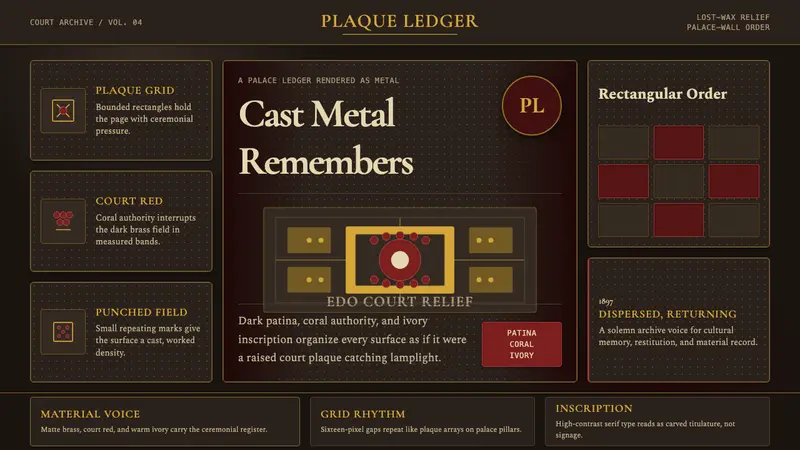 Benin Bronze Oba CourtCourt gravity in cast metal. Patinated brass grid, coral red panels, ivory serif relief.
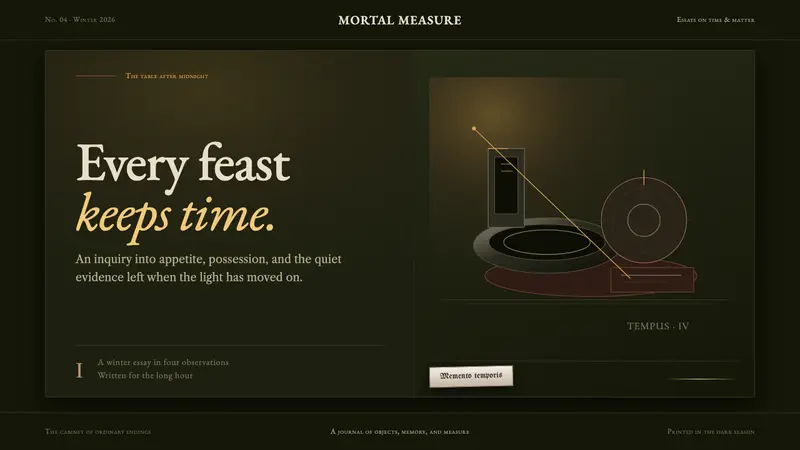 Dutch VanitasTime waits at the table. Olive-black depths, earth-brown type, and one candle-hot edge.