About Otto Neurath ISOTYPE
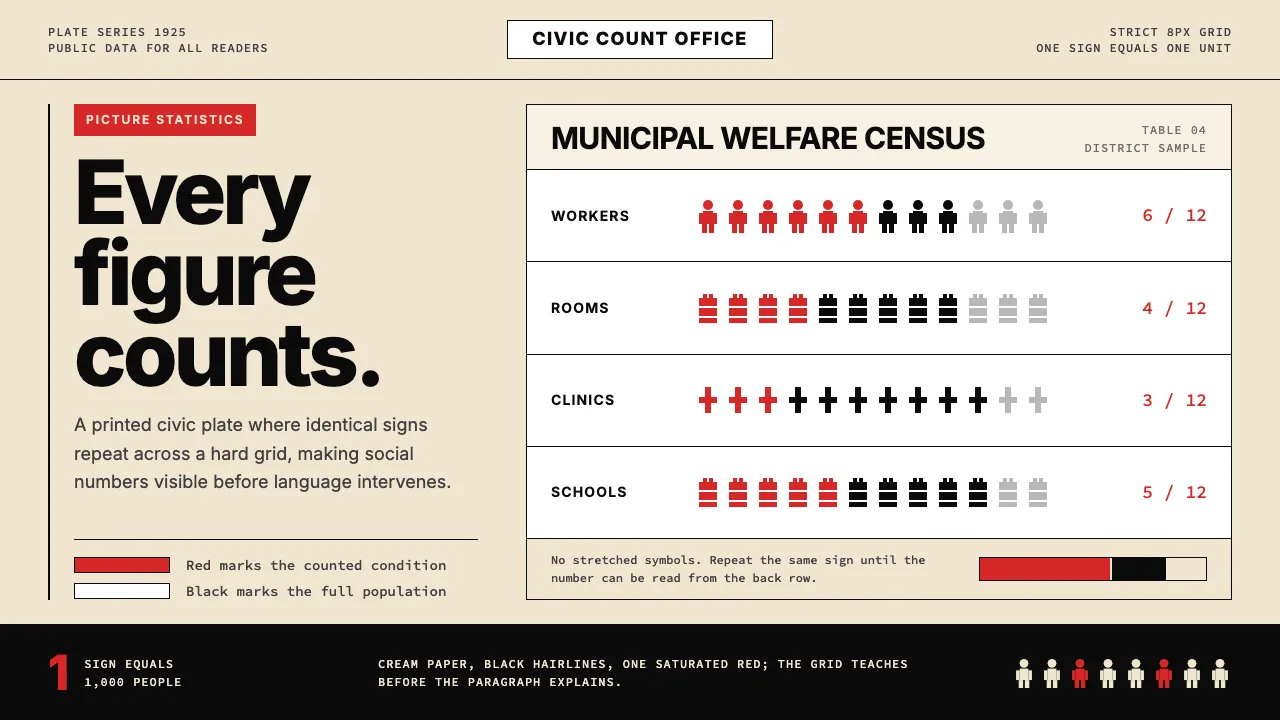
ISOTYPE — the International System Of TYpographic Picture Education — was developed in 1925 Vienna by social scientist Otto Neurath, transformer Marie Reidemeister, and graphic designer Gerd Arntz to teach economic and social statistics to working-class audiences who could not read German. The visual language is austere and exact: cream paper, deep-black pictograms, and a single saturated red, arranged on a strict Bauhaus grid.
Each chart counts by repeating a small icon — one figure equals 1,000 people, one factory equals 10,000 workers — turning census data into something a child can read across a room. ISOTYPE is the ancestor of every pictogram, airport sign, and stat-block infographic that followed.
- Origin
- Vienna, Austria → Netherlands → United Kingdom
- Era
- 1925–1934 Vienna; ongoing influence through contemporary infographic and pictogram canon
- Key figures
- Otto Neurath · Marie Reidemeister Neurath · Gerd Arntz
- Movements
- Vienna Circle social-statistics · Bauhaus modernism · early infographic data-visualization
Otto Neurath ISOTYPE design spec
Colors
Typography
The other 11 sections — buttons, cards, spacing, motion, techniques and more — open once you unlock. Download the DESIGN.md or send it to your AI in one click. Unlock once, yours forever.
Sign up nowStyles similar to Otto Neurath ISOTYPE
Also inspired by design movements, with a close feel.
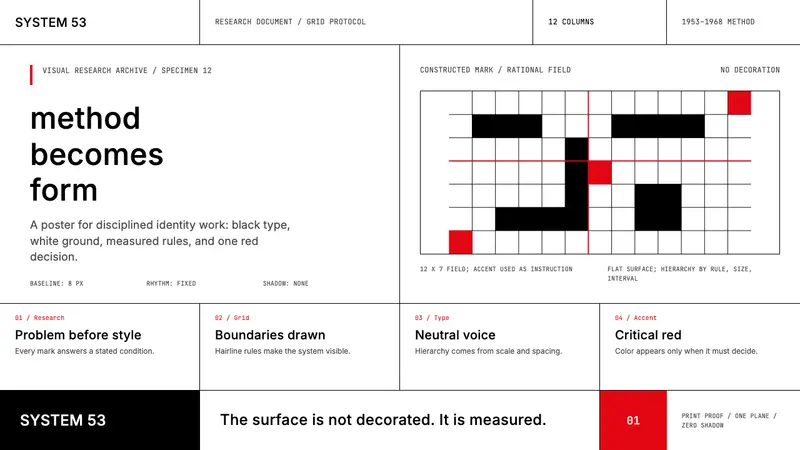 Ulm School (HfG Ulm)Clarity becomes discipline. Black-white grid, Inter grotesk, and one surgical red mark.
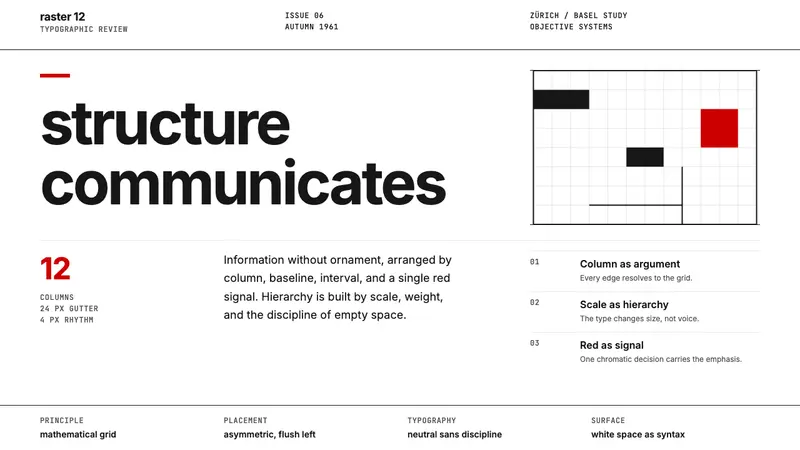 Swiss International StyleObjectivity made visible. Inter scale, white space, and one red block expose the grid.
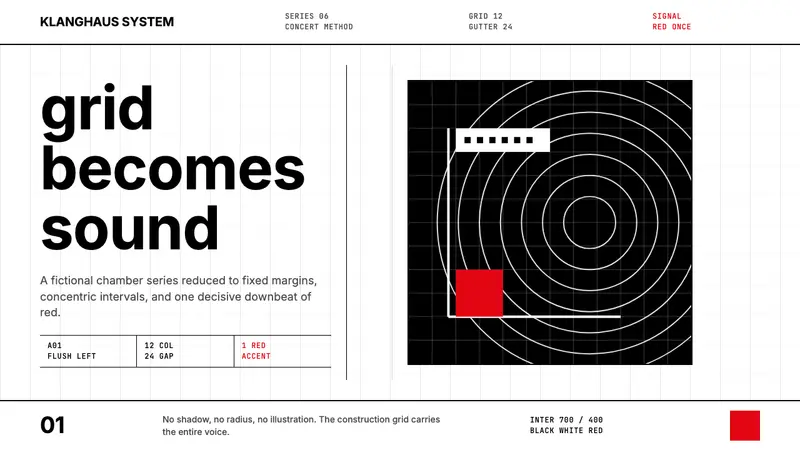 Müller-Brockmann GridOrder becomes force. Black-white 12-column grid, Inter type, one red downbeat.
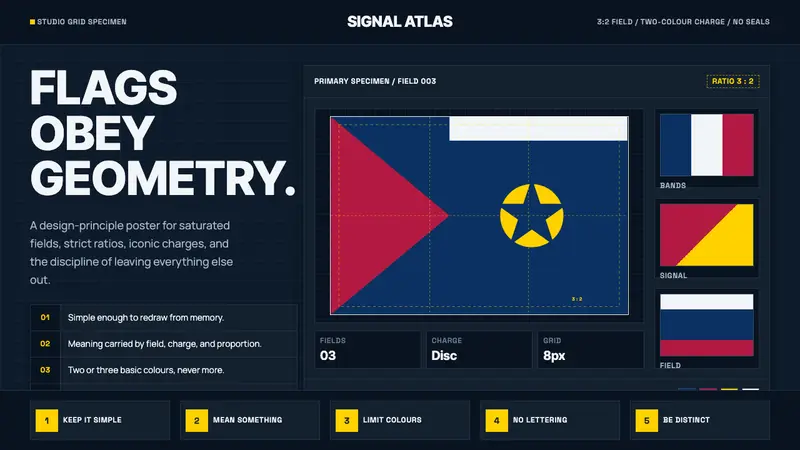 Vexillology Flag DesignDiscipline made visible. Old Glory blue, red and yellow sit on a strict dark grid.