About Mexican Otomi Tenango
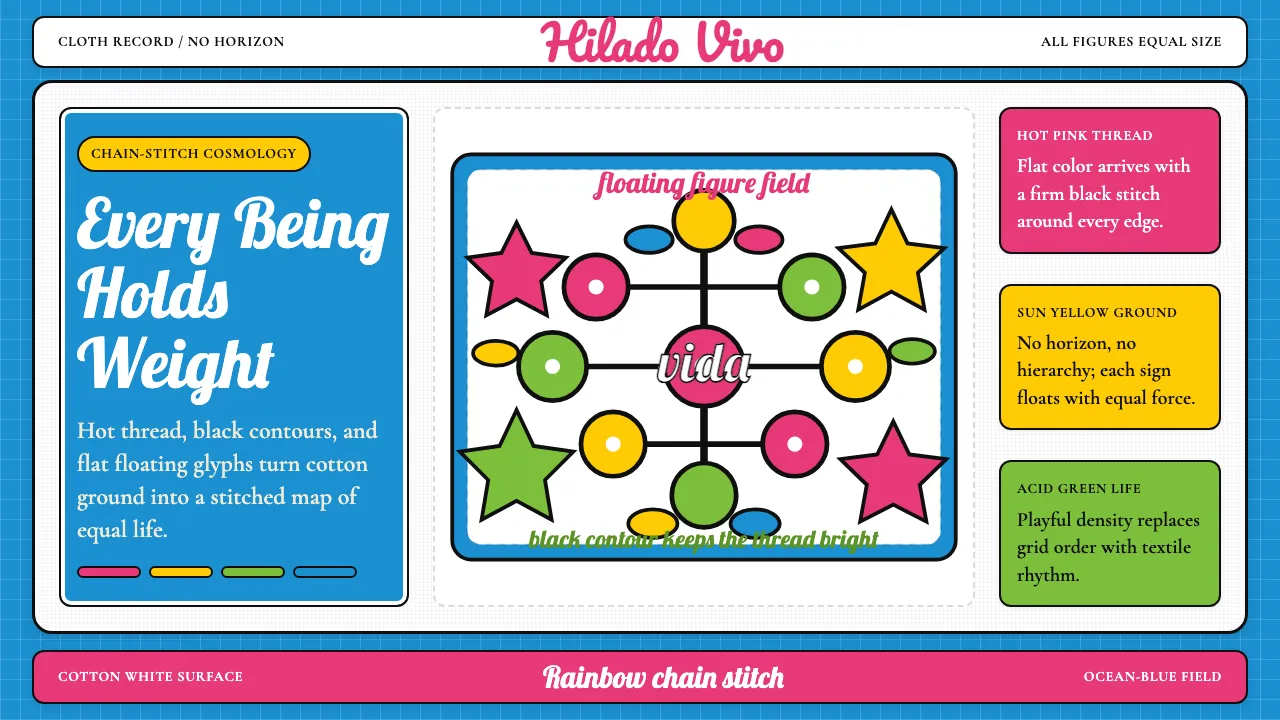
Otomi tenango embroidery is the rainbow-saturated chain-stitch cloth of the Hñähñu people of Hidalgo, Mexico. Deer, jaguars, birds, and flowers — all rendered the same size, all floating without horizon on white cotton — make up a cosmology where every being holds equal weight.
Born from pre-Columbian cave paintings and amate-bark art, the modern tenango emerged in the 1960s when Tenango women turned ancient motifs into embroidered textiles for commerce. Today, a tenango cloth reads like a flat tapestry of equally-important life, stitched in hot pink, sun yellow, and acid green against bold blue or white ground.
- Origin
- Tenango de Doria & San Pablito, Sierra Otomí, Hidalgo, Mexico
- Era
- Motifs pre-Columbian; embroidered-cloth form developed 1960s–present
- Key figures
- Catharine Good Eshelman · Bodil Christensen
- Movements
- Otomi tenango embroidery · Mexican indigenous textile · Hñähñu cultural revival
Mexican Otomi Tenango design spec
Colors
Typography
The other 11 sections — buttons, cards, spacing, motion, techniques and more — open once you unlock. Download the DESIGN.md or send it to your AI in one click. Unlock once, yours forever.
Sign up nowStyles similar to Mexican Otomi Tenango
Also inspired by crafts & folk art, with a close feel.
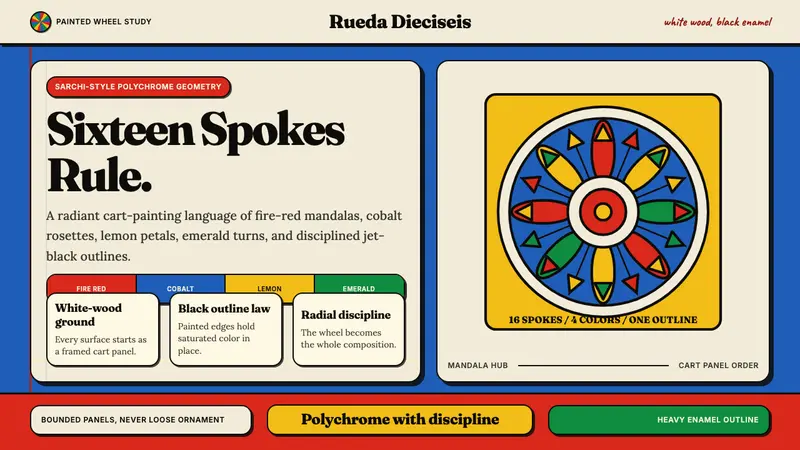 Costa Rican Oxcart Sarchí 1900Geometry sings. Fire red, cobalt, lemon and black outlines turn the wheel into law.
 Indian Dhaba Truck-Art MenuHighway maximalism, lacquered. Saffron and marigold glow on indigo steel, scalloped edge to edge.
 Ga Fantasy CoffinMemory refuses to whisper. Marine enamel, fat sign type and hard black seams carry it outdoors.
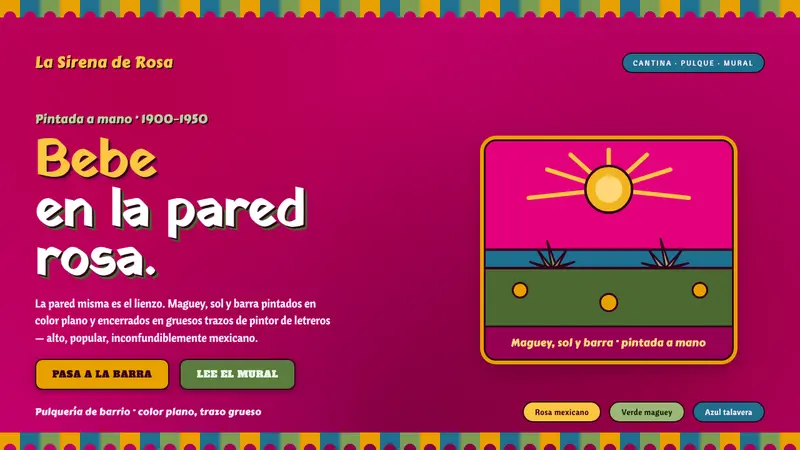 Mexican Pulquería MuralThe wall is the canvas. Hot rosa-mexicano plaster, maguey green and marigold in folk lettering.