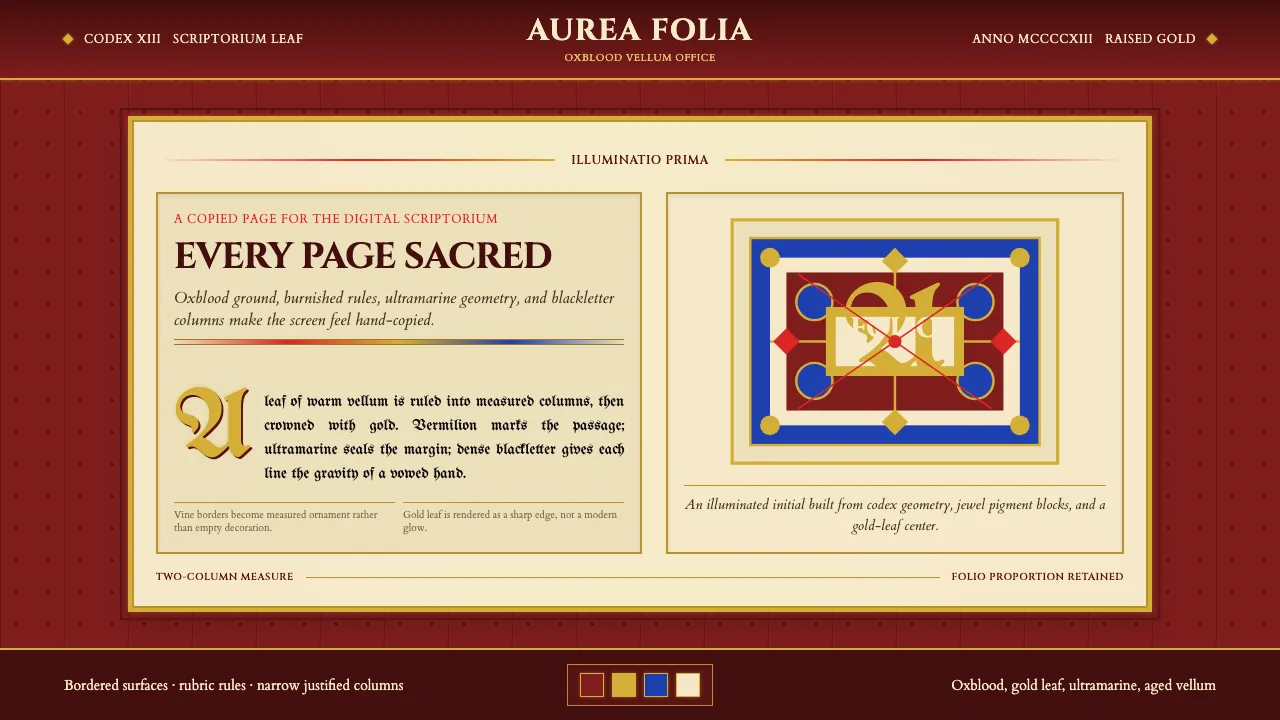
About Medieval Illuminated Manuscript
Medieval illuminated manuscripts represent the most labor-intensive book art tradition ever practiced. From the 8th to 15th centuries, monks in European scriptoria hand-painted pages of vellum with gold leaf, ground-lapis ultramarine, vermilion red, and blackletter calligraphy — a single decorated folio could take a month to complete.
This design system channels the jewel-toned richness of the Book of Kells, the Lindisfarne Gospels, and the Très Riches Heures du Duc de Berry into a digital vocabulary of oxblood grounds, gold-leaf accents, ultramarine ornament, and blackletter type — every page treated as sacred.
- Origin
- Monasteries across Europe — Ireland, England, France, Germany, Italy
- Era
- 8th–15th century (peak 13th–15th c.; Book of Kells c. 800, Très Riches Heures c. 1413)
- Key figures
- Limbourg brothers · Eadfrith of Lindisfarne · Anonymous Irish monks of Kells
- Movements
- Insular art · Carolingian Renaissance · Gothic illumination · International Gothic
Medieval Illuminated Manuscript design spec
Colors
Typography
The other 11 sections — buttons, cards, spacing, motion, techniques and more — open once you unlock. Download the DESIGN.md or send it to your AI in one click. Unlock once, yours forever.
Sign up nowStyles similar to Medieval Illuminated Manuscript
Also inspired by print & type, with a close feel.
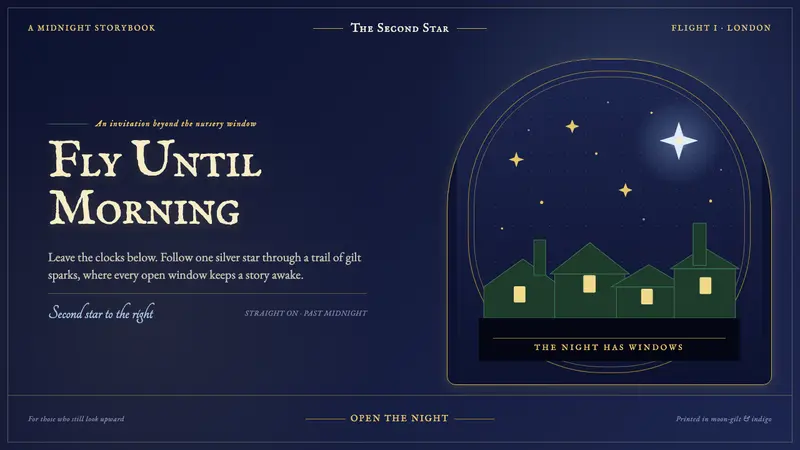 Peter Pan Neverland (1904)Enchantment glints, never shouts. Midnight navy holds gilt sparks and Edwardian serif type.
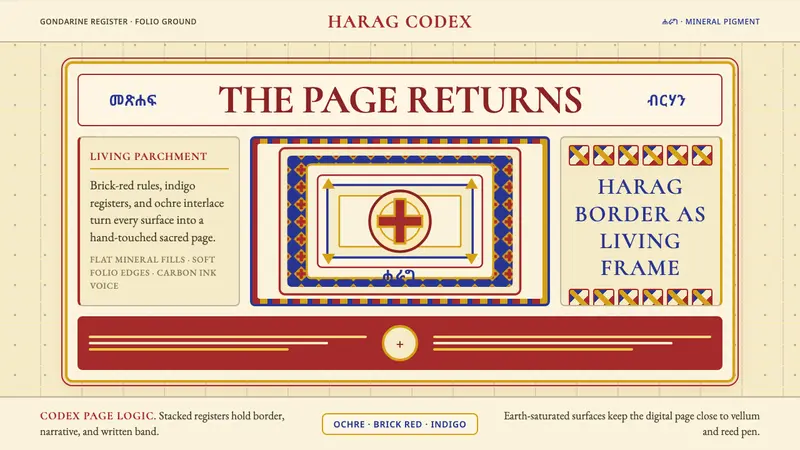 Ethiopian Orthodox ManuscriptSacred page, alive. Brick red, indigo, and ochre harag borders frame a staring icon.
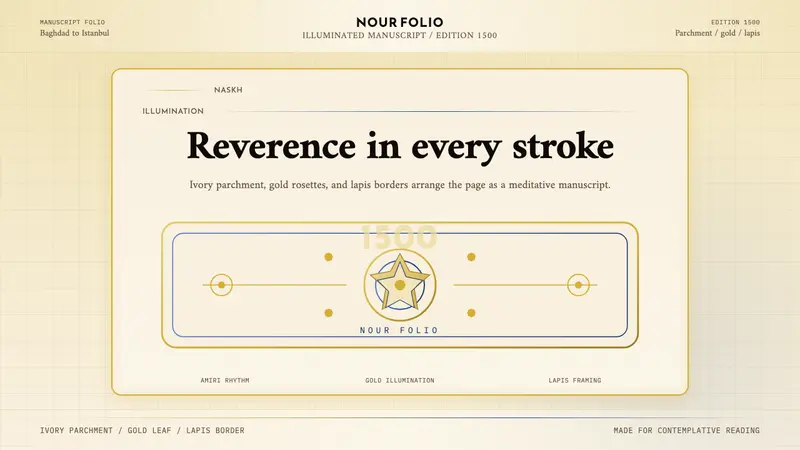 Naskh Quranic (1500)Reverence in every stroke. Ivory parchment, gold rosettes, and lapis framing.
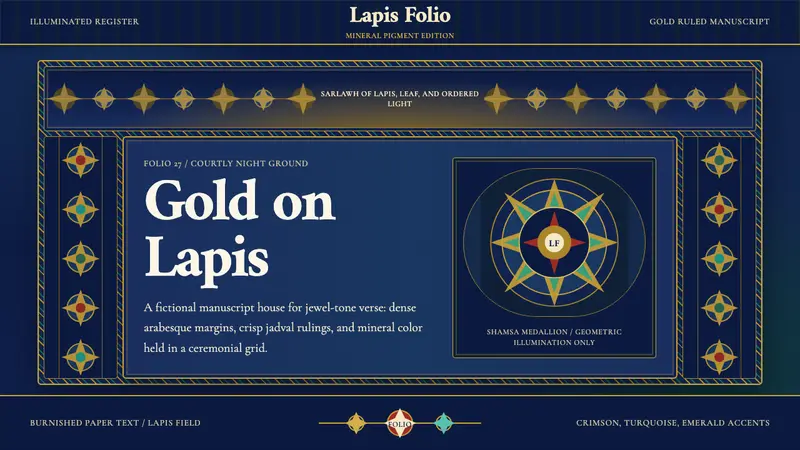 Timurid Manuscript (Herat)Courtly density glows. Lapis ground, Amiri type, and gold jadval geometry hold the folio.