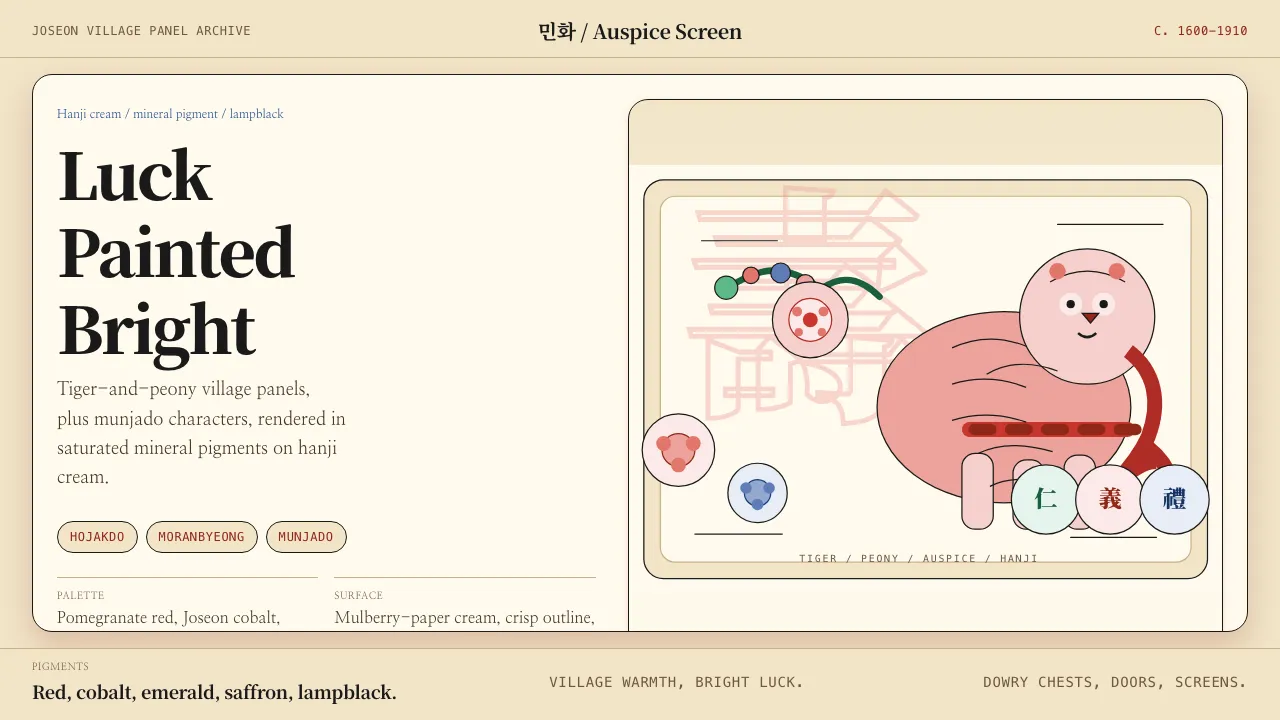
About Korean Minhwa (Joseon Folk Painting)
Minhwa is Joseon Korea's folk-painting tradition: bright, cheerfully-stylized auspicious panels that village painters produced from c. 1600–1910 for ordinary people's walls and dowry chests. Tigers reduced to friendly fat striped bodies with googly eyes, magpies scolding from pine trees, peony screens for wedding rooms, scholar's-bookshelf chaekgeori — all in 5–7 saturated mineral pigments bounded by lampblack outline.
The aesthetic feels like the Leeum Museum's Minhwa hall: pomegranate-red, Joseon cobalt, Korean emerald and saffron arranged on mulberry-paper hanji cream. Where elite literati painting demanded restraint, Minhwa is the opposite — village warmth, symbolic cheer, and the self-confidence of a folk shaman painting prosperity onto a wall.
Learn more about the Korean Minhwa (Joseon Folk Painting) style
- Origin
- Korea (Joseon dynasty)
- Era
- Joseon dynasty c. 1600–1910 (peak village production 1700–1900); 20c folk revival; contemporary K-design influence
- Key figures
- Anonymous Joseon folk-painters · Cho Jayong · Yanagi Sōetsu · Lee Dong-jae
- Movements
- Joseon folk-painting tradition · Mingei (Yanagi) · Korean cultural-revival
Korean Minhwa (Joseon Folk Painting) design spec
Colors
Typography
The other 11 sections — buttons, cards, spacing, motion, techniques and more — open once you unlock. Download the DESIGN.md or send it to your AI in one click. Unlock once, yours forever.
Sign up nowStyles similar to Korean Minhwa (Joseon Folk Painting)
Also inspired by crafts & folk art, with a close feel.
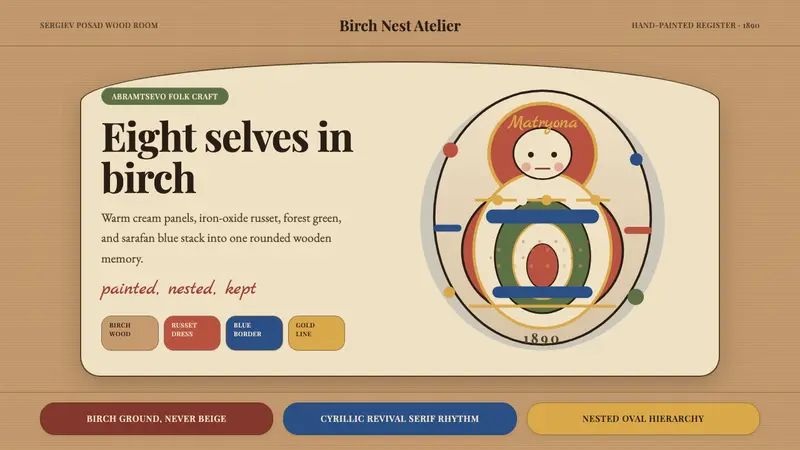 Russian Matryoshka 1890Warmth nests inward. Birch, cream, russet, and egg-oval type stage handmade depth.
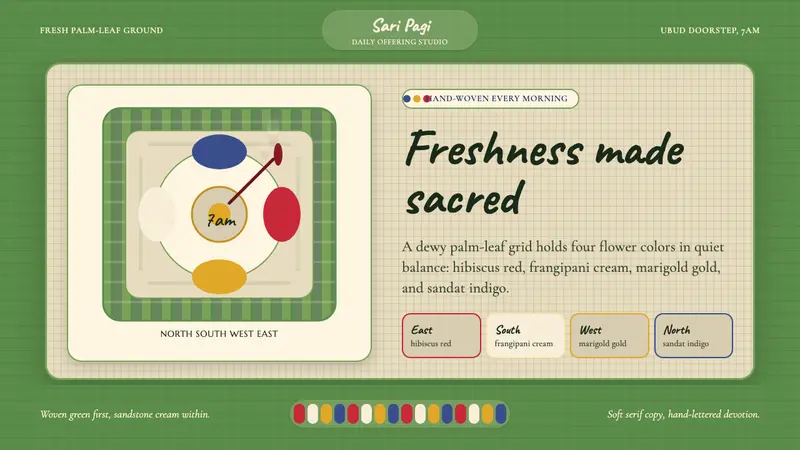 Balinese Canang Sari (Daily Offering)Morning ritual, freshly woven. Palm green grid with four flower colors on temple cream.
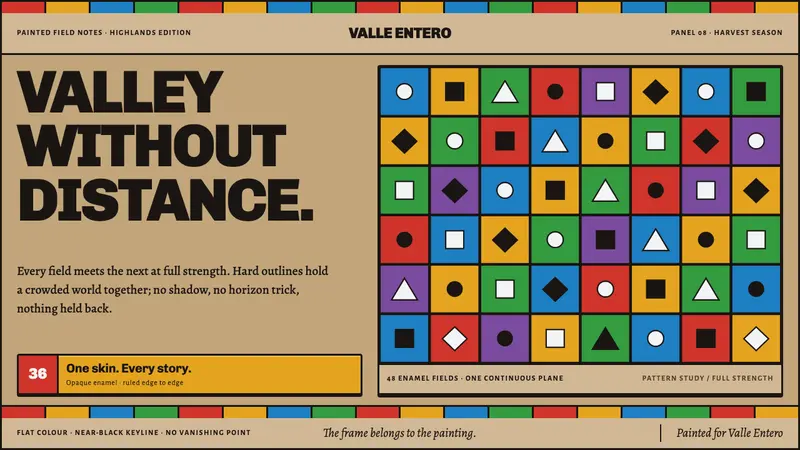 Tigua Sheepskin PaintingA whole valley at full volume. Saturated enamel fields lock together with near-black outlines.
 Cuban Habano CigarLuxury sleeps in shadow. Tobacco brown, antique gold rules, and burgundy seals.