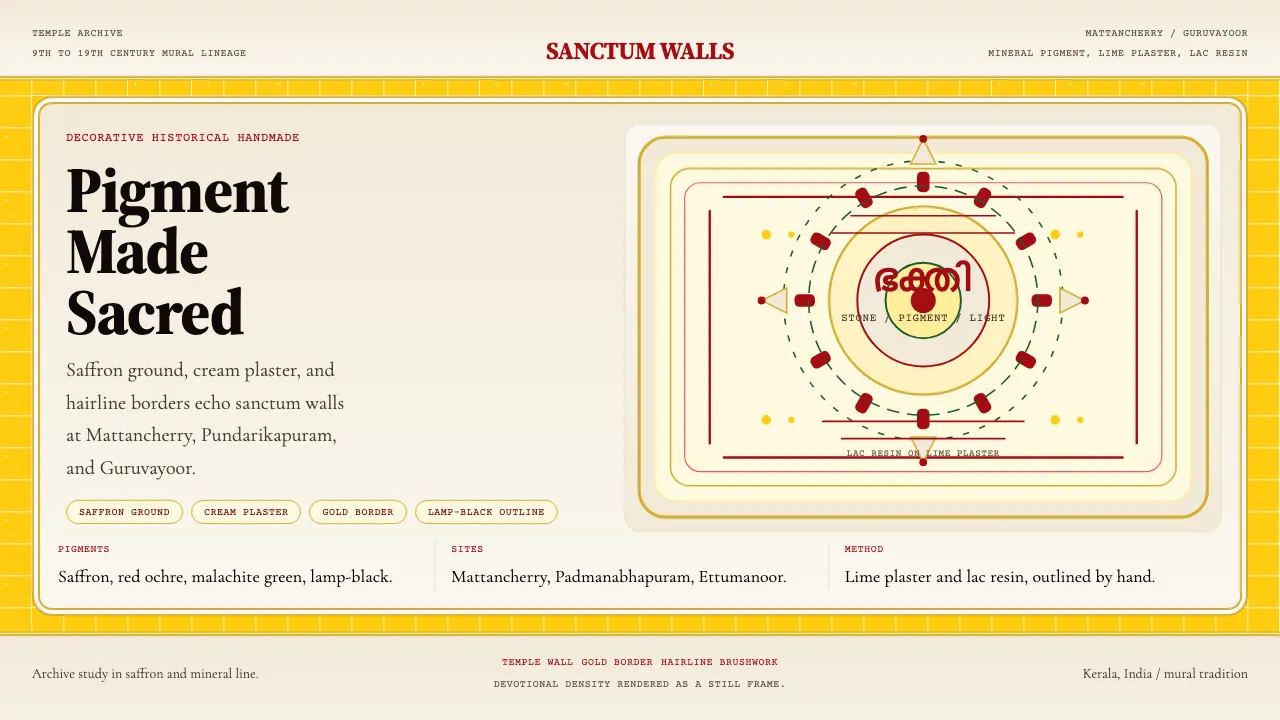
About Kerala Mural Temple
Kerala mural painting is the sacred wall-painting tradition of Hindu temples in Kerala, India, reaching its zenith between the 16th and 19th centuries. Master artists ground mineral pigments — saffron-yellow, red ochre, malachite green, lamp-black — bound with lac resin onto lime-plastered sanctum walls, filling every surface with mythological figures from the Ramayana and Puranas in dense, devotional compositions where no space is left unadorned.
This design system translates that mineral-pigment warmth and ornamental density into digital surfaces: saffron page grounds, cream lime-plaster content panels, hairline brushwork borders, and classical serif typography that echoes the monumental inscriptions of Mattancherry Palace and Guruvayoor temple.
- Origin
- Kerala, India
- Era
- 9th century origins; peak 16th–19th c.; modern revival 20th century
- Key figures
- Mammiyoor Krishnankutty Nair · Saji T.K. · Anonymous Kerala temple-mural masters · Vijayanagara-era patrons
- Movements
- South Indian Hindu temple-arts tradition · Kerala-Dravidian iconography · Indian folk-art-as-modernism revival
Kerala Mural Temple design spec
Colors
Typography
The other 11 sections — buttons, cards, spacing, motion, techniques and more — open once you unlock. Download the DESIGN.md or send it to your AI in one click. Unlock once, yours forever.
Sign up nowStyles similar to Kerala Mural Temple
Also inspired by crafts & folk art, with a close feel.
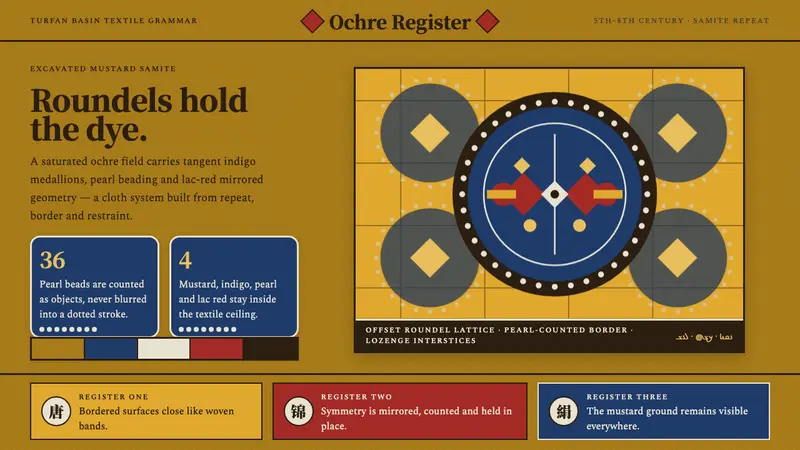 Astana Tomb SilksDye survives as structure. Mustard ground, indigo roundels and pearl beads lock the repeat.
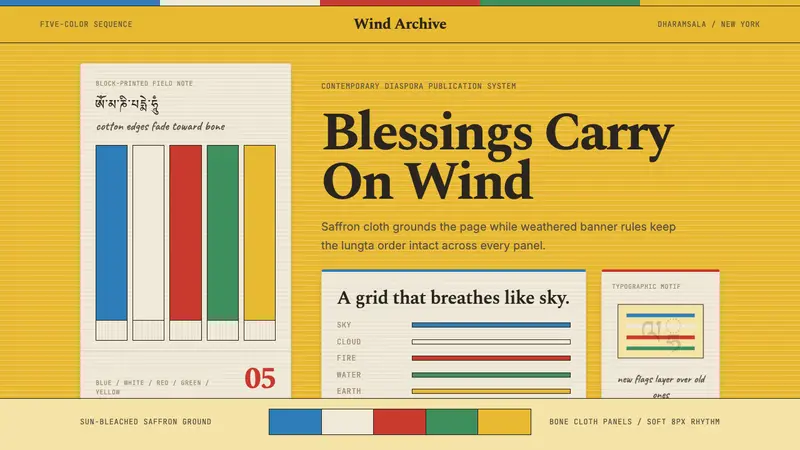 Tibetan Prayer Flag Modern RainbowWind-worn warmth. Saffron ground, Spectral type, and fixed lungta strips carry the page.
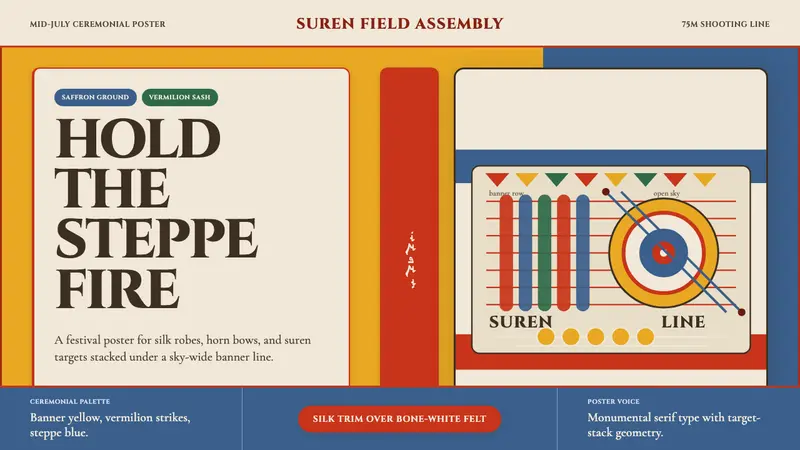 Mongolian Naadam ArcheryFestival heat at full draw. Saffron ground, vermilion trim, suren circles.
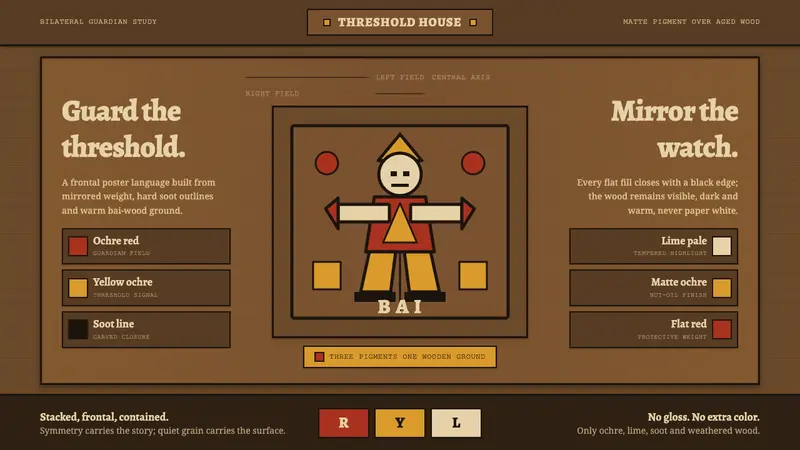 Palauan Dilukai Gable FigureGuardian symmetry on old wood. Ochre red, yellow and soot black lock each flat form.